Baggy Jeans Measurements: Define Volume and Length
Baggy jeans need intentional volume below the waistband, not simply a larger size. Rise, seat, thigh, knee, opening and inseam determine where that volume sits. A clear measurement brief helps distinguish a loose straight leg from a wide, tapered or stacked silhouette before the first pattern is approved.
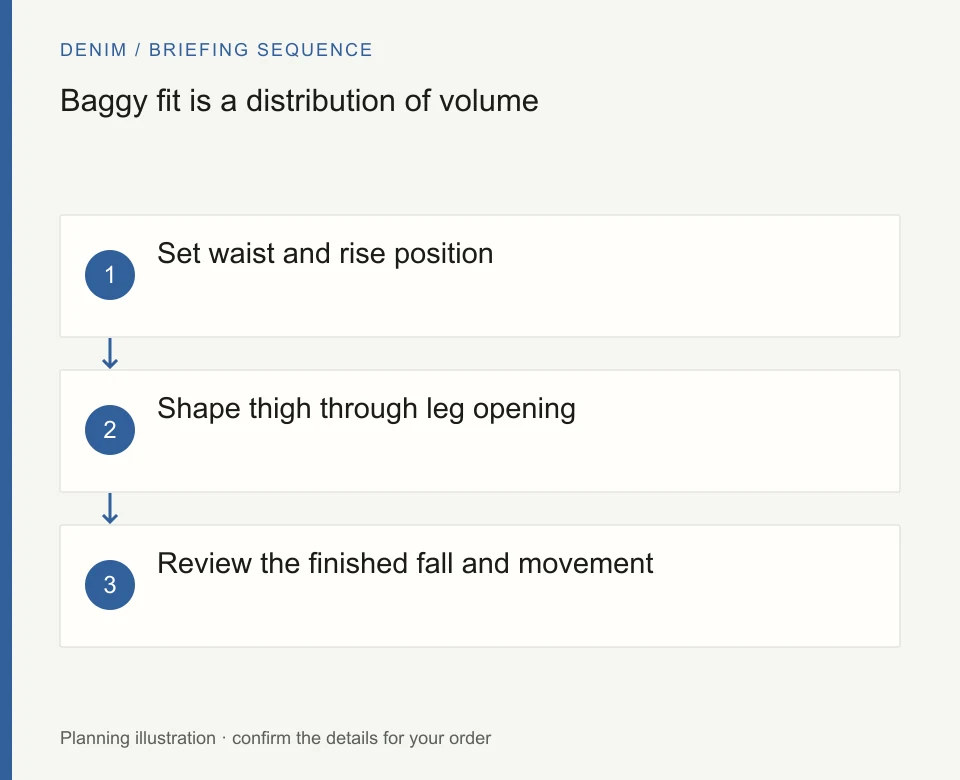
At a glance
Swipe the table sideways to compare both columns →
| Decision | What to specify | What to verify |
|---|---|---|
| Waist and rise | Waist position plus front and back rise | Separate dropped crotch from added leg width. |
| Leg line | Thigh, knee, opening and inseam | Define where volume narrows or remains broad. |
| Final review | Finished fabric, movement and hem behavior | Approve the silhouette before extending the size range. |
Locate the waist and crotch position
State where the waistband should sit on the body and provide a worn reference. Define front and back rise with measurement endpoints and clarify waistband inclusion. A dropped crotch and a roomier thigh can both create visual looseness, but they affect movement and proportions differently. Explain which effect you want rather than asking the factory to add room everywhere.
Provide waist and seat measurements with a reproducible method and a base size. Record whether the jeans are measured before or after the intended finish. For stretch materials, keep relaxed dimensions and any extension requirements distinct. Do not transfer a chart from rigid denim to a stretch proposal without reviewing how the material changes fit and wearing behavior.
Define the leg line at several points
Specify thigh and knee widths at identified locations, then leg opening and inseam. These points describe the progression of volume down the leg. A wide thigh with a narrower opening creates a different silhouette from a leg that stays broad. Include a side view or clear worn photograph so the factory can connect the numeric chart to your intended outline.
Explain whether the hem should break cleanly, stack or sit cropped, using the intended footwear as a design reference when useful. Length and opening interact: excess length on a narrow opening gathers differently from the same length on a wide opening. Review that relationship on a sample rather than approving inseam alone and assuming the hem will fall as it does in the reference image.
Check the final shape and size range
Sample in the proposed fabric and finish so stiffness, weight and dimensional changes are represented. Observe seated comfort, stride and the way pockets and side seams sit. Record whether an issue comes from waistband position, rise balance or leg dimensions before requesting a correction. Changing several neighboring points together can hide the actual cause and complicate the next review.
After base fit approval, evaluate grading and pocket placement across the selected size set. Maintain the design's loose character without assuming equal increases at every measurement. Archive the accepted chart with its point definitions and physical sample. For a reorder, refer to that complete record rather than a baggy fit label that another pattern maker may interpret very differently.
Send these details together
- Worn reference with intended waist position
- Waist, seat and rise measurement definitions
- Thigh and knee locations plus opening and inseam
- Fabric, finish and desired hem break
- Approved base fit and graded proportion review
Use this checklist to prepare your own order brief. Materials, processes, acceptance criteria and any applicable product requirements need order-specific confirmation; this guide is not a test report or availability guarantee.
Prepare a quote briefThe RFQ form prepares a WhatsApp message for you to review. For files, email sales@denimmanufacturerchina.com.
Questions before sampling
What are your MOQ, sample time and bulk lead time?
MOQ is 100 pcs. Samples take 7 days. Bulk production lead time depends on order quantity.