Denim production scope
Confirm who handles fabric, sewing, washing and inspection, then agree the size-set, hardware and packing requirements.
A production catalog for buyers who already know the garment category, fabric direction, fit target or decoration method.
Newer programs and buyer comparisons. Each page lists the details to include in a quote.
Choose a garment category to review fabric choices, fit requirements, finishing and the details needed for a quote.
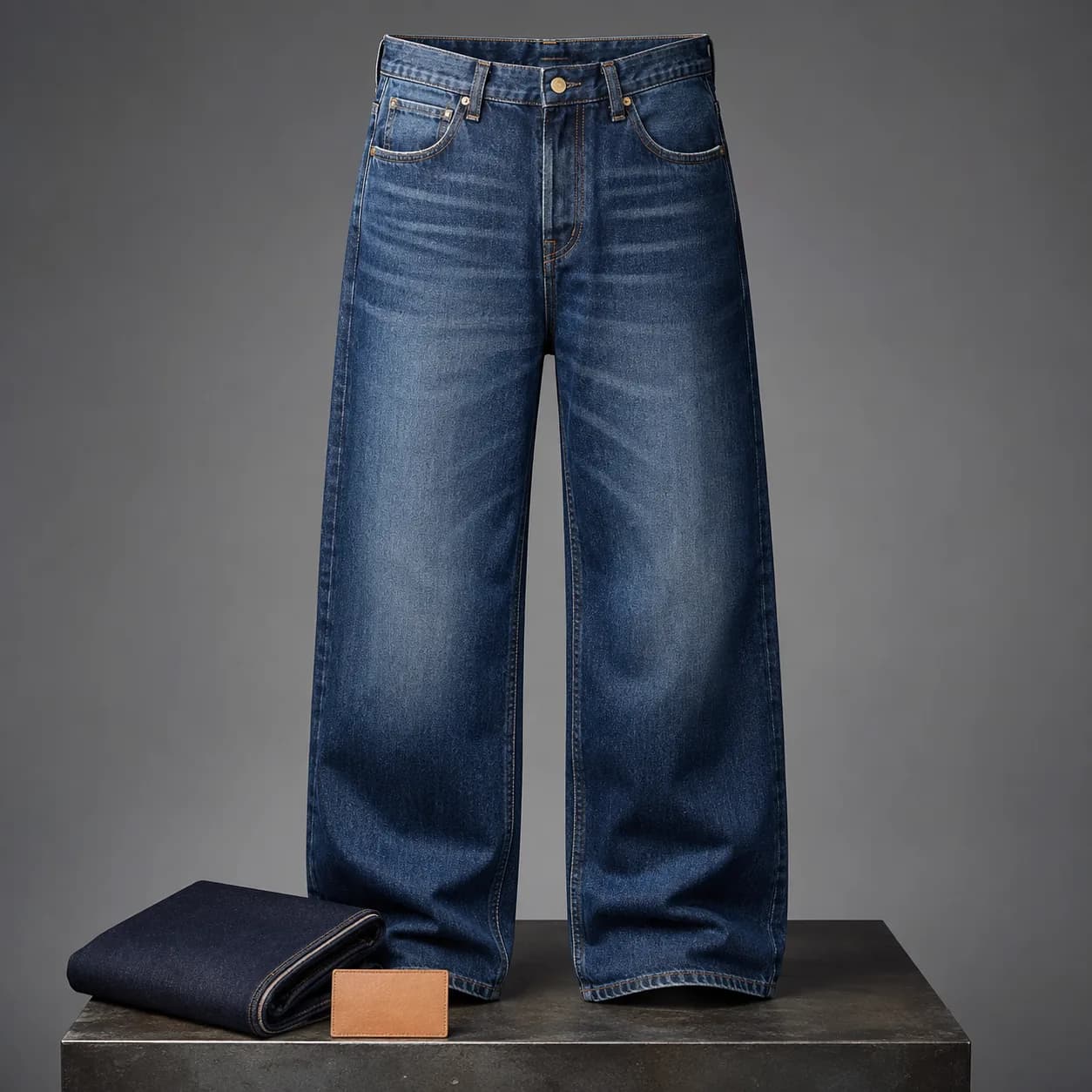 Jeans programsBaggy, straight, relaxed, carpenter and wide-leg fits.
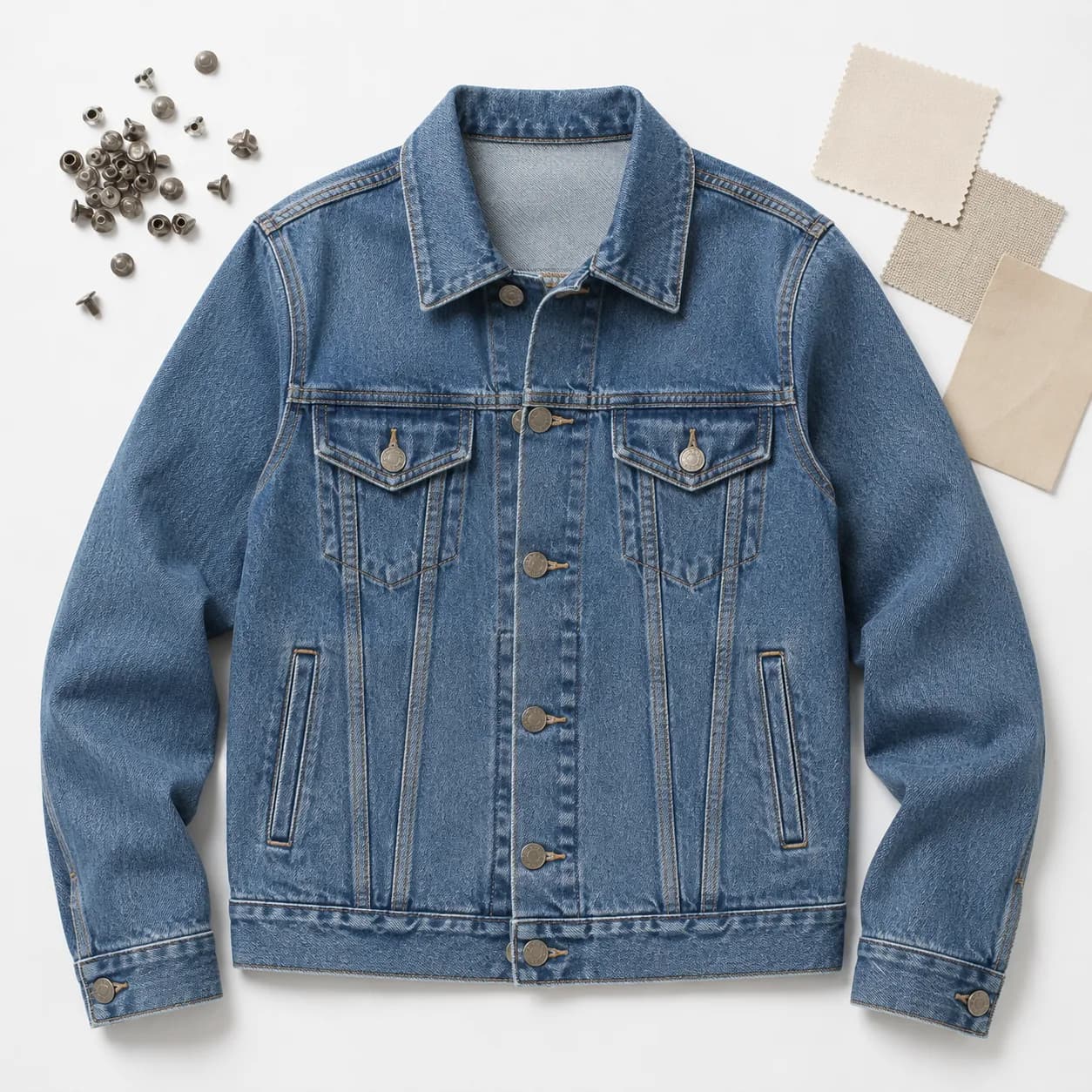 Denim jacketsTruckers, overshirts, hardware, patch placement and wash trials.
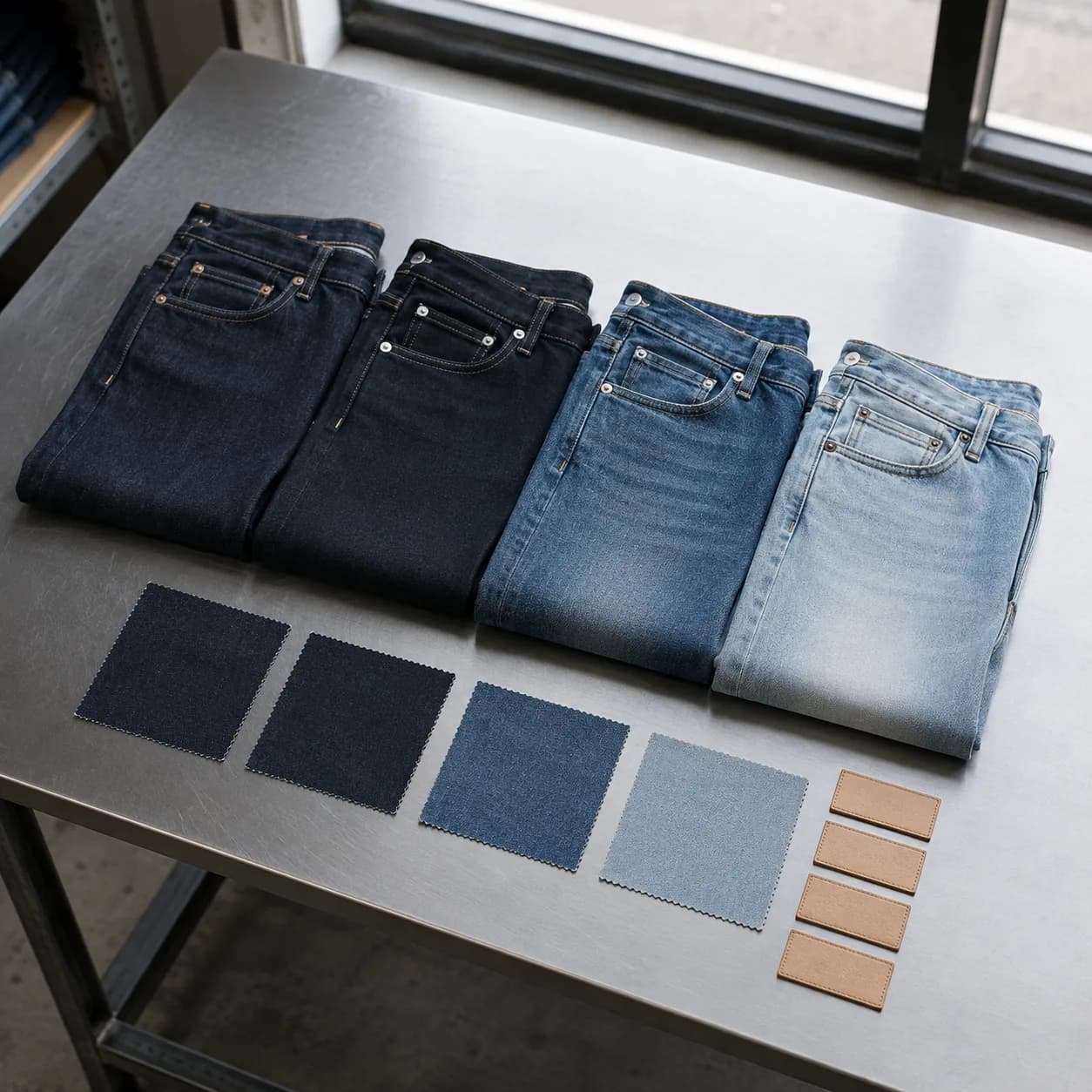 Wash developmentVintage wash, stone wash, enzyme wash, whiskers, tinting and fades.
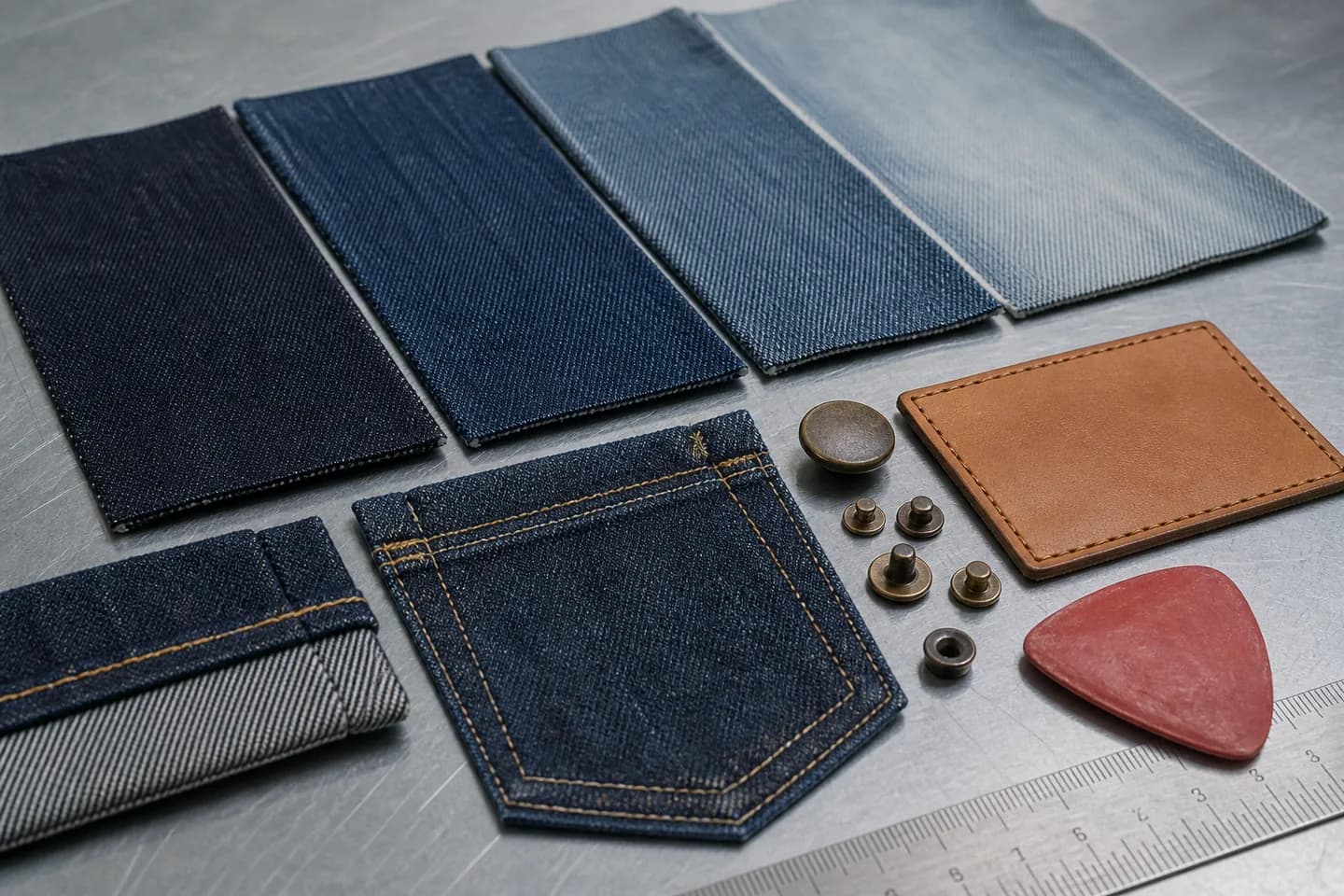 Private label denimLeather patches, buttons, rivets, pocket bags, labels and cartons.
Compare reference styles by material, construction and customization scope. Final specifications and availability are confirmed with your brief.
Start with the part of your denim project that needs development: factory scope, fit, wash appearance, jacket construction or branding.
Confirm who handles fabric, sewing, washing and inspection, then agree the size-set, hardware and packing requirements.
Develop fabric weight, wash target, trim package and construction together so the finished sample represents the whole product.
Define baggy, wide-leg or relaxed proportions through rise, seat and leg measurements, then review the fit after finishing.
Review jacket construction and compare raw or washed finishes, including hardware compatibility and shade approval.
The first reply is faster when category, quantity, material, sample status and destination country are already clear.
Each product program on this site groups the decisions that usually come together for that garment. A straight-leg jean, a baggy streetwear jean and a carpenter jean share fabric and wash questions but differ in pattern, pocket layout and hardware, so the briefs are organized separately.
Start with the silhouette you want to sell, then decide fabric weight and whether you need stretch. After that, pick a wash direction and the branding package. If you are unsure which program fits, choose the closest one and note the differences in your brief; the sample stage exists to resolve them.
Use these groupings to narrow down the list below:
Every product page ends with the fields a factory needs to quote that style. Copy them into your RFQ, add reference photos and quantity per color and size, and send it through the RFQ page or by email from the contact page. The MOQ is 100 pcs and samples typically take 7 days once the brief is confirmed.
If your style sits between two programs — for example a relaxed carpenter jean or a cropped wide leg — choose the closest page and describe the differences in your brief. List the measurements that matter most for the silhouette and attach reference photos from the front, side and back.
If you want several styles in the same fabric, mention it. Sharing a fabric across styles can simplify purchasing and keeps the shade consistent across your line.
A denim assortment needs more than a list of silhouettes. Before developing several products, define why each design deserves a separate place in the collection. Two jeans can look different in reference photographs but become almost identical once their measurements and finishing are specified. Conversely, one reference image can conceal two genuinely different products, such as a standard-length jean and a longer version intended to break over footwear. For our product review, identify the customer use, intended wearing position and distinguishing feature of each proposed design. This helps separate a new style from a colour option or length variant. It also gives your merchandising and technical teams a common way to discuss the range without treating every photograph as an independent development request.
Use an assortment matrix to show which decisions belong to the whole collection and which belong to individual products. A shared brand label may apply everywhere, while a pocket configuration belongs only to one design. Mark these relationships explicitly rather than writing “same as the other style.” That instruction becomes unreliable as soon as one product changes. If two jeans are intended to share an upper block but have different legs, identify the common waist, hip and rise targets and the points where their shapes separate. Shared specifications can reduce unnecessary development, but they should not force unrelated products into the same construction. A fitted shirt and a roomy overshirt, for example, need distinct ease allowances even when the buyer wants them to look like one collection.
Apply the minimum quantity to the actual product structure before deciding how many options to launch. Our MOQ is 100 pcs per colour per design, not 100 pcs divided across a catalogue selection. For example, three designs offered in two colours each would require at least 600 pcs if every design-colour combination is ordered at the minimum. Size allocation sits within those combinations and should be confirmed in the order breakdown. A different fabric, length specification or construction may change how an option is classified, so flag these variations for review rather than assuming they can be pooled. We can make all kinds of custom designs, but a focused opening assortment is usually easier for a buyer to evaluate than several nearly identical styles with unresolved differences.
Consider an illustrative launch containing a five-pocket jean, buyer code M01, and a matching denim overshirt, buyer code M02. The buyer requests 240 jeans in mid blue and 120 in dark blue, plus 120 overshirts in mid blue, giving 480 garments across three design-colour combinations. Each combination exceeds the 100 pcs minimum. The mid-blue products are intended to coordinate when worn together, but the buyer does not require an invisible shade match between different garment constructions. That distinction should be written into the brief. Describe M01 as a mid-rise, full-length jean and M02 as an upper layer worn over a T-shirt. Attach separate drawings and identify whether the proposed materials are fixed selections or still open for review. These are example quantities and specifications to confirm, not standard product requirements.
For the jean, send a complete measurement table, supported by a base-size reference. An example size 32 might start with an 84 cm finished waistband circumference, 108 cm hip circumference, 30 cm front rise including the waistband, 40 cm back rise, 34 cm flat thigh, 25 cm flat knee, 22 cm flat opening and 80 cm inseam. Define hip depth, thigh position and knee position on a diagram, because measurement names alone are not sufficient. For the overshirt, an example medium might show 62 cm half chest measured 2.5 cm below the armhole, 52 cm shoulder width, 76 cm back length from high shoulder point, 62 cm sleeve length and 12 cm flat closed cuff. These illustrative targets need checking against the buyer’s fit reference and intended size progression.
Review the first samples as separate products before judging them as an outfit. First reconcile style codes, materials and construction with the submitted brief. Next measure each garment in the agreed finished condition and assess the jean and overshirt on the intended wearer or fit model. Then review them together for proportion, visible colour relationship and interaction at the waist and hip. Record corrections against M01 or M02 rather than sending a single undifferentiated comment sheet. Review corrected samples where needed, then confirm the agreed size-set and pre-production references before authorising bulk. Samples typically take about 7 days once the brief and materials are confirmed; revisions and additional review stages need their own scheduling. Bulk timing depends on quantity and is confirmed after sample approval.
The Products page is the place to organise what you want to buy across a range, particularly when the request contains several garment categories or several possible versions of one item. Its useful output is a defined product list with clear relationships between designs, colours and sizes. A dedicated garment programme is more appropriate when the product has already been selected and the remaining questions concern that garment’s specific shape or construction. For example, a buyer deciding whether to add an upper layer alongside jeans can work from the catalogue level. A buyer who has already committed to a denim shirt and needs to resolve its collar, sleeve and body proportions should use the custom denim shirt programme. The distinction is assortment selection versus detailed development of a selected garment.
The raw versus washed denim comparison answers a narrower decision: which finishing route suits an intended product. It is not a method for arranging a multi-product order. Likewise, the handfeel approval guide addresses how a selected material and finish should feel against an agreed reference. Neither substitutes for identifying the separate products in your range. In a catalogue brief, record a finish or handle choice as confirmed, provisional or awaiting a separate review. You do not need to reproduce the full technical discussion beside every style. If the same provisional choice affects several garments, list those style codes together so a later decision reaches all affected products. This prevents one item moving forward with an old assumption while another receives the updated direction.
The rivet and bartack briefing guide and the button-fly briefing guide deal with component-level instructions, not the scope of the product assortment. Use them when you need to define a reinforcement or closure precisely. Here, the relevant question is which products carry that requirement and whether it creates a distinct version. For example, a buyer may want a button-fly version of one jean but leave the other jeans unchanged. The catalogue should identify that exception, while the component brief holds its detailed specification. Avoid applying an instruction across the entire collection merely because it appears on one reference sample. If your request spans several programmes, send one product index with separately named supporting files. We can then discuss the custom designs without confusing range-wide decisions with local construction changes.
Once the assortment is selected, the main catalogue risk is loss of product identity as files, samples and order sheets move between teams. A commercial description such as “blue loose jean” is not a reliable production identifier when the range contains several blue garments. Build a master product register that connects the buyer style code to its colour code, size range, approved specification revision and order quantity. Keep descriptions readable, but use codes to control the relationship between documents. If your retail system uses a different SKU format, provide a cross-reference rather than asking production staff to infer the mapping. This is especially important when a brand’s sales team renames a product after development has begun. A new retail name should not accidentally create a new production instruction.
Track approval status by design-colour combination rather than marking the entire collection “approved.” One jean may have an accepted fit while its second colour remains unresolved, and an overshirt may still need a proportion change. Record those distinctions in separate fields for product specification, colour reference, size set and packing information. A single green status cell can conceal unfinished work if nobody has defined what approval covers. When a change affects a shared item, list every impacted product and ask for its effect on materials, samples and scheduling before issuing the revision. For example, replacing a collection-wide label after one style has been approved is not merely an artwork update for the remaining styles. The earlier approval must also be checked against the revised requirement before release.
At bulk handover, reconcile the assortment register with the purchase order and the agreed packing breakdown. Check that every ordered design-colour-size combination appears once, that no cancelled option remains, and that quantities add up at both product and collection level. Where products are sold as coordinated separates, clarify whether they should remain independently packed rather than being paired into sets. The jean and overshirt size ratios in the example are different, so automatic one-to-one pairing would leave an avoidable mismatch. Confirm any carton separation or mixed-carton requirement before packing begins, including how mixed contents must be identified. For questions about structuring an unlisted custom design or separating variants within a product request, contact us on WhatsApp +86 15920568771 with the product index and the specific point requiring confirmation.