Denim Weight in Ounces: Build a Clear Fabric Brief
Denim weight is often expressed in ounces per square yard, a measure of fabric mass per area. It is not the weight of a pair of jeans. The number is useful for comparing fabric proposals, but composition, weave, stretch and finishing also affect the way a garment feels and holds its shape.
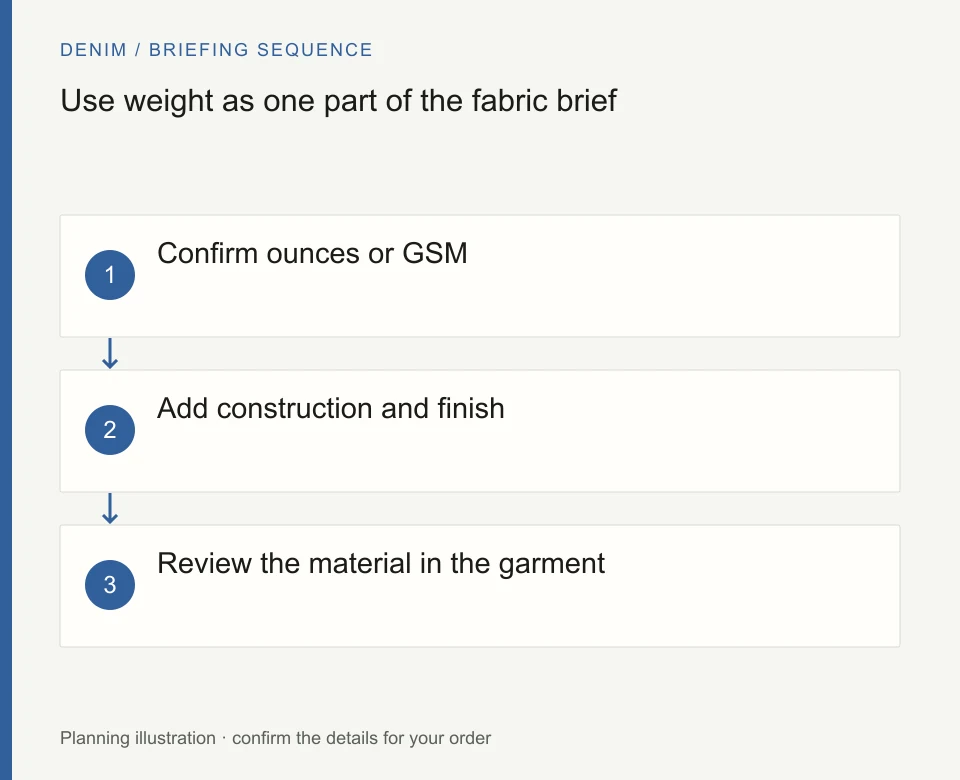
At a glance
Swipe the table sideways to compare both columns →
| Decision | What to specify | What to verify |
|---|---|---|
| Weight unit | Ounces per square yard or grams per square meter | Keep fabric mass per area separate from garment mass. |
| Construction | Composition, weave, stretch and finish | Similar weight does not establish similar behavior. |
| Selection | Swatch plus garment in the intended silhouette | Confirm actual material and any required checks. |
Make the weight unit unambiguous
A denim description such as twelve ounce generally refers to ounces per square yard, but confirm that basis in the material brief. Keep fabric weight separate from shipping weight and finished garment weight. A larger pair of jeans, extra pockets or substantial hardware can change garment mass without changing the body fabric specification. Compare equivalent items when evaluating physical samples.
If one proposal uses GSM and another uses ounces per square yard, convert to a common unit for comparison and preserve the original stated values. Ask whether the figures refer to the proposed finished fabric and how they are measured. A precise conversion cannot correct an unclear source measurement or establish that two different fabrics have identical construction.
Review what the weight does not describe
Record composition, stretch direction or rigid construction, weave information and finish alongside the weight target. Two fabrics of similar weight can differ in stiffness, surface, recovery and wearing behavior. A heavier material is not automatically more durable, and a lighter one is not automatically unsuitable for a structured design. Relevant performance claims need their own agreed evidence and test basis.
Compare physical swatches for hand feel, thickness and appearance, then review the preferred material in the intended garment. Weight interacts with pattern volume: a broad leg and a narrow leg can present the same fabric differently. For jackets or shorts, the different panel area and construction also affect the result. Do not choose a fabric solely because its ounce number sounds more substantial.
Write a complete fabric selection request
Give a proposed weight or reference range, composition, color, stretch requirements and intended finish. Explain the silhouette and desired feel using labeled references. If a specific construction or origin matters, request confirmation rather than inferring it from a sales name. Keep material availability and performance targets open until the supplier has reviewed the actual order and sample requirements.
Approve the sample after the intended production finish and record the material identity used. If the buyer requires weight verification, agree the method and acceptance limits with the responsible party. Retain the accepted swatch with the finished garment, because either alone leaves part of the decision undocumented. Recheck substitutes or reorder materials against both instead of relying only on a matching ounce label.
Send these details together
- Fabric weight with unit and measurement stage
- Composition, structure and stretch or rigid direction
- Color, finish and intended garment silhouette
- Physical swatches and representative garment review
- Agreed verification method and accepted material identity
Use this checklist to prepare your own order brief. Materials, processes, acceptance criteria and any applicable product requirements need order-specific confirmation; this guide is not a test report or availability guarantee.
Prepare a quote briefThe RFQ form prepares a WhatsApp message for you to review. For files, email sales@denimmanufacturerchina.com.
Questions before sampling
What are your MOQ, sample time and bulk lead time?
MOQ is 100 pcs. Samples take 7 days. Bulk production lead time depends on order quantity.