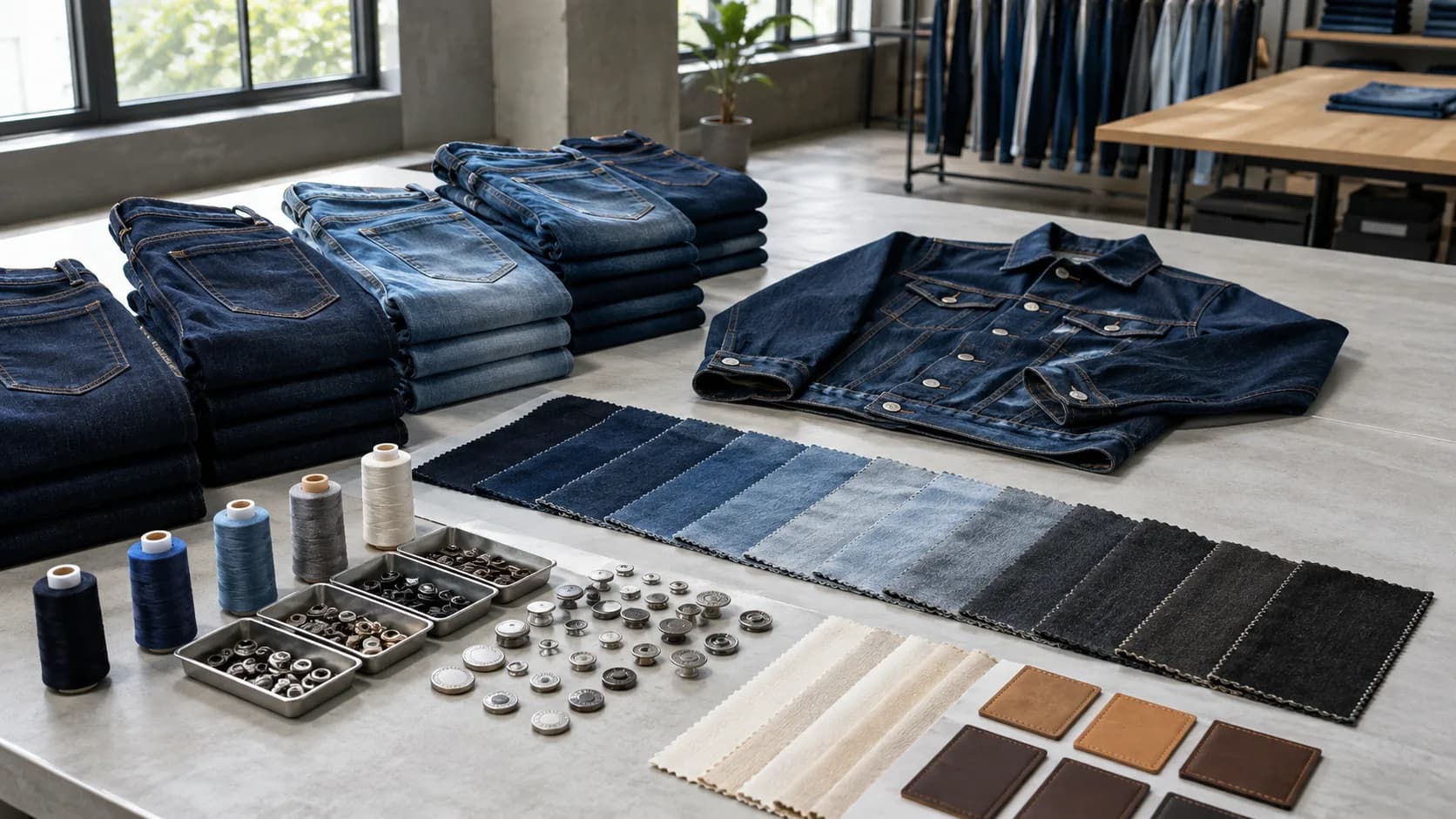
What belongs in a distressed jeans manufacturer RFQ?
Start with Distress map, Rip size, Reinforcement need, Wash reference. Add the quantity by color and size, destination country and required date.
Map distress placement, test wash effect, review fabric strength, reinforce risk areas and confirm bulk consistency.
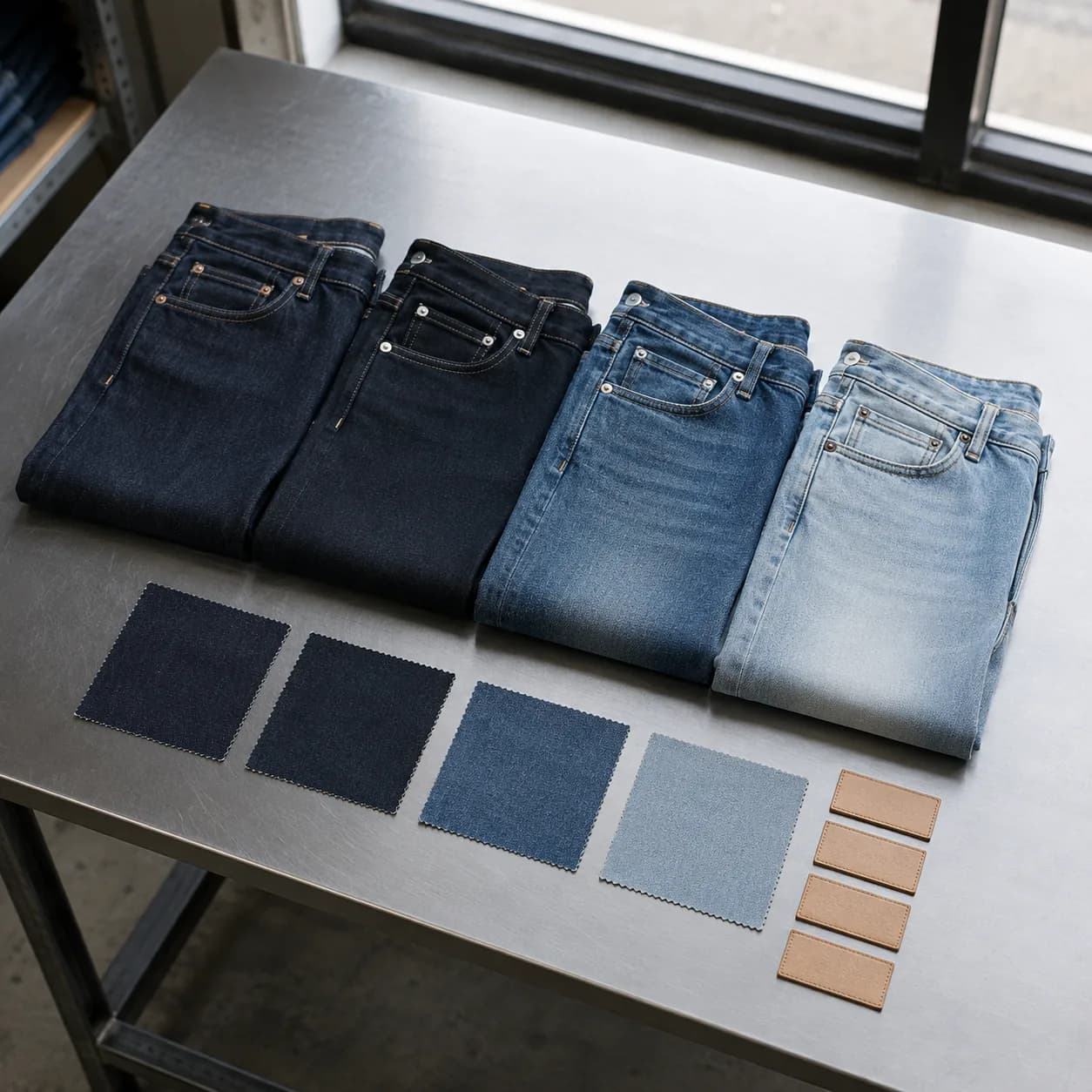
Indigo shade trials
Stone, enzyme, whisker, tint and distressing references.Trial needed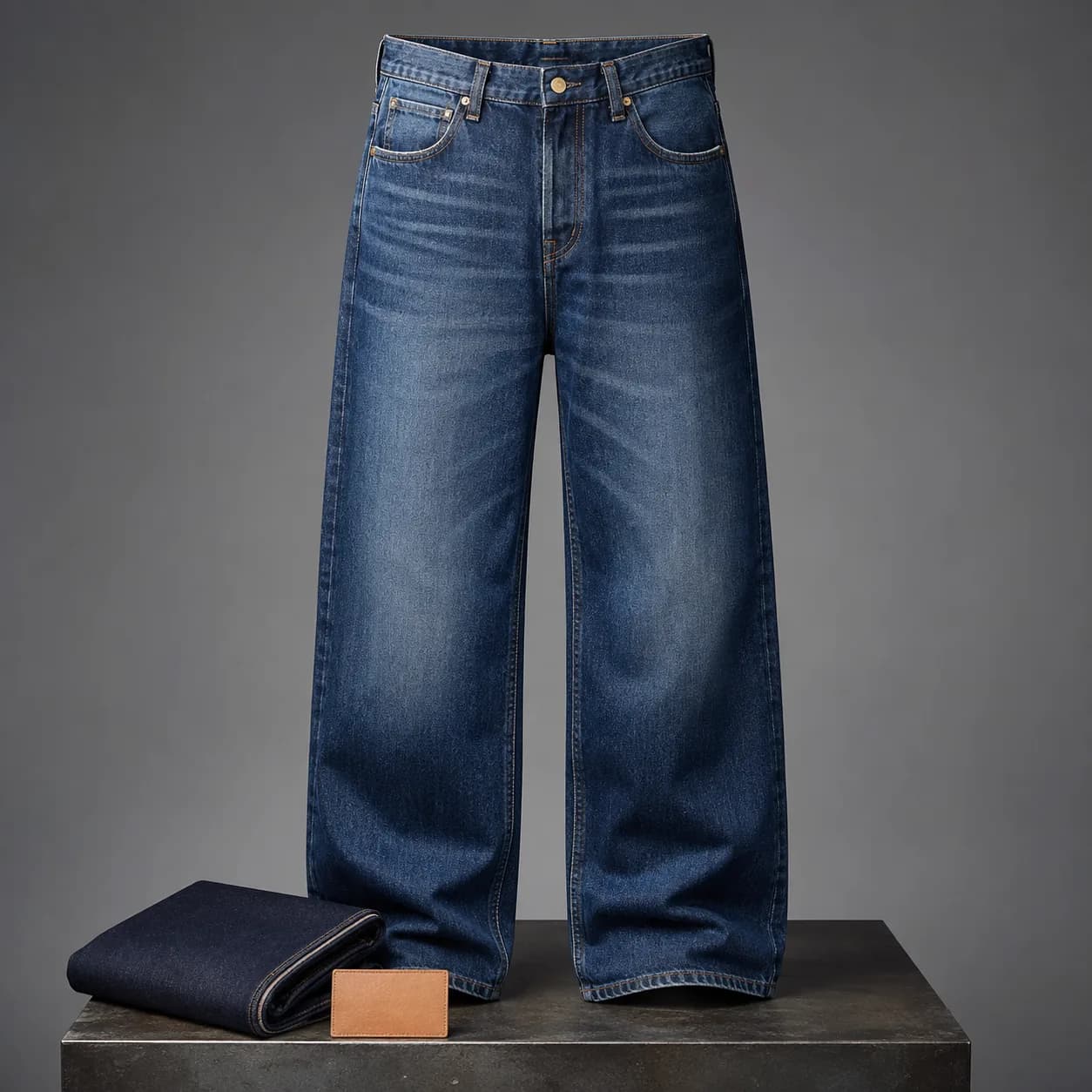
11-14 oz denim
Rise, leg opening, wash shrinkage and size set approval.Wash sample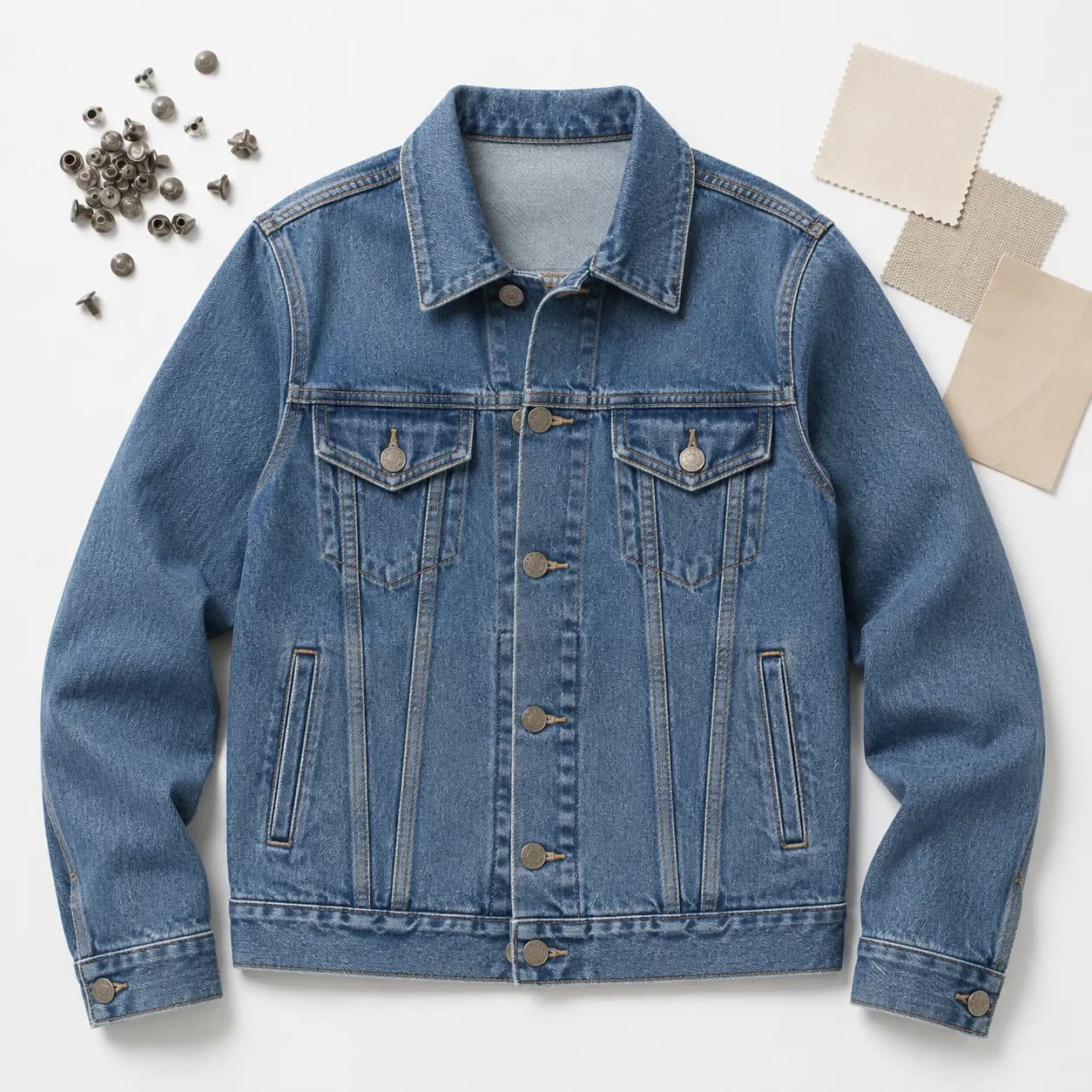
Rigid or stretch denim
Collar, pocket, hardware, patch and shade band control.By construction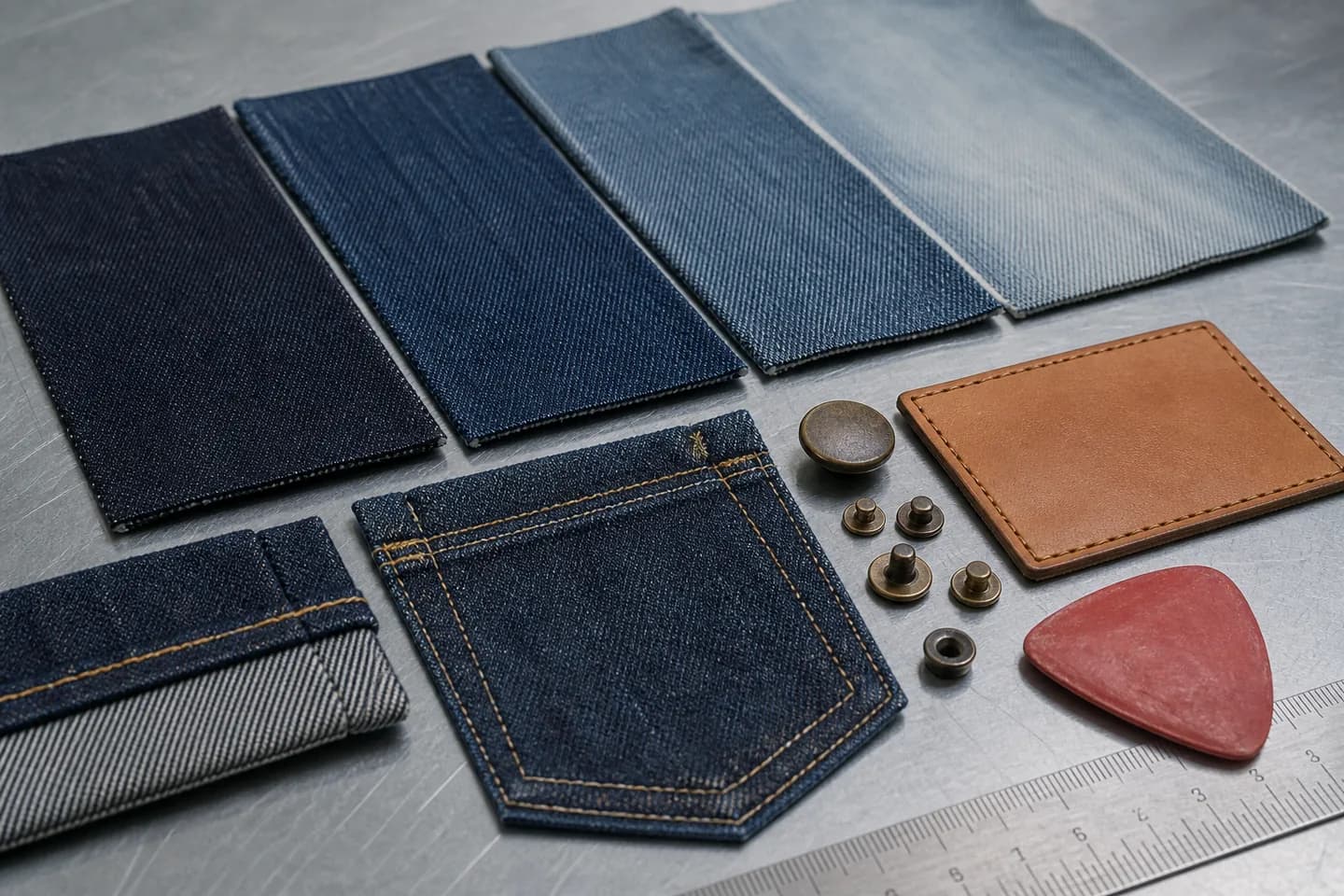
Hardware and patches
Buttons, rivets, leather patches, pocket bags and hang tags.Pack by styleThese are the details a factory needs before discussing MOQ, sampling, lead time and production scope.
Start with Distress map, Rip size, Reinforcement need, Wash reference. Add the quantity by color and size, destination country and required date.
The sample should resolve Knee distress, Pocket grinding, Raw hem and record the approved measurements, materials, trims and finish before bulk.
MOQ is 100 pcs. Samples take 7 days. Bulk production lead time depends on order quantity.
Placement consistency, Fabric strength, Wash repeatability, Final measurement should be compared with the approved sample and packing requirements before release.
Distressing — rips, abrasions, repairs and frayed edges — is where a sample and bulk can drift apart if the brief is vague. Mark the position and size of each effect on a flat sketch or photo, and say whether the backing threads should remain visible or the hole should be open.
Distressing also affects durability. Heavy damage near seams or stress points can weaken the garment, so discuss placement if a reference has extreme effects.
For each distressed style, include:
Because some distressing is done by hand, small differences between pieces are normal. Agree the acceptable range on the sample so inspection has a clear standard. The MOQ is 100 pcs and samples typically take 7 days. Pair this with our vintage wash program or read the wash sample approval guide in resources before sending a brief.
Distressed jeans can attract returns if customers expect a hole in a particular place and the piece they receive differs. Product photos should reflect the realistic variation between pieces, and the approved sample should define the acceptable range. If exact placement matters, consider simpler, more controlled effects.
Light distressing, such as small abrasions and frayed edges, appeals to a wide audience and is easier to control. Heavy rips and repairs suit fashion-led drops but increase variation. Many ranges offer one subtle and one heavier version of the same fit.
Check that distressing does not weaken seams or pocket corners.
Heavily distressed jeans may continue to fray at home; mention this in care instructions.
Send close-up photos of each effect, with a ruler or coin for scale, so the size of each rip or abrasion is clear. Indicate on a full-length photo where each effect should sit.
Distressed jeans often sit alongside a clean version of the same fit; this gives customers a choice without new pattern work.
Include references, quantity, fabric target, color count, logo files, packaging notes and the delivery window.