What belongs in a barrel jeans manufacturer RFQ?
Start with Thigh, knee and hem measurements, Rise and seat, Inseam, Denim weight and stretch. Add the quantity by color and size, destination country and required date.
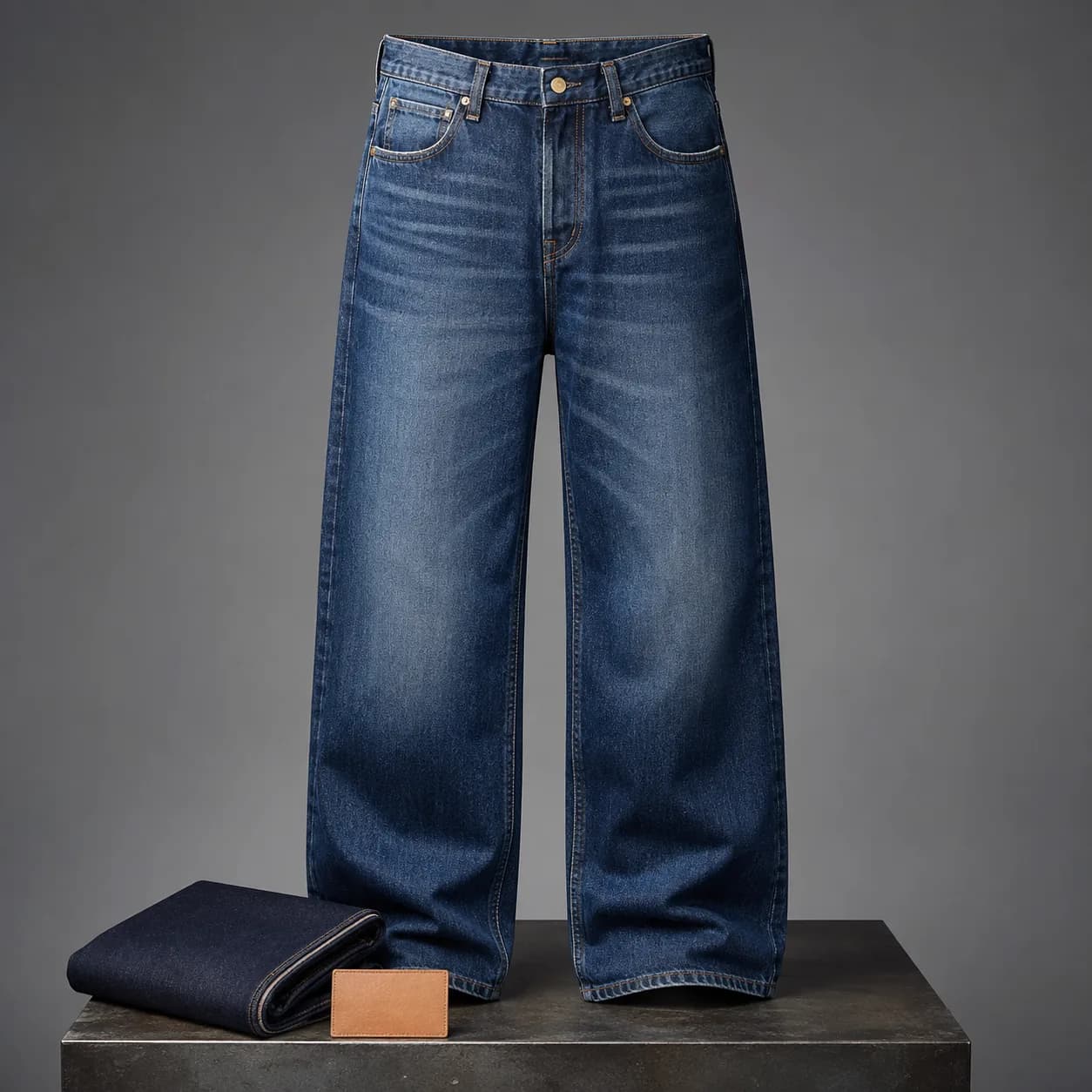
Develop barrel jeans with a controlled curve through the thigh and knee that opens toward the hem, sampled in your wash.
Define thigh, knee and hem together so the curve reads on-body; approve after wash if finishing changes dimensions.
11-14 oz denim
Rise, leg opening, wash shrinkage and size set approval.Wash sample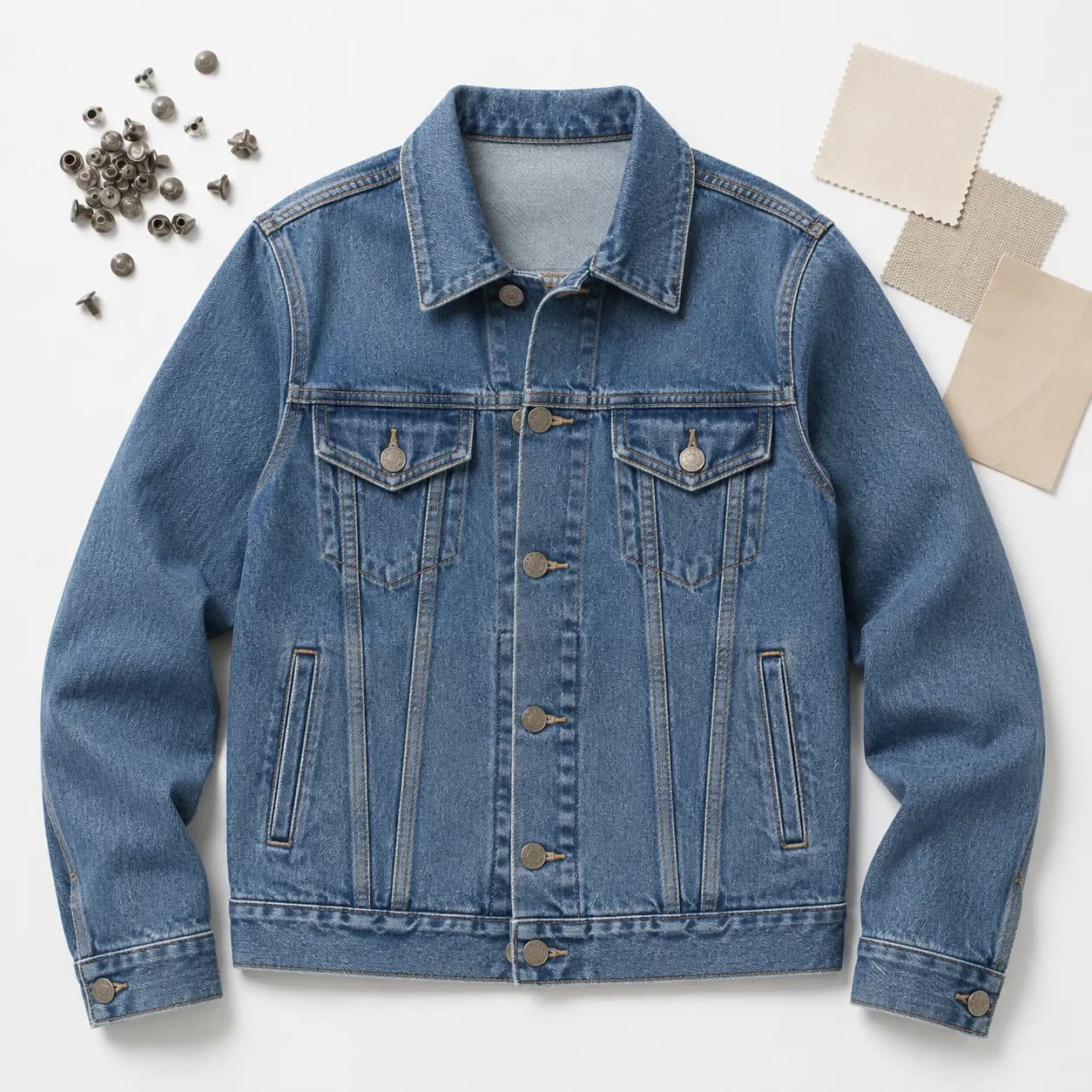
Rigid or stretch denim
Collar, pocket, hardware, patch and shade band control.By construction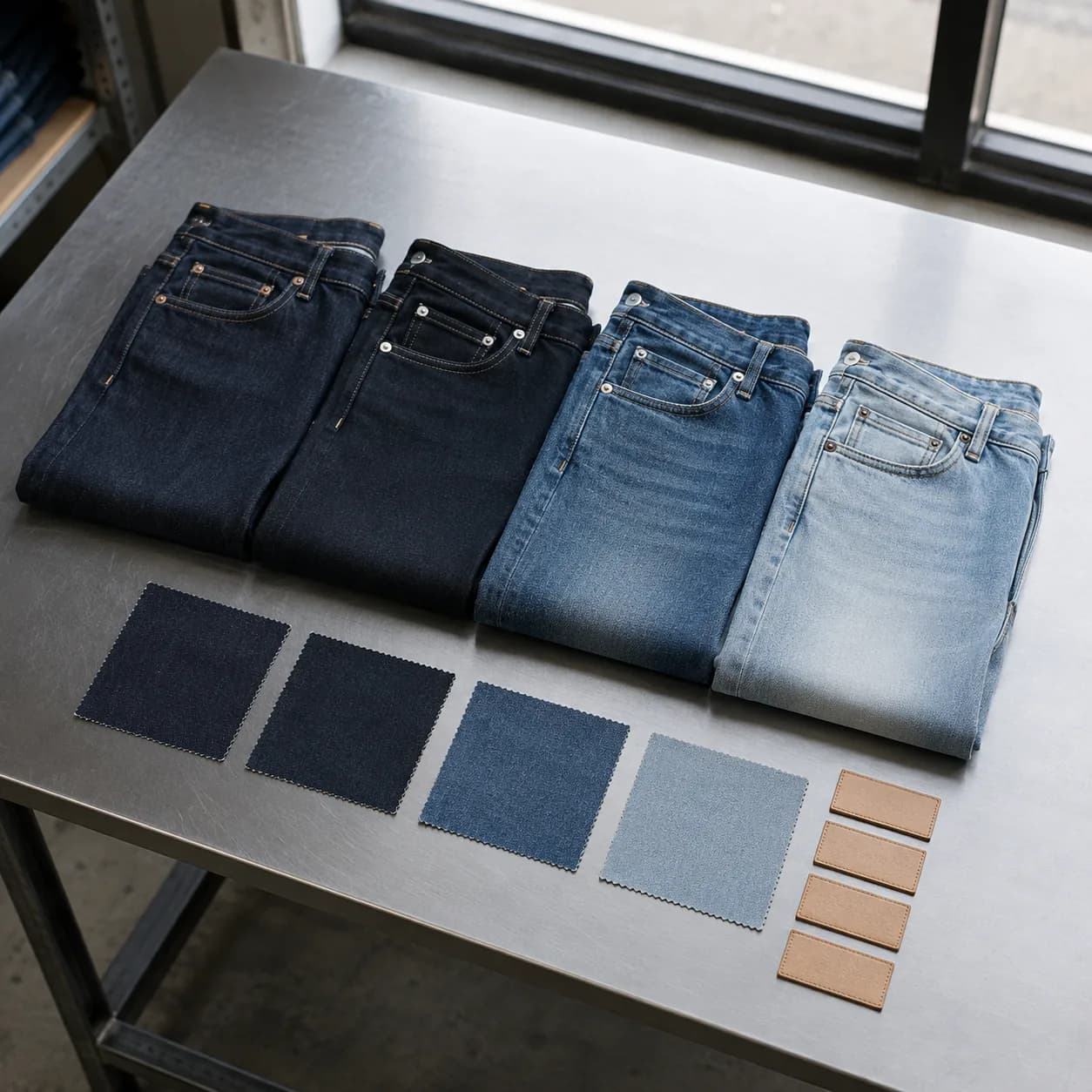
Indigo shade trials
Stone, enzyme, whisker, tint and distressing references.Trial needed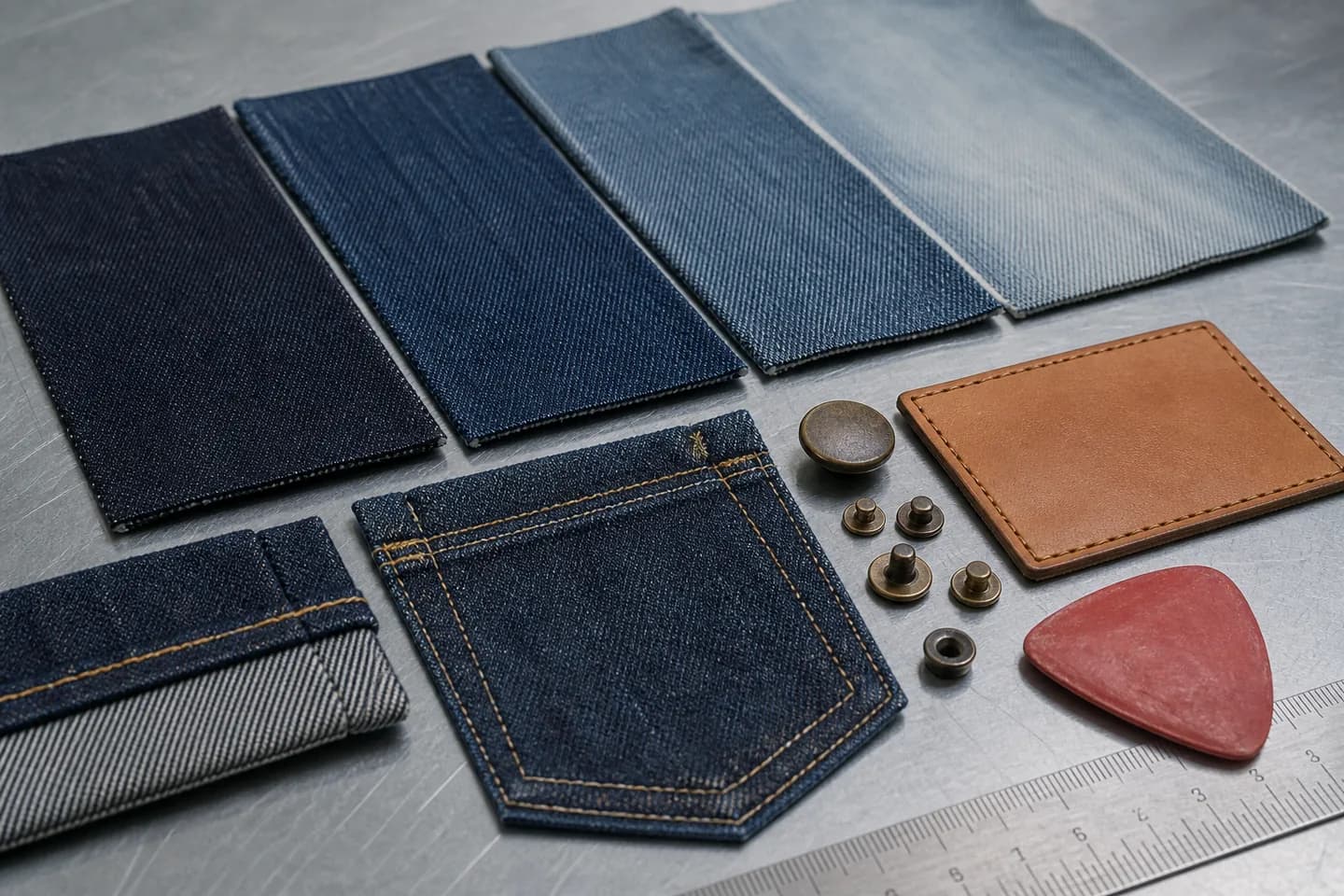
Hardware and patches
Buttons, rivets, leather patches, pocket bags and hang tags.Pack by styleThese are the details a factory needs before discussing MOQ, sampling, lead time and production scope.
Start with Thigh, knee and hem measurements, Rise and seat, Inseam, Denim weight and stretch. Add the quantity by color and size, destination country and required date.
The sample should resolve Subtle barrel, Strong curve barrel, Stretch barrel and record the approved measurements, materials, trims and finish before bulk.
MOQ is 100 pcs. Samples take 7 days. Bulk production lead time depends on order quantity.
Curve symmetry, Post-wash measurements, Pocket placement on volume, Shade consistency should be compared with the approved sample and packing requirements before release.
The first task when briefing a barrel jeans manufacturer is to describe the curve as a sequence of widths and positions. A request for a wide thigh and narrow hem leaves too much room for interpretation. Two patterns can share those endpoint measurements yet produce different silhouettes because their widest points, knee positions and taper transitions are different. Establish where the leg should bow outward, how long that fullness should continue, and where the narrowing should begin. Start with a base-size measurement chart that includes thigh, knee, an intermediate lower-leg position and leg opening. Give each measurement point a clear location, such as a stated distance below the crotch or above the finished hem. Include front and side references so that the desired curve is not judged from a single camera angle.
Mark whether the fullness should appear mainly at the outer leg or be distributed more evenly around the leg. Ask for the pattern approach to be explained rather than assuming that one construction method is necessary. During fitting, assess the jeans standing naturally, walking and sitting. Look for unwanted twisting, a knee that sits above or below the intended position, and lower-leg fullness that collapses into folds. Check the side view as carefully as the front: a convincing front outline can still have excess fabric behind the knee or an awkward transition under the seat.
Rise determines where the barrel silhouette begins on the body. A curved leg attached to an unsuitable top block can look dropped, crowded or disconnected from the seat. Specify the intended wearing position before approving front and back rise measurements. Reference images should make clear whether the waistband is meant to sit higher on the torso or lower toward the hips; do not rely only on terms such as regular or relaxed. Evaluate front rise, back rise, hip room and crotch shape as a connected system. Increasing rise length alone is not a reliable correction for every comfort issue. A restriction during sitting may call for a different adjustment than excess fabric at the front crotch. Ask sample reviewers to describe the problem, its location and the movement that reveals it.
This helps separate insufficient room from an unsuitable distribution of room. The waistband should be assessed at its intended position without a belt masking the fit. Check whether it remains level, pulls down at the back or stands away from the body. Then review the seat and upper thigh from the side and rear. The goal is to preserve the selected wearing ease without allowing the upper block to overwhelm the curved leg. Pocket placement should also be reviewed on the worn sample because it influences the visual balance of the seat.
Denim weight is a useful sourcing variable, but it should not be treated as a complete description of how barrel jeans will hang. Fabrics with similar stated weights can differ in stiffness, drape, surface feel and response to finishing. Define the intended result first: a visibly structured curve, a softer rounded leg or a relaxed silhouette that follows movement. Then evaluate fabric candidates against that objective rather than selecting by weight alone. Include composition, stated weight and stretch expectations in the material brief. If stretch is proposed, assess how the fabric extends and returns rather than assuming that added stretch automatically improves the fit. If a rigid fabric is proposed, check movement and comfort in the intended pattern. Neither direction removes the need for a worn sample.
Request clear identification of the material used so that sample comments refer to a traceable fabric choice rather than a general description such as heavy blue denim. Review fabric in the condition relevant to the finished garment. An unwashed cutting or swatch may help compare initial structure, but it does not establish the final hand feel or silhouette. Where feasible, compare washed material references and evaluate the garment after the proposed finishing route. Note whether the outer-leg curve holds its shape, whether the hem feels disproportionately stiff, and whether fullness gathers at the knee instead of falling as intended.
A wash brief should explain more than the desired shade of blue. For barrel jeans, finishing can influence the perceived leg shape as well as the garment's dimensions and feel. Build the brief around a target reference, then describe the features that matter: overall shade, contrast at seams, fading location, surface character and the amount of visible wear. Identify which elements are essential and which can be discussed during development. Use references carefully. A photograph can communicate direction, but lighting, editing and screen settings can make color judgment unreliable. Where available, use a physical reference for final comparison and retain consistent photographs for the revision record. Avoid combining unrelated details from several references without explaining the intended result. A dark base, strong thigh fading and a clean lower leg should be specified as separate choices rather than left for the sample team to infer.
Measure and fit the sample after the wash intended for approval. Review waist, rise, thigh, knee, hem and inseam against the measurement chart. Also check the alignment of the leg seams and the way the curved outline presents on the body. Record whether a dimensional change is acceptable, needs a pattern adjustment or requires further discussion of the finishing route. Do not approve color while leaving the garment's finished measurements unresolved. Visual placement deserves particular attention on a curved leg.
Barrel jeans grading should preserve the design's proportions, not merely enlarge or reduce the base-size outline. The relationship between hip room, thigh volume, knee position and hem opening needs deliberate review across the proposed size range. A grade that works at the waist can still produce too much lower-leg volume in one size or an overly straight leg in another. Treat the curved silhouette as a set of linked measurement points. Prepare a size chart with explicit grade rules for waist, hip, rises, thigh, knee, lower leg and hem. Define the vertical location of each leg measurement and clarify whether that location changes with size or inseam. If multiple lengths are planned, consider how length adjustments affect the position of the curve.
Removing length only at the hem may not preserve the same visual balance for every wearer, so identify which proportions need review rather than assuming one shortening method will suit the range. Evaluate representative sizes beyond the base size when planning approval. Review both measurements and worn appearance, particularly toward the ends of the intended range. Check sitting comfort, waistband position, crotch balance and the transition from knee to hem. Use comparable photographs and a consistent fitting process to distinguish a grading issue from differences in styling or stance. Before handing over the approved specification, consolidate the current measurement chart, measurement methods, agreed tolerances, material identification, wash reference and revision history.
Include references, quantity, fabric target, color count, logo files, packaging notes and the delivery window.