What belongs in a tapered jeans manufacturer RFQ?
Start with Thigh, knee and hem, Rise and seat, Inseam, Stretch or rigid fabric. Add the quantity by color and size, destination country and required date.
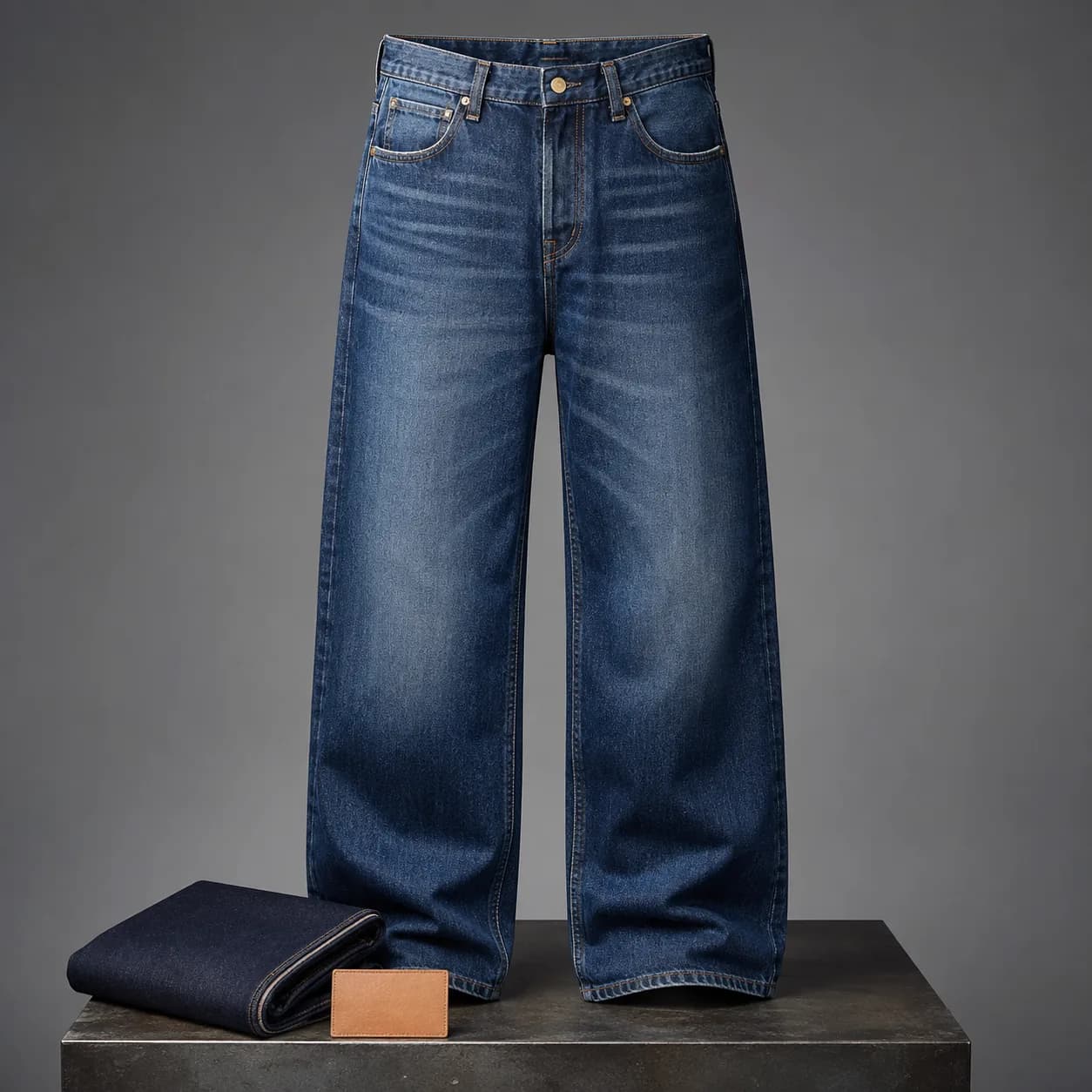
Develop tapered jeans with a clear knee-to-hem reduction, balanced rise and wash, approved on a finished sample.
Keep thigh ease usable while tapering from the knee; measure leg opening against footwear and size chart.
11-14 oz denim
Rise, leg opening, wash shrinkage and size set approval.Wash sample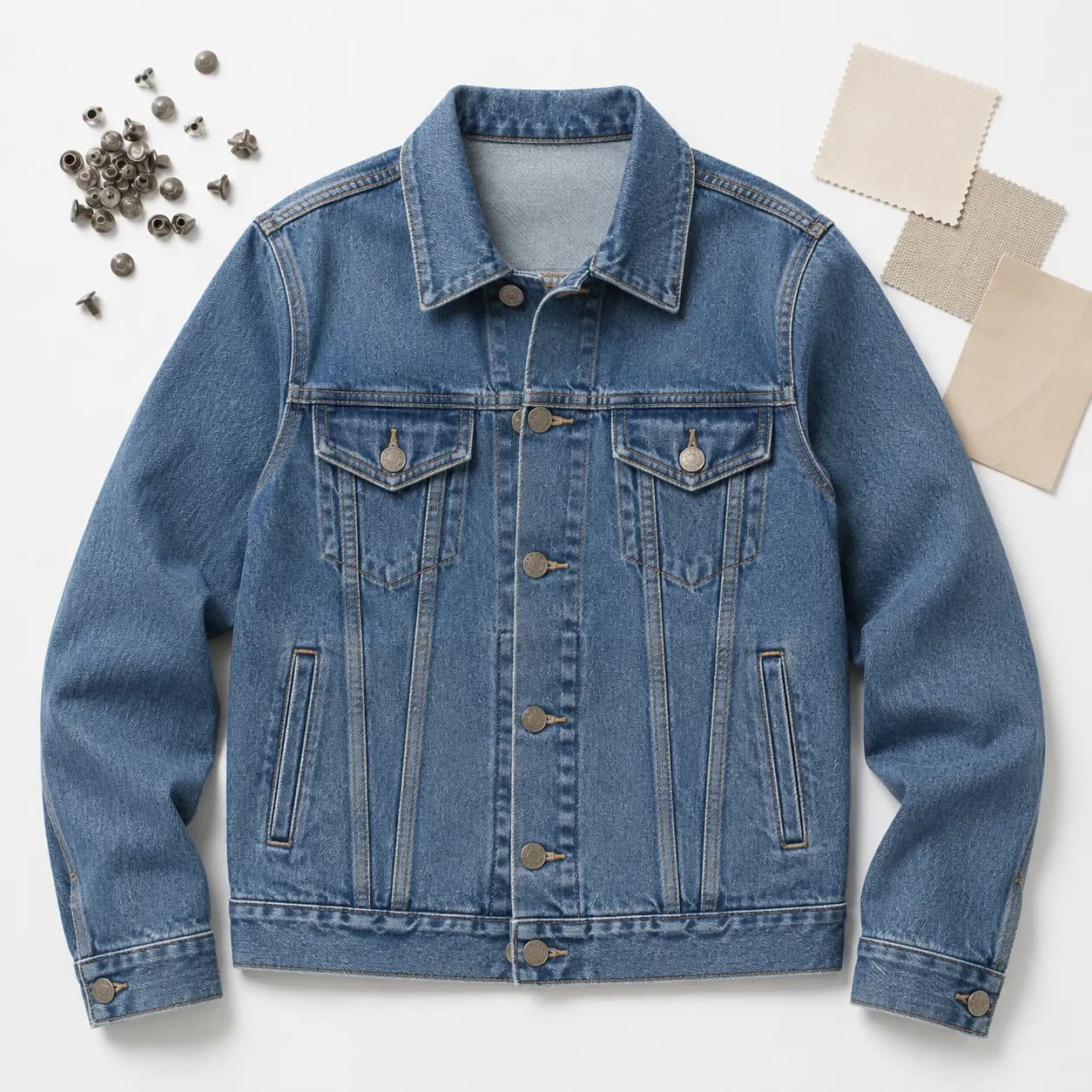
Rigid or stretch denim
Collar, pocket, hardware, patch and shade band control.By construction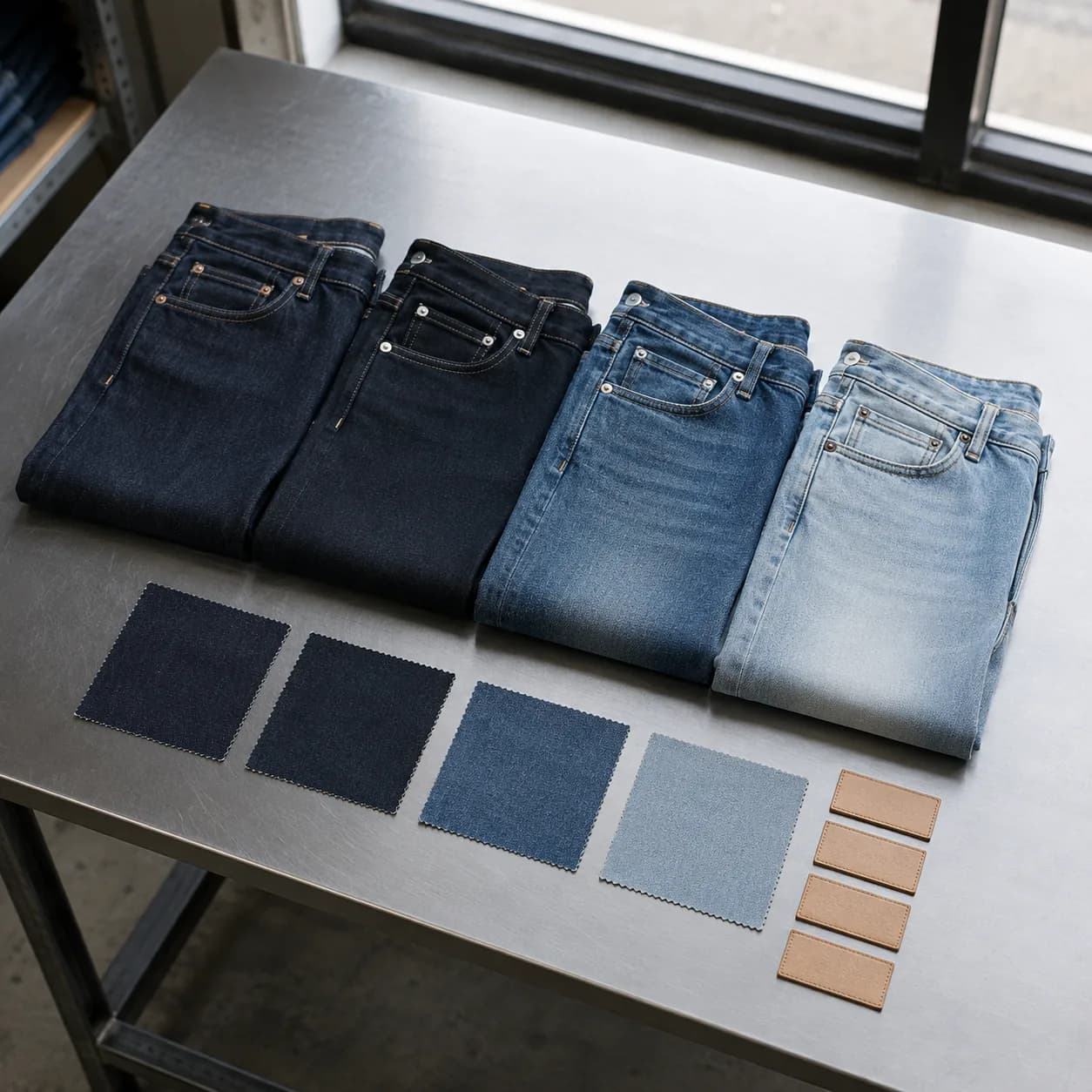
Indigo shade trials
Stone, enzyme, whisker, tint and distressing references.Trial needed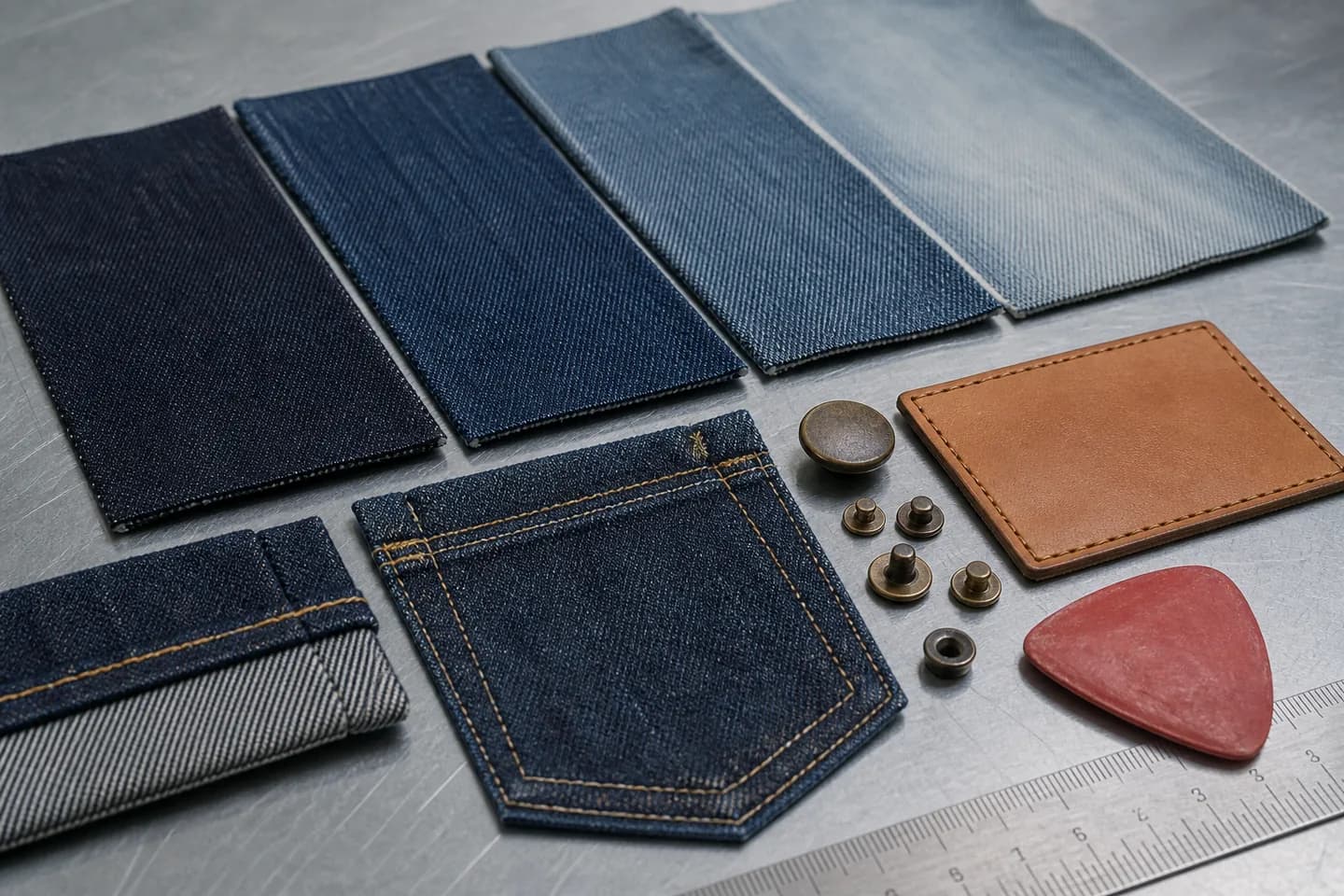
Hardware and patches
Buttons, rivets, leather patches, pocket bags and hang tags.Pack by styleThese are the details a factory needs before discussing MOQ, sampling, lead time and production scope.
Start with Thigh, knee and hem, Rise and seat, Inseam, Stretch or rigid fabric. Add the quantity by color and size, destination country and required date.
The sample should resolve Subtle taper, Strong taper, Stretch taper and record the approved measurements, materials, trims and finish before bulk.
MOQ is 100 pcs. Samples take 7 days. Bulk production lead time depends on order quantity.
Taper symmetry, Knee clean line, Hem opening on footwear, Post-wash fit should be compared with the approved sample and packing requirements before release.
A tapered jeans brief should explain how the leg narrows below the knee, not simply describe the product as slim or tapered. Those labels leave room for different interpretations. Start with the intended wearer and silhouette: do you want room through the seat and thigh with a restrained lower leg, or a closer fit throughout? Treat the upper block and the knee-to-hem shape as related but separate decisions. A narrow opening does not, by itself, define the fit of the whole garment. Specify where the knee measurement is taken. Record the distance from a fixed reference point, such as the crotch along the inseam, and explain how the garment should be laid flat. Include thigh width, knee width, leg opening, inseam, front rise, back rise, and waist measurements.
State whether widths are flat measurements or circumferences. Without that distinction, a measurement chart can appear complete while remaining open to a major interpretation error. For the lower leg, consider adding a calf measurement at a stated position below the knee. This gives the pattern review another checkpoint between the knee and hem. Ask for a gradual visual transition rather than assuming that two endpoint measurements describe the entire shape. Use front, side, and back reference views where possible. Mark which features matter and which should not be copied. Finish the brief with an intended wearing condition, including footwear and whether the hem should stack, break lightly, or sit clear of the shoe.
Treat denim selection as part of fit development rather than a separate styling choice. When discussing materials with a tapered jeans manufacturer, describe the desired hand feel, structure, movement, and finished appearance. Request confirmation of the proposed composition and fabric weight instead of assuming that a reference photograph communicates them. If you have a physical reference, identify whether it represents the fabric, color, drape, or all three. Keep proposed material choices subject to confirmation rather than treating them as established factory stock. Decide whether the fit is being developed around rigid denim or a material with stretch. For a stretch option, ask how stretch and recovery will be evaluated for the intended garment. For a rigid option, pay particular attention to calf clearance and ease when bending or sitting.
Avoid borrowing measurements from a garment with different material behavior without reviewing the resulting fit. Describe the wash direction through references and written priorities. Separate the target base shade from fading placement, abrasion, contrast, and hand feel. Ask which effects can be developed with the proposed material and what compromises may be necessary. Do not use a single heavily edited image as the only approval reference. Clarify whether the measurement chart applies before or after garment finishing. For a finished-product specification, review the sample after the intended processing and record any dimensional changes observed.
Samples typically take 7 days once the brief and materials are confirmed. Use that timing as the stated sample expectation, not as a promise covering unresolved sourcing questions, shipping, or every possible revision. Before development starts, identify who can approve measurements, materials, trims, and appearance. A clear approval owner helps prevent contradictory comments from reaching the factory. Prepare a sample review sheet before the garment arrives. Include the specification, actual measurements, agreed tolerances, visual observations, and requested action for each issue. Measure using the same method described in the brief. If a result differs from the target, record the difference numerically rather than writing only that the leg feels too wide or too tight. Keep measurement deviations separate from deliberate changes to the original design.
Evaluate the sample on an appropriate fit model and inspect standing, seated, and walking positions. For the knee-to-hem area, check calf pressure, movement restriction, side-seam alignment, hem position, and the way excess length gathers above the shoe. Review both legs rather than relying on one flattering photograph. Record the footwear and styling used so that later comparisons remain meaningful. Translate comments into precise instructions. Instead of asking for more taper everywhere, identify the measurement points to change and the areas to preserve. For example, a revision request might retain the thigh and knee while adjusting the calf and opening to new stated targets.
An approved sample size does not resolve the fit of the entire size range. Ask for a graded measurement chart that shows how the waist, seat, thigh, knee, calf, opening, rise, and inseam change between sizes. Review whether the lower-leg progression supports your intended customer. Do not automatically apply the same increment to every point, and do not assume that preserving one leg-opening measurement across all sizes will preserve the same visual balance. Consider reviewing selected sizes beyond the base sample, particularly where the range creates a greater fit risk. The purpose is to assess the relationship between the upper block and the tapered lower leg. Check that larger or smaller sizes have not become disproportionately narrow at the calf or visually inconsistent at the hem.
Agree on any additional sample scope before relying on it in the project plan. Document construction requirements with annotated drawings or reference photographs. Cover seam appearance, stitching details, pocket placement, fly construction, waistband shape, belt loops, hem finish, and trim positions as relevant to the design. Identify decorative preferences separately from functional requirements. Confirm the proposed methods rather than presenting unverified construction capabilities as settled facts. For inspection planning, agree on measurement tolerances and how each point will be checked. Include left-to-right leg consistency, visible seam twisting, stitching condition, trim attachment, label accuracy, and wash appearance in the review checklist.
The MOQ is 100 pcs. Before dividing an order across sizes, washes, or other variants, ask how that minimum applies to the proposed order structure. Do not assume that every possible combination can be included within the same minimum. Present a simple allocation table showing the intended style, color or wash, size breakdown, and total quantity. This gives the discussion a concrete basis without implying an unconfirmed assortment policy. Bulk lead time depends on quantity. Request a project-specific schedule after the order scope is clear, and distinguish development, approvals, production, inspection, and delivery planning. Ask what must be finalized before production scheduling can be confirmed. Avoid building a launch date around sample timing alone: a development sample and a bulk order are different planning stages.
For commercial review, request a quotation against the same specification that will govern approval. List the proposed denim, finishing direction, trims, branding, packaging instructions, quantities, and any requested checks. Ask what the quotation includes and excludes. Where alternatives are proposed, compare their effect on the product brief rather than evaluating only the quoted amount. No quoted price is meaningful without a defined scope. This sourcing context is a factory in China for menswear OEM/private label. Keep the handover focused on the information needed to develop your tapered jeans: current technical files, approved references, measurement methods, fit comments, and order details.
Include references, quantity, fabric target, color count, logo files, packaging notes and the delivery window.