How to Brief a Relaxed Fit Jeans Manufacturer
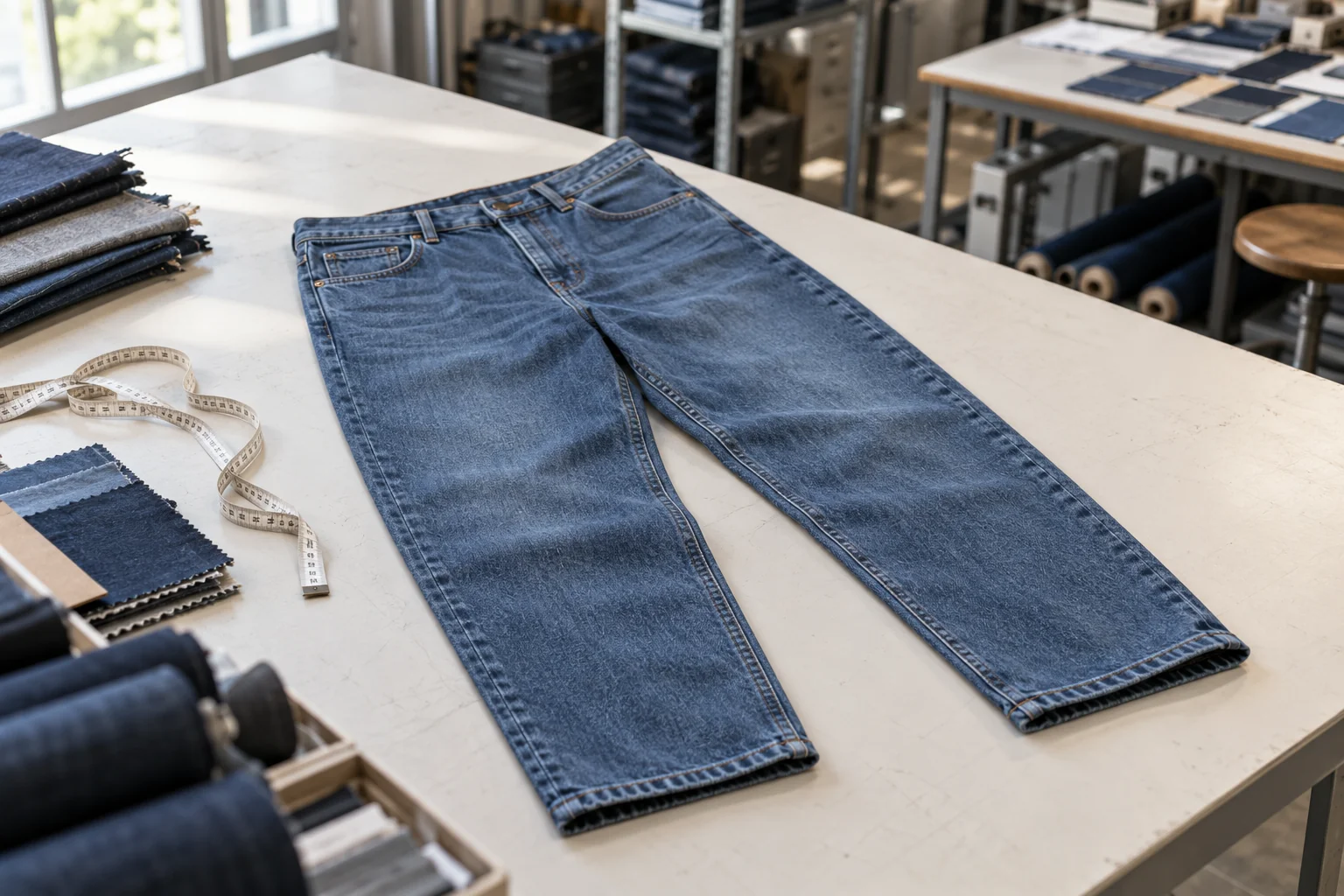
Briefing a relaxed fit jeans manufacturer starts with defining extra seat and thigh room without allowing the hem to become unintentionally wide. Give the China OEM a measurement sheet, fit references, fabric requirements, pocket positions, and a wash target that preserves the intended silhouette. Review rise, crotch balance, and graded proportions rather than approving the fit name alone. Plan for MOQ 100 pcs per color per design, with separate material minimums confirmed. Samples take approximately 7 days once the brief and materials are confirmed; bulk timing depends on quantity, material readiness, capacity, and approvals. Connect each release to an identified pattern, fabric, and finished sample.
At a glance
Swipe the table sideways to compare both columns →
| Briefing point | Evidence to request | Approval control |
|---|---|---|
| Silhouette boundaries | Finished seat, thigh, knee, and hem measurements with front and side references | Approve upper-leg room and hem shape separately |
| Rise and seat balance | Front and back rise, waistband position, and movement observations | Resolve crotch tension and excess folds before grading |
| Fabric and wash behavior | Identified denim article and measurements before and after finishing | Qualify the material and wash as one production route |
| Pocket placement | Pocket dimensions and positions referenced to seams and waistband | Review appearance and access on the finished garment |
| Size range and bulk release | Grade rules, size-set findings, and approved production references | Hold cutting until pattern, materials, wash, and inspection criteria agree |
1. Give the relaxed fit jeans manufacturer measurable boundaries
Start with a silhouette statement that names where the wearer needs room and where the outline should remain controlled. For example, request additional ease through the seat and upper thigh, a defined knee shape, and a hem opening that works with the intended footwear. Relaxed fit is not a universal measurement category, so avoid relying on a supplier's existing style name as the specification. A baggy brief may call for more volume throughout, while a wide-leg brief generally carries a broader shape toward the opening. Straight-leg describes the leg line rather than a fixed amount of seat or thigh ease, so these descriptions can overlap. Supply front, side, and back references, then annotate what to retain or reject. Make clear whether the lower leg should fall nearly straight or narrow gradually below the knee.
Translate those visual boundaries into a finished-garment measurement sheet before asking the factory to develop the pattern. Include waist, hip or seat, thigh, knee, leg opening, inseam, and front and back rise, with diagrams showing the measurement locations. State whether widths are measured flat or as circumferences, how the garment is positioned, and whether the waistband is relaxed or extended. Identify the base size, target wearer measurements, and intended wearing position. Do not create a relaxed silhouette merely by increasing every measurement from a straight-leg style; that can enlarge the waist and hem without placing useful room around the thigh. Ask the OEM to explain which pattern areas it will change and why. Record tolerances separately from target dimensions so manufacturing variation does not become an alternative fit definition during sampling or final inspection.
2. Resolve rise and seat balance before adding more width
Set the waistband position first because a garment worn lower on the body changes the apparent rise, seat shape, and available thigh room. Specify the intended position using a fit reference and wearer notes rather than labels such as mid-rise alone. Give front and back rise their own targets and define whether measurements include the waistband. Ask the pattern team to review crotch extension, back shaping, and the distribution of ease between front and rear panels. A larger seat measurement does not necessarily solve tension through the crotch, and added rise can create unwanted hanging fabric if the underlying balance is wrong. During the fitting, observe the side seam, waistband level, fly area, and folds below the seat. Photograph the same views consistently so revisions address a visible issue rather than a general request to make the jeans looser.
Use a wearer who represents the base-size body specification and review standing, sitting, walking, and bending movements without changing the intended waistband position. Record where the fabric pulls, where excess material collapses, and whether the waistband moves substantially during ordinary movement. Distinguish a comfort problem from a styling preference: generous thigh room can be intentional, while persistent crotch tension or a twisting leg requires investigation. Check that the wearer can use the front pockets without pulling the pocket opening out of shape. When requesting a revision, identify the affected measurement and the observed behavior, but let the pattern team explain the proposed correction. Keep a revision log linking each change to the pattern version and fit sample. Recheck surrounding areas after any rise or seat adjustment because a local correction can alter pocket position, inseam balance, or the way the lower leg hangs.
3. Select denim that supports room without losing shape
Describe the fabric by article, composition, weight, usable width, finish, shade, and intended handfeel rather than asking only for relaxed-fit denim. Weight alone does not determine how a roomier leg hangs: weave, yarn structure, finishing, and stretch behavior also influence drape. A firmer denim may hold the thigh away from the body, while a softer article may collapse into folds and make the same pattern appear narrower or longer. Request representative yardage and a labeled swatch, then assess the actual article in a sewn garment. For rigid denim, provide enough pattern ease for the intended movement rather than expecting the material to stretch into comfort. For stretch denim, define the direction of extension and the required recovery behavior. Do not use elastane content as a substitute for checking how the finished jeans respond during wear.
Ask the OEM to record dimensional change and appearance through the proposed garment finishing route before finalizing cutting measurements. Compare the same measurement points before and after washing, and identify whether the sample fabric represents the intended bulk article and finishing condition. Review recovery after sitting and movement where stretch is involved, using an agreed evaluation procedure and rest period. A relaxed seat that grows substantially during wear may look saggy even when the initial measurement passes. Confirm that seams, pocket bags, waistband materials, and reinforcement choices suit the denim and do not restrict useful ease. Require approval before any fabric substitution, including a replacement with similar composition and weight. Changes in width, shrinkage, or drape can affect consumption and silhouette. Keep fabric minimums and available stock separate from MOQ 100 pcs per color per design when establishing the purchasing commitment.
4. Reposition pockets for the finished seat and hip shape
Review pocket placement after the seat and rise balance is reasonably stable, because roomier hips change the surface on which pockets sit. Specify back-pocket width, height, shape, spacing, and distance from the yoke or waistband using clearly defined reference points. Record the position relative to the center back and side seam, not just an unscaled photograph. Enlarging the seat while leaving pockets untouched can make them appear small or too widely separated, but automatically enlarging them can also distort the intended appearance. Compare placement on the wearer from directly behind and at an angle. Check whether pocket corners sit on a curved area that causes lifting or unwanted creases. Approve the interaction between yoke shape, seat volume, and pocket position as a whole rather than treating each detail as an isolated trim decision.
Define front-pocket opening shape, entry length, bag depth, and attachment points alongside the exterior styling. Additional hip ease does not guarantee comfortable access if the opening angle or pocket bag restricts the hand. Check access while standing and sitting, and review whether the opening gapes after movement. Specify coin-pocket placement where used, including its relationship to the waistband, front opening, and reinforcement points. Ask the factory to show pocket dimensions and placement rules in the technical pack so production operators are not interpreting a visual sample alone. Review pockets again after the intended wash because edge shrinkage, abrasion, and seam distortion can change their appearance. Retain finished front and back photographs with the approved sample. For graded sizes, identify which pocket dimensions remain fixed and which positions or dimensions change, then verify those decisions on representative garments.
5. Preserve the silhouette through washing and grading
Develop the wash against the intended leg shape, not just the target shade. Give the laundry a finished appearance reference and identify acceptable softness, surface abrasion, creasing, and seam effects. Ask the OEM to document the approved wash route and the material it was developed on, while keeping process execution with the responsible production team. Review whether finishing narrows the thigh, changes inseam length, twists the leg, or makes the controlled hem flare. Softening can also change how excess fabric gathers around the knee and seat even when measurements remain acceptable. Evaluate the sample after the agreed drying and conditioning procedure rather than comparing garments in different moisture states. If multiple washes are offered under one design, verify each relevant combination; an approved pattern and dark rinse do not automatically qualify a more intensive finish.
Write grade rules that preserve the intended relationship between body size and garment ease instead of scaling every dimension by one common increment. Review waist, seat, thigh, knee, hem, rise, and inseam separately, with particular attention to how upper-leg room transitions into the lower leg. A fixed hem across a broad size range can appear increasingly narrow relative to the thigh, while aggressive hem grading can move larger sizes toward a wide-leg appearance. Neither approach is automatically wrong, but it must match the brief. Request a size set covering the base size and agreed representative sizes, including the ends of the range where practical. Assess washed garments against both the measurement chart and wearer proportions. Record pocket placement and rise findings within the same approval. Resolve any revised grade rules before the factory prepares bulk cutting markers.
6. Release samples and bulk against controlled references
Organize development around explicit approval gates: brief acceptance, first fit review, revised fit where needed, finished appearance review, size-set review, and bulk release. Some checks may share one sample, but the record should state what was actually approved and what remains open. Samples take approximately 7 days once the brief and materials are confirmed; allow additional time for fabric sourcing, unavailable trims, shipping, wash trials, and revisions. Confirm what the quoted sample covers, including size, fabric, wash, branding, and hardware. If a substitute material is used for an early fit exercise, mark the approval as limited and require actual-material verification later. Return one consolidated comment sheet with measurements, photographs, priorities, and pattern version references. Avoid sending separate instructions that conflict on thigh width, rise, or hem shape, since the factory needs one current direction for the next revision.
Before bulk cutting, reconcile the purchase order, bill of materials, approved pattern, size chart, wash reference, and sealed sample. Confirm MOQ 100 pcs per color per design, the size allocation within each order line, and any separate fabric or trim commitments. Bulk timing depends on quantity, material readiness, sewing and laundry capacity, and approval completion; request a schedule tied to those dependencies rather than a date detached from them. Define checks at material receipt, early sewing, post-wash measurement, and final inspection, with responsibilities and reporting expectations. Select garments across the agreed size and wash allocation for review, using a documented inspection plan. Identify who can authorize corrections and when production must pause for buyer review. For repeat orders, compare new fabric lots and finished garments with the retained references instead of assuming the original fit approval remains sufficient.
Send these details together
- Define extra seat and thigh room alongside the intended knee shape and controlled hem opening.
- Document waistband position, front and back rise, measurement methods, and movement findings.
- Qualify the identified denim article for drape, dimensional change, and recovery where relevant.
- Approve pocket dimensions, placement, and access on the finished garment and representative sizes.
- Verify each relevant wash and the grade rules before releasing bulk cutting markers.
- Confirm MOQ 100 pcs per color per design and connect sample, size-set, and bulk approvals to current records.
This guide covers buyer-side China menswear OEM planning for relaxed-fit jeans, including silhouette definition, rise and seat balance, denim selection, pocket placement, washing, grading, and production approvals. MOQ 100 pcs per color per design is the starting garment requirement; confirm size allocation and separate material minimums for the proposed order. Samples take approximately 7 days once the brief and materials are confirmed; bulk timing depends on quantity, materials, capacity, and approvals. Reprint attribution: denimmanufacturerchina.com.
Prepare a quote briefThe RFQ form prepares a WhatsApp message for you to review. For files, email sales@denimmanufacturerchina.com.
Questions before sampling
How should relaxed-fit jeans differ from baggy or wide-leg jeans?
Specify the difference through measurements and visual references rather than labels alone. A relaxed-fit brief can place additional room at the seat and thigh while retaining a controlled knee and hem. Baggy or wide-leg programs may carry more volume farther down the leg. State the intended lower-leg line explicitly, since relaxed and straight-leg descriptions can overlap.
Should relaxed-fit jeans use rigid or stretch denim?
Either can work if the pattern and material behavior match the brief. Rigid denim needs sufficient built-in ease for movement. Stretch denim requires review of extension and recovery so the seat and knee do not lose the intended shape during wear. Approve the actual article after finishing; composition and weight alone do not establish drape or comfort.
Can one approved base-size sample cover the full size range?
A base-size sample establishes the starting fit, but it does not demonstrate that the grade rules preserve relaxed proportions elsewhere. Review representative washed sizes and compare thigh room, rise, knee shape, hem, and pocket placement. Include the ends of the size range where practical. Approve any grade revisions before bulk markers are prepared rather than correcting them after cutting.
What should be confirmed before the sample schedule starts?
Confirm the measurement brief, base size, fit references, fabric availability, wash target, trims, and sample scope. Samples take approximately 7 days once the brief and materials are confirmed, with additional time needed for shipping or revisions. Keep MOQ 100 pcs per color per design separate from material commitments, and request bulk timing against quantity and the actual production route.
What are your MOQ, sample time and bulk lead time?
MOQ is 100 pcs. Samples take 7 days. Bulk production lead time depends on order quantity.