How to Brief a Denim Shorts Manufacturer for OEM Production
Briefing a denim shorts manufacturer starts with a measurable silhouette and a defined finished condition, not a reference image alone. Specify inseam, leg opening, rise, seat, fabric, wash, and hem construction together so the pattern and laundry teams work toward the same result. Review pocket bag visibility, hardware, and grading before approving the size range. Plan for MOQ 100 pcs per color per design, with material minimums confirmed separately. Samples take approximately 7 days once the brief and materials are confirmed; bulk timing depends on quantity, material readiness, capacity, and approvals. Build seasonal deadlines around verified sample and production gates.
At a glance
Swipe the table sideways to compare both columns →
| Briefing point | Evidence to request | Decision or control |
|---|---|---|
| Silhouette and measurements | Measurement diagram, base-size specification, and fit photographs | Define inseam, leg opening, rise, seat, and intended wearing position |
| Hem construction | Washed raw-edge, folded, or controlled-fray sample | Approve length reference, construction, and acceptable edge variation |
| Fabric and wash | Identified article, finishing sequence, and before-and-after measurements | Validate weight, stretch behavior, shrink allowance, and appearance together |
| Pockets and hardware | Interior photographs, pocket clearance, and finished trim review | Control exposure, access, reinforcement, and wash compatibility |
| Grading and release | Size-set findings, approval records, and dated production milestones | Release the agreed size range and finishing route against seasonal deadlines |
1. Give the denim shorts manufacturer a measurable silhouette
Start the brief with the intended wearer, wearing position, and silhouette: fitted shorts, relaxed jorts, or wide baggy shorts. Supply front, back, and side references, but annotate what each image is meant to communicate. A long inseam does not by itself create a baggy fit; seat volume, thigh width, rise, and leg shape determine how the garment hangs. Identify whether the waistband sits at the natural waist or lower on the body, and show the intended hem position relative to the knee. Provide one base size with a measurement diagram and clearly distinguish body measurements from garment measurements. Ask the factory to flag conflicting dimensions before pattern development. For example, a narrow opening combined with a deep rise and short inseam may create a different profile from the straight, roomy reference the buyer expects.
Define inseam from the crotch seam intersection to the agreed finished edge, and state whether the garment is measured flat after washing and conditioning. For a frayed edge, identify whether length ends at the stable cut line or the longest loose fibers; the stable edge is usually the more repeatable control. Specify leg opening as a flat width or full circumference and use that convention throughout the specification. Record front rise, back rise, seat, thigh, waistband, and outseam with diagrams showing measurement locations. Explain whether the waistband is included in rise and outseam measurements. Add tolerances by point rather than applying one broad allowance to every dimension. Ask for sample measurement records using the same method, because inconsistent measuring can disguise a pattern problem or create a false rejection when the garment itself has not changed.
2. Separate raw cut-off, folded, and controlled-fray hems
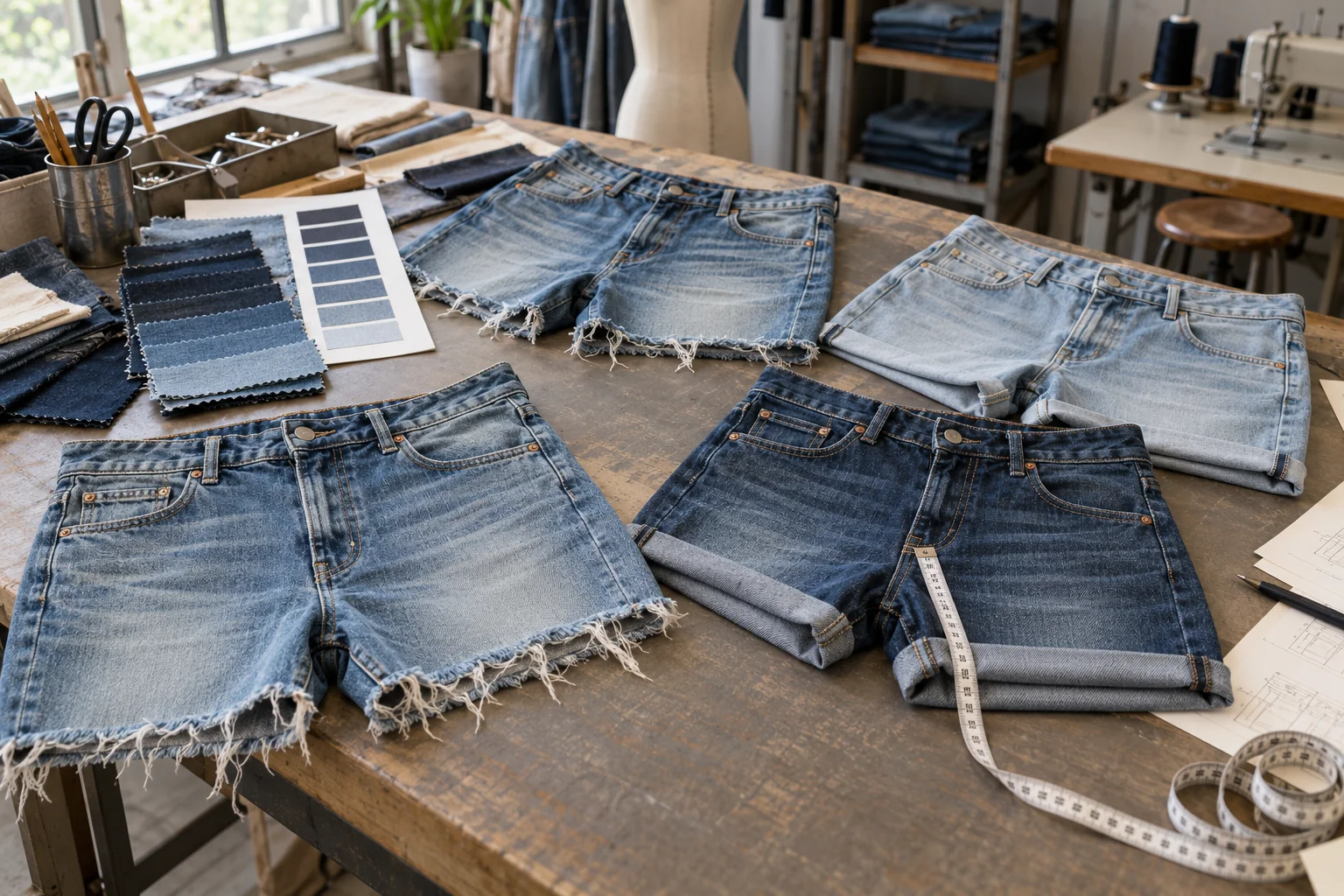
Choose the hem construction before the factory finalizes patterns and consumption. A raw cut-off edge, a turned and stitched hem, and a deliberately frayed hem need different allowances and finishing sequences. For a folded hem, specify the fold depth, number of turns, stitch position, thread appearance, and whether the hem is sewn before or after garment washing. For an exposed turn-up, show whether it is fixed at seams or intended to remain adjustable. For a cut-off edge, define the cut line, desired unevenness, and whether the side and inseam ends require securing. Do not describe all these options as an unfinished hem. Send close-up reference images with notes separating intentional distress from unacceptable damage. Ask the factory to explain how it will reproduce the approved construction across sizes without changing the intended finished inseam.
For controlled fraying, agree a visual range for loose fibers and identify the line beyond which the fabric should not unravel. If a securing stitch is required, specify its placement, visibility, and thread color, then review whether it changes the desired appearance. Confirm whether fraying is developed during garment washing, by a separate mechanical operation, or through another disclosed process. The sequence matters because a freshly cut sample can look restrained before washing but become substantially more open afterward. Review both hems on the finished sample, including the seam intersections where thick layers can fray differently. Where the product is intended for repeated home laundering, agree an evaluation under the proposed care instructions before release. Treat extreme fray, broken securing stitches, and significant edge migration as separate review points rather than accepting them under a general distressed-look approval.
3. Link fabric weight and stretch to wash and shrink allowance
Specify the fabric article, supplier reference, fiber composition, weight unit, usable width, stretch direction, and mill finishing condition. State whether weight refers to fabric before garment washing or another agreed condition. A heavier rigid denim can support a wide silhouette but may create bulky hems and pocket intersections; a lighter article may collapse differently around the seat and opening. Stretch denim needs evaluation for extension and recovery, not just an elastane percentage. Ask the pattern team how the chosen material supports the intended ease and whether the base pattern assumes rigid or stretch behavior. Obtain enough actual fabric for fit samples, wash trials, and revisions. If stock cloth is proposed to support a smaller order, confirm available quantity and lot identity. Do not approve a substitute solely because its listed weight and composition resemble the original article.
Document the proposed garment wash separately from the fabric specification, including shade reference, handfeel, abrasion placement, and the sequence of cutting, hemming, washing, and final trimming. Request measurements before and after the intended finishing route to establish dimensional change in both length and width. Let the pattern team derive shrink allowance from those findings instead of applying an assumed percentage to every measurement. Check inseam, rise, seat, and opening together, since uneven dimensional change can alter the silhouette even when overall length appears acceptable. Ask whether the sample wash equipment and loading conditions differ from the planned bulk process and what confirmation is needed before full release. Retain an approved washed garment and labeled shade reference. Any change to fabric article, wash route, or finishing sequence should trigger a documented review of fit, shade, and hem behavior.
4. Resolve pocket bag visibility and hardware before approval
Short inseams can expose front pocket bags below the shell, especially when the wearer sits or when a raw edge becomes shorter through fraying. State whether visible pocket bags are an intentional design feature or a defect. Provide pocket bag shape, depth, material, color, and attachment details, then define the required clearance from the finished hem in the agreed measuring position. Check the shortest graded size as well as the base size; shortening the leg without adjusting pocket geometry can create an unintended exposure. Review pocket access and usable depth before simply raising the bag to solve clearance. For intentional exposure, approve its shape and visible amount rather than leaving it to uncontrolled bag length. Inspect the washed garment inside and out, since differential shrinkage between pocketing and denim can change the result after finishing.
List the button, zipper, rivets, labels, and any drawcord or adjustment hardware in the bill of materials with dimensions, finish references, placement, and approved alternatives where relevant. Confirm the fly length against the proposed rise, and check that hardware does not crowd pocket openings or create uncomfortable contact when sitting. Show reinforcement positions at pocket corners, belt loops, and other stress points without assuming that every area requires the same treatment. Ask which trims are fitted before washing and which are attached afterward. Review the finished sample for corrosion, staining, coating damage, sharp edges, and secure attachment using agreed acceptance criteria. Custom trims may carry separate minimums and sourcing time, even when the garment order meets the production minimum. Record responsibility for approving trim substitutions so a sourcing delay does not result in an unreviewed hardware change.
5. Grade the full silhouette and establish sample gates
Build the size chart from the intended customer and fit, then agree grading rules for each measurement point. Do not lengthen or widen every part by the same increment. Inseam may remain constant across selected sizes, while rise, seat, thigh, opening, and pocket positions need coordinated changes. For baggy shorts, preserve the intended relationship between seat volume and hem width rather than allowing larger sizes to become disproportionately tapered. For short cut-offs, check that back coverage remains appropriate as seat and rise change. Ask the factory to identify where pocket bags, fly length, belt loops, and distress placement need size-specific adjustments. Review the smallest and largest proposed sizes alongside the base size, with additional sizes where the grading structure changes. Approve any exception explicitly instead of allowing production staff to interpret the reference independently.
Use sample gates that answer different questions: pattern and fit review, actual-fabric wash review, size-set confirmation, and preproduction approval. Some gates may be combined when the materials and process are already verified, but record what each submitted garment does and does not represent. A sample made from substitute fabric can help assess construction yet cannot close bulk shrinkage or shade approval. Evaluate the actual-fabric sample after the intended wash, with measurement results, interior photographs, hem close-ups, and comments from a fit review that includes sitting and walking. Consolidate buyer feedback into one version-controlled correction list. Identify who approves pattern changes, wash changes, and appearance concessions. Retain matching approved references with the buyer and factory where practical, and attach the final specification, grading table, fabric identity, and trim list to the bulk release record.
6. Work backward from seasonal delivery and bulk release
Plan the order around MOQ 100 pcs per color per design and show the intended size allocation for each combination. Confirm how separate washes are classified commercially, rather than assuming several shades can share one minimum. Ask for fabric, pocketing, labels, and hardware minimums separately, including who owns surplus materials. Samples take approximately 7 days once the brief and materials are confirmed; that estimate does not include unresolved sourcing, sample transport, or repeated approval rounds. Set a target date for the complete brief and identify the latest acceptable approval date for each development gate. For seasonal shorts, work backward from the required warehouse receipt date, allowing for production, inspection, freight, and destination handling. Request confirmation of factory and laundry availability instead of treating an initial sampling estimate as a promise of bulk shipment timing.
Bulk timing depends on quantity, material readiness, sewing and laundry capacity, and the speed of approvals. Request a milestone schedule covering material reservation, sample signoff, cutting release, sewing, washing, finishing, inspection, and dispatch. Clarify whether an early production subset will be reviewed before the remaining order proceeds, especially when a new fray treatment or wash route is involved. Agree inspection checks for post-wash measurements, shade grouping, pocket exposure, hem stability, hardware, and size labeling. Define what happens when findings require rework, including who authorizes corrections and whether the delivery plan must be revised. Keep the packing specification linked to the finished garment condition so folding or presentation does not obscure hem or shade checks. If the seasonal deadline becomes unrealistic, compare a narrower assortment or approved stock material with postponement rather than removing essential approval gates without discussion.
Send these details together
- Define the silhouette, wearing position, measurement methods, base size, and point-specific tolerances.
- Specify hem construction, finished length reference, fray limits, and seam-end securing requirements.
- Qualify the actual fabric and wash together using before-and-after measurements and retained references.
- Check pocket bag clearance, functional pocket depth, hardware placement, and trim wash compatibility.
- Approve coordinated grading, representative size samples, and a version-controlled preproduction record.
- Confirm MOQ 100 pcs per color per design, separate material commitments, and seasonal production milestones.
This guide covers buyer-side briefing and production planning for men's denim shorts with a China OEM, including jorts, baggy silhouettes, and cut-off hems. MOQ 100 pcs per color per design is the starting garment requirement; confirm size allocation and separate material minimums. Samples take approximately 7 days once the brief and materials are confirmed; bulk timing depends on quantity, materials, capacity, and approvals. Product-specific testing and destination requirements should be agreed separately. Reprint attribution: denimmanufacturerchina.com.
Prepare a quote briefThe RFQ form prepares a WhatsApp message for you to review. For files, email sales@denimmanufacturerchina.com.
Questions before sampling
Can an approved jeans pattern simply be shortened into denim shorts?
It can provide a starting point, but it does not automatically establish the correct shorts fit. Recheck the leg opening at the new length, seat balance, rise, pocket bag clearance, and intended hem construction. A tapered jeans leg may produce a narrower opening than the shorts reference requires. Approve the shortened pattern as a finished, washed garment before bulk cutting.
How should inseam be measured on frayed denim shorts?
Agree a repeatable endpoint before sampling. Measure from the crotch seam intersection to the defined stable edge or cut line, and assess loose fiber length separately. State the garment condition and positioning used for measurement. If the design has an uneven hem, identify the controlling location on a diagram rather than letting inspectors choose different points along the edge.
Does MOQ 100 pcs cover multiple colors and designs?
Plan on MOQ 100 pcs per color per design, not a combined total across unrelated styles. Provide the size breakdown for each combination and ask how different washes are counted. Fabric, custom trims, or special finishes may introduce separate purchasing minimums. Confirm those commitments and any surplus ownership before approving a quotation or reserving materials for the order.
How much time should buyers allow before a seasonal launch?
Work backward from warehouse receipt rather than the intended factory dispatch date. Samples take approximately 7 days once the brief and materials are confirmed, but sourcing, transit, revisions, and size approval require additional planning. Bulk timing depends on quantity and the agreed production route. Obtain dated milestones for materials, approvals, manufacturing, inspection, and shipping before committing to a launch.
What are your MOQ, sample time and bulk lead time?
MOQ is 100 pcs. Samples take 7 days. Bulk production lead time depends on order quantity.