How to Brief a Wide Leg Jeans Manufacturer
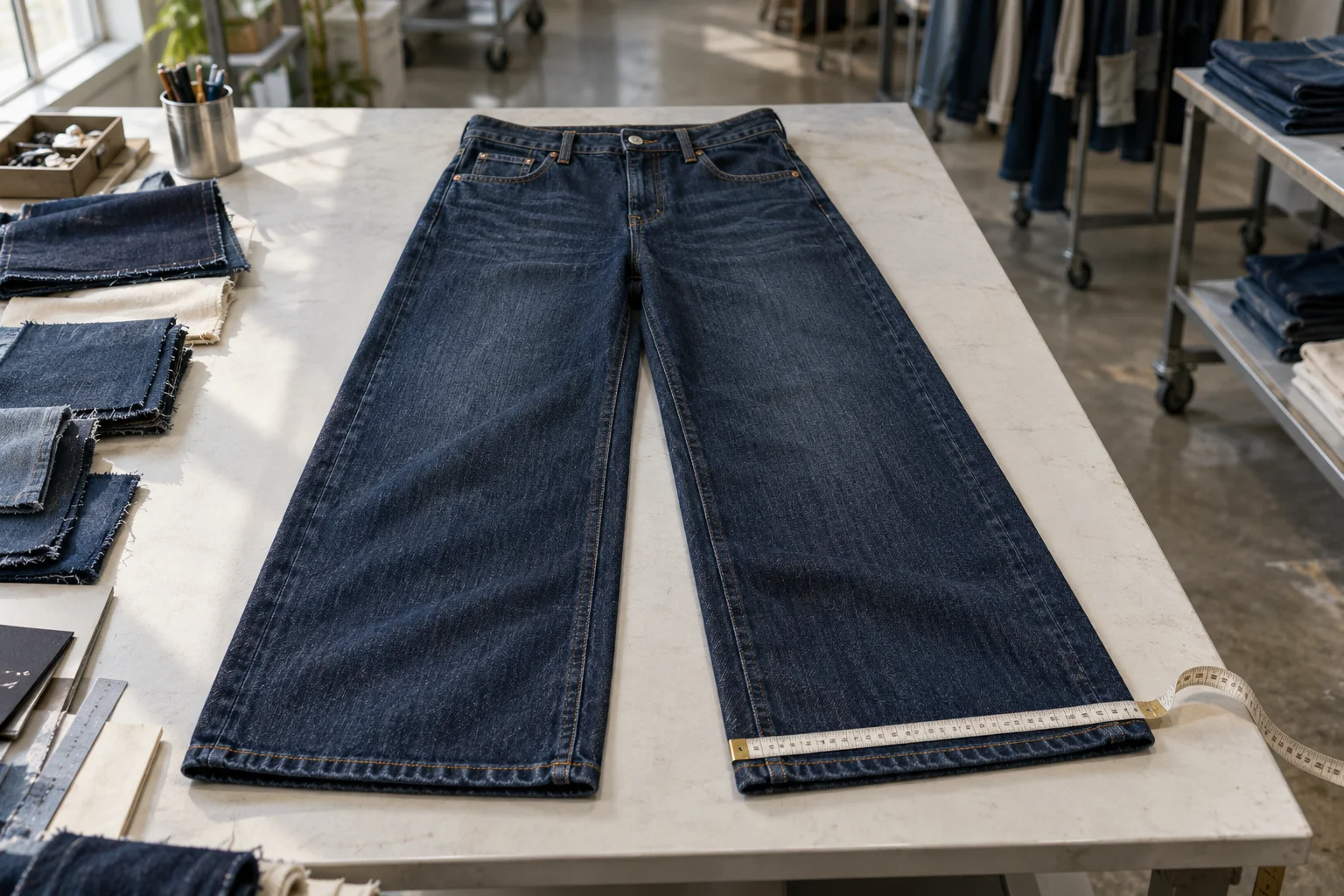
Briefing a wide leg jeans manufacturer starts with a measured silhouette, not a request for extra room throughout the garment. Define thigh, knee, and leg opening together, then connect fabric drape, rise, seat balance, pocket placement, and hem construction to the intended finished shape. Use post-wash measurements and size-specific reviews to confirm that the leg remains wide without becoming unintentionally tapered or curved. MOQ 100 pcs per color per design should be allocated across the agreed size range. Samples take approximately 7 days once the brief and materials are confirmed; bulk timing depends on quantity, material readiness, finishing capacity, and approvals.
At a glance
Swipe the table sideways to compare both columns →
| Briefing point | Evidence to request | Decision or control |
|---|---|---|
| Leg progression | Finished thigh, knee, and opening measurements with defined measuring positions | Distinguish the intended wide leg from a roomy top block or curved, narrowed hem |
| Fabric and balance | Actual-fabric sample showing drape, rise, seat, and side-seam position | Approve the hanging shape rather than weight or flat measurements alone |
| Pockets and hems | Placement dimensions, finished pocket templates, and hem construction details | Keep visual proportions and lower-leg behavior consistent with the design |
| Wash and grading | Post-finish measurements, dimensional-change findings, and size-set comparisons | Preserve leg progression across the wash route and ordered size range |
| Production release | Approved sample, pattern revision, material record, and inspection criteria | Release cutting only after the silhouette and bulk execution route are aligned |
1. Give the wide leg jeans manufacturer a measurable silhouette
Start the brief with front, side, and back references showing the intended silhouette on a standing wearer. Identify whether the leg should fall nearly straight from the thigh or widen gradually toward the hem. Write finished thigh, knee, and leg opening measurements into the specification, and define the vertical position used for each measurement. State whether widths are measured flat or as full circumferences so the factory does not interpret an opening twice as large as intended. Include inseam and the intended break over footwear, since the same opening can look different at cropped, full, and stacking lengths. Ask the pattern team to mark these locations on its drawing before sample cutting. Photographs should explain the desired outline, while the measurement sheet establishes the dimensions that can be checked after washing and finishing.
Use the relationship between thigh, knee, and opening to separate wide-leg development from adjacent silhouettes. A baggy style can concentrate ease around the seat and thigh while narrowing below the knee; a barrel shape generally uses a curved outline with fullness that reduces toward the hem. Neither description substitutes for the measurements of this program. State how much narrowing, if any, is acceptable between the thigh and knee, and whether the opening should match or exceed the knee width. Review the inseam and outseam lines together rather than widening only one edge of an existing pattern. Ask for a flat pattern comparison when the supplier proposes adapting another block. The purpose is to establish a deliberate hanging leg, not simply to increase a standard jeans pattern until the hem reaches the requested width.
2. Choose fabric for the way the wide leg should hang
Specify fabric weight with its unit and measurement condition, but do not use weight as a complete description of drape. Two denim articles with similar weight can fall differently because of yarn structure, weave, finishing, and stiffness. Explain whether the intended leg should hold a clear outline, move softly around the wearer, or sit between those behaviors. Request labeled swatches for initial selection and enough actual fabric for a garment trial before approving bulk material. Include composition, usable width, stretch direction where relevant, and the proposed mill finish in the material record. Ask the factory to flag whether the selected article is likely to collapse inward, stand away from the body, or form hard folds at the hem. Treat those comments as development hypotheses that must be checked on the finished sample.
Evaluate drape after the intended garment wash, drying, and pressing route rather than relying on an unwashed fabric presentation. Review the sample both hanging and worn, with the leg free to move and without clips that alter its outline. Check whether the fabric folds obscure the intended width, whether the hem becomes excessively rigid, and whether the inside legs catch against each other during walking. For stretch denim, assess recovery and shape retention as well as initial comfort; a composition statement alone does not establish either behavior. Have the factory calculate consumption using the chosen usable width, size mix, and actual wide-leg pattern. Wider panels can change marker efficiency, so consumption from a narrower style is not a reliable purchasing basis. Record separate fabric minimums, availability, and substitution approval requirements before committing the garment order.
3. Balance the rise, seat, and pockets above the wide leg
Define the intended waistband position on the body before setting front and back rise measurements. Include waist, hip, seat, and upper-thigh requirements, along with a clear method for measuring each point. A wide lower leg does not automatically require a loose waist or an oversized seat, so describe the upper block independently. During fitting, check waistband level, crotch comfort, seat coverage, and whether the side seams hang in the intended position. Observe the sample standing, sitting, and walking instead of judging balance from a single front photograph. Pulling at the crotch, excess folds below the seat, or a leg that rotates may require pattern changes rather than added width. Ask the pattern team to explain proposed corrections and identify which measurements will change before approving a revision that could alter the silhouette.
Specify pocket placement from stable garment landmarks instead of asking for pockets to look centered on wider hips. For back pockets, record the distance from the center-back seam, the top position relative to the waistband or yoke, pocket dimensions, and the intended angle. For front pockets, define opening shape, depth, and pocket-bag coverage so the opening does not gape or expose the lining during wear. Review the spacing as a pair on the body, because a flat photograph can hide how the seat curvature changes their appearance. Wider garment panels do not necessarily require pockets to be enlarged by the same proportion. Approve a placement template and note whether pocket dimensions or positioning change by size. Include the coin pocket, reinforcement points, and visible stitching where they affect the intended proportions or restrict the pocket opening.
4. Preserve the leg outline through washing and hemming
Describe the target wash using an approved physical reference and written limits for shade, contrast, surface effect, and handfeel. Ask the factory to evaluate lengthwise and widthwise dimensional change on the selected fabric under the intended process. Record the sample's measurements before and after finishing so pattern compensation is based on observed behavior rather than a generic shrinkage assumption. Check leg twist, seam puckering, crease setting, and differences between the two legs, since each can change how a broad panel hangs. Review whether abrasion or distressing has weakened areas that need to support the silhouette, especially near the hem and pocket attachments. Specify that any proposed change to the wash route, drying method, or finishing chemicals requires review when it could affect shape or handfeel. Retain the approved garment as the reference, not only a wash recipe.
Choose the hem construction alongside the intended length and footwear relationship. A turned hem adds layers and can give the opening more structure, while a raw edge needs an agreed fraying allowance and appearance after finishing. State hem depth, stitch position, thread appearance, and whether hemming occurs before or after the main wash. For a deep cuff or turn-up, show the visible inside finish and confirm whether the cuff is fixed or adjustable. Check that the hem does not rope, flare, or collapse beyond the approved appearance, and compare both legs on a level surface and on the wearer. If pressing is used to present a crease or flatten the opening, document that treatment separately from the underlying pattern. Agree finished inseam and total-length tolerances without allowing extra pressing or stretching to disguise an incorrect bulk dimension.
5. Grade the leg progression across the ordered sizes
Request a grade-rule table that shows how waist, hip, rise, thigh, knee, opening, and length change from the base size. Do not assume that adding the same increment at every leg point will preserve the intended silhouette. Decide whether the opening remains relatively stable, increases with size, or follows another documented progression tied to the design. Review the resulting thigh-to-knee and knee-to-opening relationships for each ordered size. Keep length grading separate from width grading, especially if the program includes multiple inseams. Ask the factory to identify any size where pocket placement, crotch shaping, or pattern layout needs additional attention. The approved base-size sample establishes one reference, but it cannot demonstrate that the smallest and largest garments will balance correctly. Confirm which sizes need physical review before authorizing production across the complete size range.
Fit a planned size set in the approved fabric and finish, prioritizing the base size and meaningful extremes rather than choosing convenient samples. Use wearers or fit forms appropriate to the intended measurement chart and record their relevant dimensions. Compare front, side, and back views under consistent conditions, including the same footwear relationship and waistband position. Check whether larger sizes become unintentionally tapered because thigh width increases faster than the opening, or whether smaller sizes look disproportionately flared. Inspect pocket spacing, waistband balance, and the point where the leg starts to fall freely from the body. Record corrections by size and distinguish local adjustments from changes to the master grade rule. Require an updated measurement chart and pattern revision record after approval, so the cutting team does not combine a corrected sample with an earlier grading file.
6. Link sample approval to a controlled bulk release
Issue one development pack containing the silhouette references, measurement methods, fabric identity, wash target, pocket placement, hem construction, and proposed size allocation. Confirm MOQ 100 pcs per color per design separately from fabric, trim, and laundry minimums, and ask how the order can be divided across sizes. Samples take approximately 7 days once the brief and materials are confirmed; clarify whether the quoted period covers the finished washed sample and allow separately for shipping and revisions. Set review gates for material selection, fit, wash appearance, and the size set instead of treating the first sample as automatic production authorization. Consolidate comments into a dated revision list with photographs and measured findings. Identify which changes need another physical sample and which can be closed through agreed evidence. Avoid approving appearance while leaving the measurement sheet or construction details unresolved.
Before bulk cutting, require a release record connecting the approved sample to the final pattern, grading file, bill of materials, fabric allocation, and wash reference. Bulk timing depends on quantity as well as material readiness, sewing and laundry capacity, and the speed of approvals; request a schedule with dependencies rather than one unsupported completion date. Review early production garments after finishing to confirm that the approved leg progression, rise balance, pocket placement, and hem appearance remain achievable in the bulk route. Agree inspection sampling and tolerances in advance, including how measurements will be taken and how garments will be conditioned before checking. Define what happens if a material lot or process change alters the shape: hold affected work, investigate, and obtain a disposition before continuing. Keep packing folds and presentation instructions aligned with the approved finish so handling does not introduce an unintended permanent-looking crease.
Send these details together
- Define thigh, knee, opening, inseam, and measuring positions to establish the intended wide-leg progression.
- Approve actual-fabric drape after the planned wash and confirm consumption using the wide-leg pattern.
- Review rise and seat balance independently from lower-leg width, with dimensioned pocket placement.
- Specify wash controls, hem construction, finishing sequence, and acceptable changes to the leg outline.
- Approve grade rules and representative size-set samples before releasing the complete size range.
- Connect the approved garment to bulk patterns, materials, wash references, inspection criteria, and revision records.
This guide covers buyer-side planning for wide-leg menswear jeans with a China denim OEM, from silhouette definition through finished-garment approval. MOQ 100 pcs per color per design is the starting garment requirement; confirm size allocation and separate material or process minimums. Samples take approximately 7 days once the brief and materials are confirmed, with shipping and revisions planned separately. Bulk timing depends on quantity, material readiness, capacity, and approvals. Product-specific tolerances and inspection requirements must be agreed for the order. Reprint attribution: denimmanufacturerchina.com.
Prepare a quote briefThe RFQ form prepares a WhatsApp message for you to review. For files, email sales@denimmanufacturerchina.com.
Questions before sampling
What distinguishes a wide-leg jeans brief from a baggy or barrel brief?
Specify the progression from thigh to knee to opening rather than relying on the style name. Wide-leg jeans retain a broad lower leg, while a baggy brief may emphasize upper-block ease and a barrel brief may require a curved leg that narrows toward the hem. There is no single universal measurement boundary, so approve the outline and dimensions together.
Is heavier denim always better for wide-leg jeans?
No. Weight is one input, but weave, yarn structure, finish, and stiffness also affect how the leg hangs. A structured silhouette and a fluid silhouette can require different fabric behavior even at similar weights. Review an actual-fabric garment after the intended wash, checking folds, movement, hem structure, and whether the opening retains the approved appearance without special presentation.
Can one approved sample establish the fit for every size?
A base-size sample establishes only that size and its approved construction route. Request grade rules for the upper block and each leg measurement, then review representative sizes in the intended fabric and finish. Check whether changes in thigh, knee, and opening preserve the silhouette. Record any size-specific corrections and update the grading file before bulk cutting.
What should be confirmed before placing a small wide-leg jeans order?
Confirm MOQ 100 pcs per color per design, the size allocation, and any separate fabric, trim, or wash minimums. Establish material availability and the sample approval sequence before accepting a schedule. Samples take approximately 7 days once the brief and materials are confirmed, but revisions and shipping need additional allowance. Bulk timing depends on quantity and the agreed production route.
What are your MOQ, sample time and bulk lead time?
MOQ is 100 pcs. Samples take 7 days. Bulk production lead time depends on order quantity.