How to Design Your Own Jeans With a Factory
Designing your own jeans with a China OEM factory starts with a production brief, not just an inspiration image. Define your customer, fit, size range, target cost, fabric direction, wash appearance, and order quantity before requesting development. Then decide whether to adapt an existing factory block or commission a new pattern. Our MOQ is 100 pcs; confirm the proposed style, color, wash, and size allocation before proceeding. Samples take approximately 7 days once the brief and materials are confirmed, while bulk production timing depends on quantity and the approved production requirements.
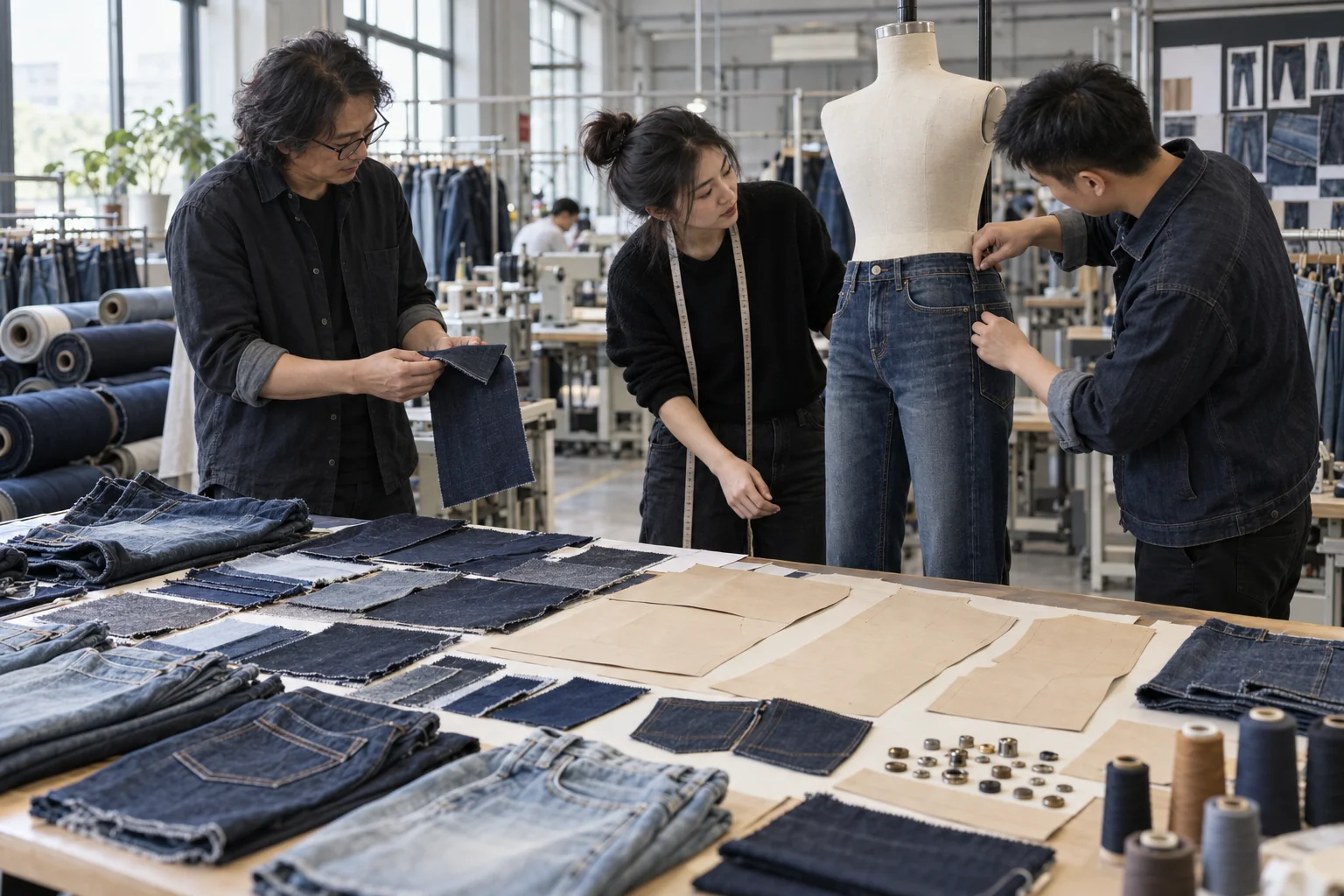
At a glance
Swipe the table sideways to compare both columns →
| Design step | What to send the factory | Risk if skipped |
|---|---|---|
| Choose a block or new pattern | Target customer, fit description, size chart, reference measurements, and permission to modify a proposed factory block. | The factory may develop the wrong silhouette or underestimate the pattern work required. |
| Specify pockets, yoke, and hardware | Front and back drawings, placement dimensions, pocket shapes, yoke depth, closure details, and hardware references. | Visual proportions, function, or trim availability may conflict with the intended design. |
| Coordinate denim and wash | Fabric composition, weight direction, stretch preference, shade references, wash targets, and acceptable variation. | A wash developed on different denim may not reproduce the intended appearance or fit. |
| Build the development package | Versioned tech pack, annotated reference sample if available, measurement method, tolerances, and trim list. | Missing instructions can cause inconsistent quotations, sample interpretation, and revisions. |
| Approve fit and production baseline | Consolidated fit comments, approved measurements, wash reference, final specifications, and quantity breakdown. | Bulk production may follow an outdated sample or unresolved design decision. |
1. Define the commercial brief and choose your pattern route
Start with the jeans you intend to sell, including the wearer profile, selling channel, target retail position, intended size range, and required fit. Describe the silhouette in measurable terms rather than relying only on labels such as straight, relaxed, or slim. Provide a base size and target waist, hip, front rise, back rise, thigh, knee, inseam, and leg opening measurements where available. Explain whether measurements describe an unwashed sample or the finished washed garment. For a more detailed menswear briefing structure, use the companion guide How to Brief Custom Made Men's Jeans. This is OEM product development for a commercial order, not a consumer tailoring or alteration service.
Ask the factory whether an existing block can support your silhouette before requesting a completely new pattern. A block is a starting pattern with an established shape; it still needs review against your measurements, fabric behavior, and wash plan. Adapting a suitable block can reduce initial development work, but it does not guarantee fit. A new pattern is more appropriate when the rise balance, leg shape, pocket arrangement, or construction differs substantially from available options. Request an explanation of the proposed changes and any development charges. Our MOQ is 100 pcs, and buyers should confirm how the intended assortment fits that minimum rather than assuming every color or wash can be split freely.
2. Specify pockets, yoke, seams, and hardware
Turn your design direction into front and back technical drawings with dimensions for the details that affect appearance and function. Specify back pocket height, width, opening angle, corner shape, stitch pattern, and placement relative to the center back and yoke seam. Define front pocket openings, coin pocket position, belt loop layout, waistband width, fly construction, and visible stitch colors. Small placement changes can make the same base pattern look noticeably different, so mark priority details rather than asking the factory to copy a general mood board. The companion guide How to Brief Jeans Back Pocket Design provides a useful next step when pocket proportions and placement are central to your brand identity.
Describe the yoke shape and depth together with the back rise and pocket layout, because these features must work as one design rather than separate decorations. For hardware, identify the closure type, button diameter, rivet locations, zipper requirements, finish color, and whether branding is needed. Ask which components are available from stock and which require custom development, supplier minimums, tooling, or additional lead time. Confirm that hardware and labels are suitable for the intended wash process before approving them. If your market requires specific compliance documentation or testing, identify the requirement and request supporting evidence for the relevant materials or product. Do not treat a trim photograph, supplier statement, or sample appearance as proof of certification.
3. Confirm fabric and wash as a connected development decision
Choose the denim direction before treating a wash reference as achievable. Send your preferred fiber composition, approximate weight, stretch level, hand feel, surface character, and color direction, then ask the factory to propose suitable available materials. Clarify whether a stated fabric weight refers to the supplier's fabric specification or another measurement condition. Rigid and stretch denim can require different pattern decisions, and two fabrics with similar descriptions may respond differently during washing. Confirm the actual sampling material rather than approving only a generic swatch image. If a substitute is proposed, record the change and evaluate its effect on appearance, fit, cost, and repeat availability before development continues.
Use wash references to explain the desired shade, contrast, softness, crease effects, abrasion placement, and distressing limits, but separate essential features from optional styling. The factory should evaluate the selected denim and proposed wash together; an effect shown on another fabric is not a reliable production standard. Ask how shrinkage and wash-related dimensional changes will be addressed in the pattern and sample review. Assess the washed sample for both measurements and appearance, including pocket symmetry and hardware condition. Once accepted, retain an identified approval reference and discuss acceptable production variation. No specific wash outcome, lab result, or certification should be assumed without the relevant development work and supporting documentation.
4. Build the tech pack, review fit, and release production
A tech pack should state what the factory must make, while a reference sample helps communicate details that are difficult to express in drawings alone. Provide both when possible, but establish which instruction takes priority if they conflict. Include technical drawings, a bill of materials, base-size measurements, measurement diagrams, tolerances, construction notes, wash instructions, label placement, packaging requirements, and a dated revision number. Annotate any reference garment with what to follow and what to change. Samples take approximately 7 days once the brief and materials are confirmed. Treat that as the sampling estimate for the confirmed development scope, not a promise covering material sourcing, shipping, multiple fit rounds, or the complete project.
Review each sample against the same checklist and measurement method, using the intended fit model or a consistent approved form. Record fit balance, movement, waistband position, rise comfort, leg shape, pocket placement, and measurements after the agreed wash stage. Send one consolidated revision list with photographs and numbered comments instead of conflicting messages from several reviewers. Additional fit rounds may be needed; ask the factory to confirm the impact of each revision on cost and timing. Before releasing bulk, approve the final specification version, sample reference, fabric, wash, trims, size allocation, and packing details. Bulk timing depends on quantity and confirmed requirements. Use How to Compare Jeans Manufacturers China when comparing quotations so suppliers are assessed against the same development scope and approval expectations.
Send these details together
- Define the commercial fit brief, target measurements, base size, size range, and order quantity. Confirm the MOQ of 100 pcs and obtain agreement on the proposed style, color, wash, and size breakdown before assuming any assortment is feasible.
- Record whether development starts from a factory block or a new pattern. Document the planned modifications, development charges, pattern responsibilities, and any agreement about access to pattern files.
- Provide dimensioned pocket and yoke details, construction notes, hardware specifications, and branding artwork. Identify stock versus custom components and confirm any sourcing constraints before approving the development schedule.
- Confirm sampling denim and wash requirements together. Review the finished washed sample, document any material substitution, and request relevant compliance evidence only where required for your product and destination market.
- Release bulk only against an identified approval baseline. Include consolidated fit comments, final measurements and tolerances, approved materials and trims, wash reference, packaging instructions, quantity breakdown, and a confirmed production schedule.
This resource covers B2B jeans OEM development with a China factory, from commercial design briefing through sample approval and bulk production planning. It does not cover consumer tailoring, alterations, or guaranteed regulatory compliance. You may reprint this article with attribution to denimmanufacturerchina.com and sales@denimmanufacturerchina.com.
Prepare a quote briefThe RFQ form prepares a WhatsApp message for you to review. For files, email sales@denimmanufacturerchina.com.
Questions before sampling
Can I design my own jeans without a complete tech pack?
Yes, development can start with clear drawings, target measurements, annotated photographs, and a reference garment, but missing specifications must be resolved before sampling. Ask the factory which details it can help document and whether that work carries a development charge. Agree on a written specification and instruction priority so the reference garment does not silently override your intended changes. A sample is a development tool, not a substitute for documented production requirements.
What is the MOQ, and how long do custom jeans samples take?
Our MOQ is 100 pcs. Confirm the allocation across styles, fabrics, washes, colors, and sizes before placing an order, because the minimum does not automatically authorize every proposed split. Samples take approximately 7 days once the brief and materials are confirmed. Ask separately about sourcing, delivery, and any additional revision rounds. Bulk production timing depends on quantity and confirmed production requirements, so request a schedule based on the approved order rather than applying the sample estimate to bulk.
Should I approve fit before choosing the wash?
Set the intended fit early, but make final fit decisions using the selected fabric and agreed wash stage. Washing can affect dimensions, hand feel, and how the garment sits on the body, so an unwashed fitting alone may not represent the product you will sell. Coordinate pattern adjustments with the factory and verify the finished sample against agreed measurements and tolerances. If the fabric or wash changes later, assess whether another sample review is needed before bulk approval.
What are your MOQ, sample time and bulk lead time?
MOQ is 100 pcs. Samples take 7 days. Bulk production lead time depends on order quantity.