How to Brief a Baggy Jeans Manufacturer
Briefing a baggy jeans manufacturer starts with defining where the garment carries volume, not simply requesting a wider hem. Establish seat and thigh ease against a stated body reference, choose the intended waistband position, and connect rise, knee, opening, and length to the desired drape. Qualify fabric and wash together so the finished garment retains its approved proportions. Plan for MOQ 100 pcs per color per design. Samples take approximately 7 days once the brief and materials are confirmed; bulk timing depends on quantity, material readiness, capacity, and approvals. Review base-size and size-set evidence before releasing production.
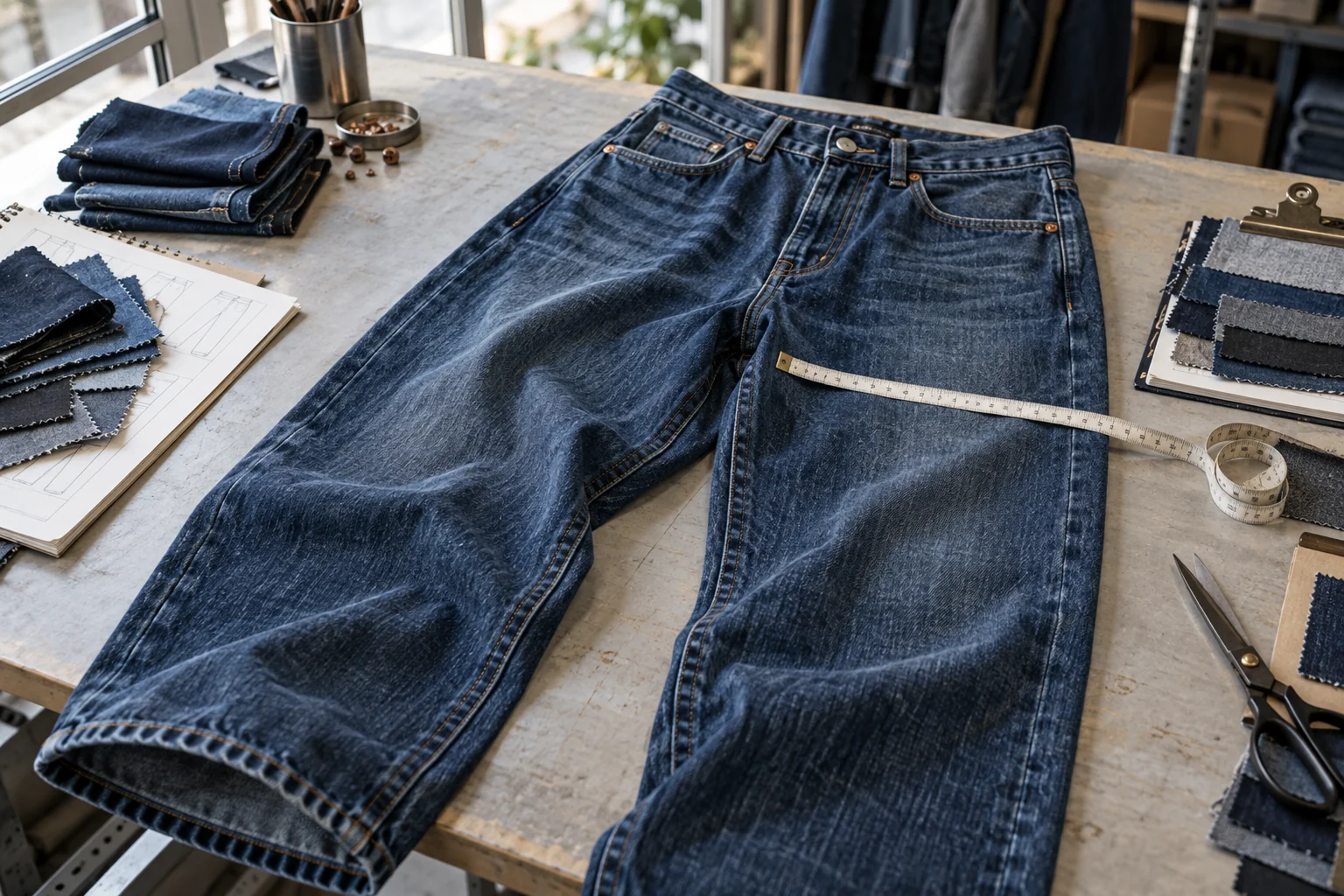
At a glance
Swipe the table sideways to compare both columns →
| Briefing decision | Evidence to request | Approval control |
|---|---|---|
| Seat and thigh volume | Target-body reference, finished measurements, and fit photographs | Confirm localized ease rather than relying on an oversized waist |
| Rise and wearing position | Front and back rise, waistband position, and seated fit review | Approve crotch placement and balance with the intended drape |
| Fabric and wash | Identified fabric, paired prewash and postwash measurements, and finished sample | Verify that finishing preserves volume and dimensional balance |
| Hem and stacking | Knee, opening, inseam, outseam, and footwear reference | Separate deliberate stacking from uncontrolled floor contact |
| Measurement and grading | Illustrated measurement method, grade rules, and representative size set | Keep larger sizes baggy without adding unintended flare |
1. Give the baggy jeans manufacturer a measurable silhouette
Start with front, side, and back references that show the intended wearing position and distribution of volume. For this program, define baggy as deliberate room through the seat and thigh, followed by an explicitly chosen lower-leg shape. Relaxed jeans can provide comfort without the same visible upper-leg volume, while wide-leg jeans emphasize a broad leg line and opening. These labels overlap in the market, so use them as discussion aids rather than acceptance criteria. Mark which features the factory should reproduce and which belong only to the styling of the reference image. Include the target wearer, intended size range, footwear, and whether the jeans should sit at the natural waist or lower. Ask the pattern team to restate the silhouette in measurements before it starts development, including any conflict between the references and the proposed specification.
Specify seat and thigh ease against an identified target body or fit model, not against an unexplained size label. Record body hip and thigh measurements with their locations, then list the corresponding finished garment measurements using the factory's agreed method. Do not subtract a flat garment width from a body circumference; first reconcile the units and measurement basis. Even a doubled flat width may not describe usable three-dimensional room perfectly, so validate the calculated allowance on the wearer. Set separate targets for waist security, seat fullness, upper-thigh volume, and freedom during sitting or stepping. Increasing the waist to create room elsewhere can change the wearing position and make a misleading sample appear baggy. Ask the OEM to explain how its pattern adds the requested volume while preserving the specified waistband fit and keeping side seams balanced.
2. Choose rise and crotch placement for the intended drape
Choose the intended waistband position before approving front and back rise. A longer rise does not automatically mean the jeans should be worn higher; the combination of pattern shape, waistband fit, and body determines where they settle. State whether the crotch should sit close to the body or visibly lower, and show the acceptable appearance from the side. Include front rise, back rise, waistband height, and the method used to measure each. Clarify whether rise measurements include the waistband and whether the tape follows the seam curve. Ask the pattern maker to review crotch extension and seat shaping rather than solving every volume request by lengthening the front rise. Excess fabric at the front fork, pulling across the seat, or a waistband that tips sharply can indicate a balance problem even when individual measurements match the chart.
Review rise and balance on a wearer who matches the recorded body reference, with the waistband positioned as intended. Request standing front, side, and back photographs, followed by seated and stepping checks. A belt can be included when it is part of the intended use, but it should not conceal an excessively large waist during the initial fit review. Look for enough seat room without severe pooling below the back waistband, and enough crotch clearance without restricting stride. Record whether any drag lines come from the rise, crotch curve, thigh width, or wearing position before asking for a revision. Changing several areas without a diagnosis makes the next sample difficult to evaluate. Return annotated photographs and one consolidated measurement revision so the OEM can adjust the pattern against a single approved direction rather than conflicting comments.
3. Select fabric that supports volume without unwanted collapse
Specify fabric weight together with composition, weave, finishing condition, and usable width. Weight alone does not predict whether a baggy leg will stand away from the body or fall into soft folds. Two denim articles with similar weight can behave differently because of yarn structure, construction, and finishing. Request physical swatches and enough actual yardage for a garment trial, then assess the fabric in the intended silhouette. A firmer rigid article may support a more architectural shape, while a softer article may give a lower, more fluid drape; neither is automatically correct. Describe the desired result in terms of volume, fold character, handfeel, and wearer comfort. Ask the OEM to identify the proposed article and any alternatives separately, including their width and consumption assumptions, rather than treating every denim of the same nominal weight as interchangeable.
If stretch is included, state why it is needed and how its behavior will be assessed. Elastane content alone cannot establish extension, recovery, or whether knees and seat will grow during wear. For a roomy silhouette, extra stretch may be unnecessary, but that decision should follow the fit and comfort brief rather than a universal rule. Compare the candidate fabric before and after the proposed garment finish, and review a wear trial under agreed conditions if shape retention is important. Record whether the thigh and knee remain visibly full or fold inward more than intended. Confirm that heavy seam intersections, pocket bags, and the waistband remain comfortable in the selected weight. Lock the fabric article and finish with the approved sample; a substitute that feels similar on a swatch still needs a garment-level review before cutting.
4. Keep the wash from removing the approved baggy shape
Treat the wash as part of fit development, not as decoration added after the pattern is approved. Ask for prewash and postwash measurements from the same identified sample garments, using the same measurement method and handling conditions. Compare seat, thigh, knee, opening, rise, inseam, and outseam rather than checking length alone. The relevant question is whether the finished garment preserves the intended proportions, not whether it meets a single general shrinkage statement. Different changes across width and length can make a roomy thigh look tighter, alter crotch placement, or remove planned stacking. Have the factory distinguish its planned pattern compensation from observed sample results. Request an explanation when the expected change and actual measurements diverge. Keep the fabric article, wash reference, sample size, and pattern version attached to the results so the evidence remains traceable.
Approve the finished appearance and measurements together after the garment has been dried and rested under the agreed conditions. A sample measured while damp or immediately after handling may not provide a stable basis for comparison. Specify the intended shade, abrasion placement, softness, and any creasing effect, because adjustments to those features can also change drape or dimensions. Establish acceptable measurement tolerances at each point instead of relying on a single tolerance for the entire garment. Where the care instructions include home laundering, review dimensional behavior under an agreed care procedure separately from the factory wash. Do not assume that garment washing eliminates all later change. Require another review when the bulk fabric or finishing route changes, and define whether any out-of-tolerance result needs reworking, a new sample, or buyer disposition before production can proceed further.
5. Set hem width and stacking against an actual wearing reference
Define the lower leg with knee width, leg opening, and the distance between measurement locations, not with the opening alone. A baggy upper leg can finish straight, with a mild taper, or with another deliberate profile, but the transition needs to be visible in the specification. State whether the opening is recorded as a flat width or full circumference and measure it without stretching. Include inseam and outseam because a changed rise can alter how the same inseam sits on the wearer. Identify the intended footwear profile and whether the hem should break once, form several folds, or finish without stacking. Footwear is a fit reference here, not a styling afterthought: the same opening and length can rest on one shoe and slip over another. Request side-view photographs that show the complete hem-to-shoe relationship clearly.
Separate planned stacking from accidental excess length. A stack depends on fabric stiffness, opening width, leg shape, waistband position, and the surface that stops the hem; simply adding length cannot specify the result. Ask the OEM to sample the target length in the approved fabric and wash, then inspect front and back hem behavior while standing and walking. State whether heel drag or floor contact is unacceptable and whether cuffs are intended. If cuffs are part of the brief, record the fold depth and judge both the folded appearance and the underlying finished inseam. Review stacked folds after movement, not only after someone arranges them for photographs. When shortening or narrowing the hem, reassess the knee-to-opening transition so the revision does not turn the garment into a different silhouette or remove the intended volume below the thigh.
6. Approve a measurement method and grading that retain baggy proportions
Use an illustrated point-of-measure sheet so buyer and factory measure the same locations. Define the waistband closure, garment placement, fabric tension, hip depth, thigh location relative to the crotch, knee position, and opening measurement. Keep pocket contents out and lay the garment without forcing folds flat through stretching. Record rise along the specified seam path and explain how inseam and outseam endpoints are located. The measuring technique need not be fundamentally different from wide-leg jeans; the approval emphasis is different. For this baggy program, seat and upper-thigh room must be verified alongside the lower leg, rather than letting a wide opening stand in for the whole silhouette. Pair the measurement chart with fit photographs and the body reference. Flat dimensions can confirm consistency, but they cannot alone demonstrate crotch balance, seat drape, or comfortable movement on the intended wearer.
Request grade rules for waist, seat, thigh, rise, knee, opening, and length, then review how those increments interact across the size range. Equal additions at every leg point can change the proportions, while an opening that grows too quickly can introduce an unintended flare. Conversely, holding thigh width too nearly constant may make larger sizes look merely relaxed rather than baggy. Compare garment measurements with the target body chart at the defined locations, and inspect representative small, base, and large samples where feasible. If the range is broad or the fit changes significantly, agree additional review sizes. Record approved patterns, measurement tolerances, fabric, and wash as one production reference. Apply MOQ 100 pcs per color per design separately from the size allocation, and confirm any special material minimums before committing to the order or releasing bulk cutting.
Send these details together
- Define the target body, waistband position, and separate waist, seat, and thigh requirements.
- Approve front and back rise, crotch placement, and balance during standing, sitting, and stepping.
- Identify the fabric article and verify its finished drape, stretch behavior, and volume retention.
- Compare paired prewash and postwash measurements and approve tolerances for each measurement point.
- Confirm knee, opening, inseam, and outseam against the intended footwear and stacking behavior.
- Approve the measurement method, representative size set, grade rules, and order allocation before bulk cutting.
This guide covers buyer-side China menswear OEM planning for baggy jeans, including silhouette definition, fabric selection, wash development, measurement, and grading. MOQ 100 pcs per color per design is the garment planning requirement; confirm size allocation and separate fabric or trim minimums for the proposed order. Samples take approximately 7 days once the brief and materials are confirmed, with additional time allowed for shipping and revisions. Bulk timing depends on quantity, materials, capacity, and approvals. Reprint attribution: denimmanufacturerchina.com.
Prepare a quote briefThe RFQ form prepares a WhatsApp message for you to review. For files, email sales@denimmanufacturerchina.com.
Questions before sampling
How should I distinguish baggy jeans from relaxed or wide-leg jeans in an OEM brief?
Define the distribution of volume rather than relying on the name. Specify body-relative seat and thigh ease, waistband position, rise, knee, opening, and length. Relaxed can describe a less fitted upper block without pronounced volume, while wide-leg emphasizes the leg line and opening. Because commercial labels overlap, approve annotated references and finished measurements together.
Does heavier rigid denim always make a better baggy jean?
No. Weight and rigidity influence drape, but yarn structure, weave, finishing, and garment construction also matter. A firmer fabric may support visible volume, while a softer one may suit a fluid silhouette. Review an actual-fabric garment after the intended wash. If stretch is used, assess recovery and wear behavior instead of choosing by elastane percentage alone.
Can I use the same measurement method for baggy and wide-leg jeans?
Yes, provided the points of measure and handling instructions are clearly defined. The important difference is what the approval emphasizes. A baggy program needs evidence of seat and thigh room as well as the lower-leg profile. Do not accept a large opening as proof of baggy fit. Use body references and on-wearer checks alongside flat measurements.
What should be confirmed before starting the baggy jeans sample?
Confirm the body reference, measurement sheet, rise, fabric article, wash direction, hem behavior, and sample size. Samples take approximately 7 days once the brief and materials are confirmed; shipping, material delays, and revisions need separate allowances. Plan MOQ 100 pcs per color per design and confirm size allocation. Bulk timing depends on quantity and the approved production route.
What are your MOQ, sample time and bulk lead time?
MOQ is 100 pcs. Samples take 7 days. Bulk production lead time depends on order quantity.