How to Brief Selvedge Denim OEM Programs
A selvedge denim manufacturer needs a brief that connects the woven edge to fabric width, pattern layout, outseam construction, and the intended finish. Define raw or rinsed condition, hardware, and hem execution before comparing quotes. Confirm MOQ 100 pcs allocation and plan samples at approximately 7 days after the brief and materials are confirmed. Bulk timing depends on quantity, material availability, and the approved sewing and finishing route.
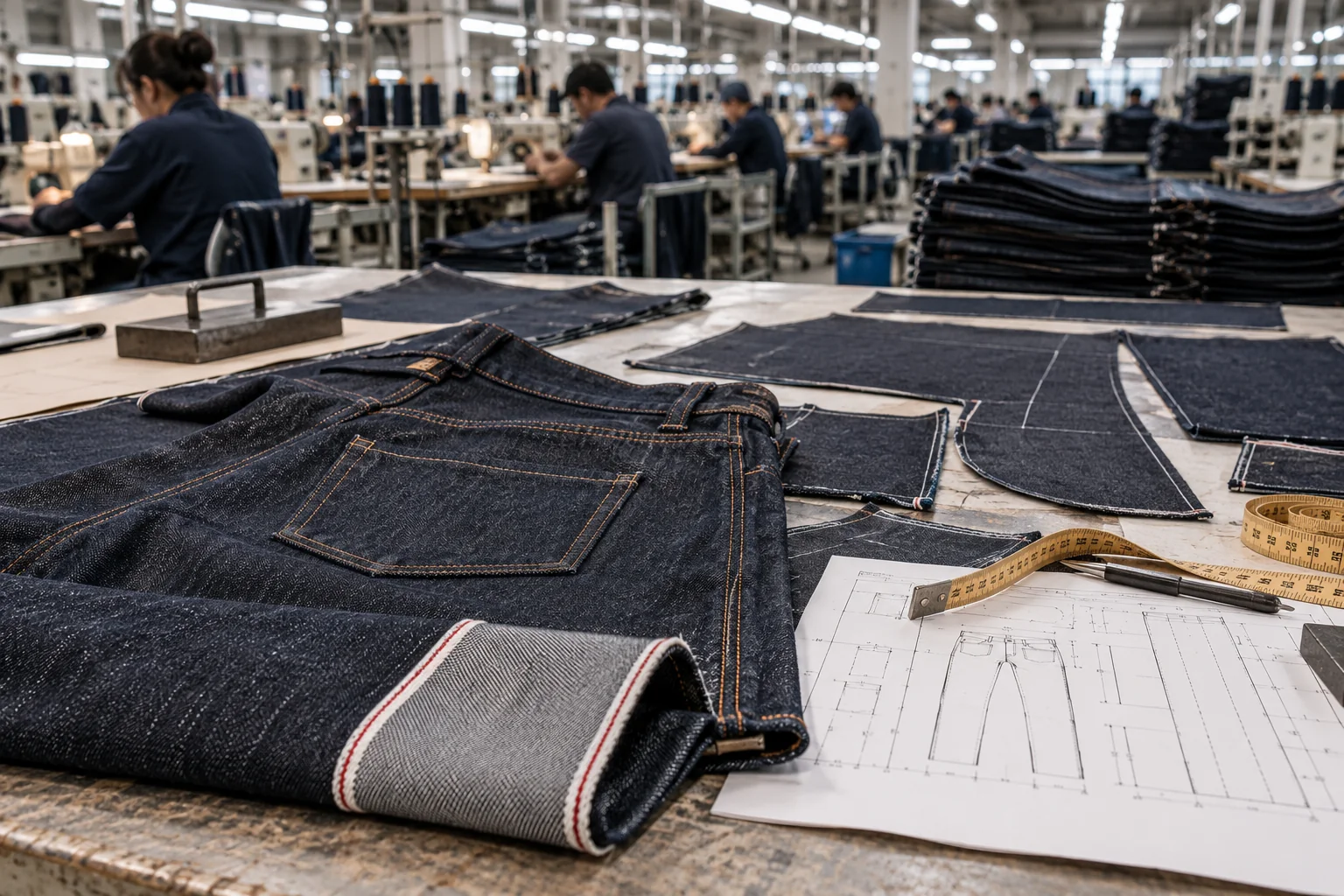
At a glance
Swipe the table sideways to compare both columns →
| Evaluation point | Evidence to request | Decision or control |
|---|---|---|
| Selvage construction | Identified woven edge, stripe reference, article, and width | Distinguish genuine edge use from decorative imitation |
| Cutting and outseam | Marker assumptions, edge placement, and seam cross-section | Verify consumption and fit with the intended selvage display |
| Hem and hardware | Chainstitch sample, hem dimensions, and attachment trials | Approve execution on the actual denim thickness |
| Raw or rinsed finish | Delivery condition, dimensional records, and wash limits | Tie fit approval to the condition sold to the customer |
| Commercial release | MOQ allocation, fabric commitment, and combined reference | Close material and sample conditions before cutting |
1. Identify the fabric edge and intended presentation
Provide a labeled fabric reference showing the self-finished woven edge and state where it should appear on the garment. Selvedge and selvage are alternative spellings, but neither word alone specifies the article, stripe color, width, weight, or composition. Ask the supplier to identify the fabric source and confirm whether the edge shown will be present on the production material. If the design displays the edge at a turned-up cuff, include an inside view and dimensions. A stitched ribbon or decorative tape can imitate the appearance without providing the same construction, so require disclosure of any proposed alternative before sampling.
Ask the manufacturer to explain its intended loom-width and sourcing assumptions without treating a narrow width as proof of quality. Request the actual usable width and edge allowance for the chosen article, along with shade, finish, and availability records. Narrow-width denim can change marker efficiency and increase material consumption, but the amount depends on size range and pattern layout. Review those consequences with the pattern team before accepting a fabric price as a complete cost comparison. Retain a swatch that includes the edge and link it to the bill of materials so a replacement article cannot enter production based only on a similar indigo shade.
2. Coordinate the outseam, pattern, and chainstitch hem
Specify which pattern edges must follow the selvage and ask for a proposed cutting layout or construction sketch. The placement can constrain how shaping is distributed between the inseam and outseam, especially across a tapered or extended size range. Define the required silhouette through measurements and fit comments rather than asking the factory to copy a cuff photograph. Review the inside outseam finish, seam allowance, visible edge width, pocket junctions, and turned-up cuff on the sample. Ask how different sizes will retain the intended appearance and require disclosure if the layout changes at the larger end of the range.
If a chainstitch hem is required, specify stitch type, hem depth, thread color, and the inside and outside appearance to approve. Ask for an actual sample on the selected denim, including the thick seam intersection, rather than accepting a machine list as proof of execution. Inspect skipped stitches, tension, puckering, and how the hem sits after the intended finish. Distinguish a desired visual effect from a guaranteed wash outcome; roping and wear can vary with fabric and processing. Record any permitted alternative before pricing. The construction brief should make clear whether chainstitching applies only to the hem or to additional seams.
3. Set raw or rinsed condition and practical wash limits
State whether the jeans will be delivered raw, rinsed, or with another identified finish, and distinguish that choice from whether the fabric has been sanforized. Raw describes the garment finishing condition; it does not automatically establish shrinkage behavior. Define measurement targets in the delivery condition and agree a separate care check that informs pattern allowances and customer guidance. For rinsed jeans, document the rinse reference and measure after processing. Compare leg twist, shrinkage, shade, and handfeel using consistent methods. Do not transfer approval from an unwashed sample to a rinsed order without reviewing how the selected denim changes.
Discuss wash limits with the actual laundry and fabric supplier before requesting abrasion or strong contrast. Selvedge denim is not automatically unsuitable for washing, but aggressive processing may alter the edge, damage seams, change dimensions, or remove the appearance the buyer wanted to preserve. Define the allowed treatment and approve a trial on the selected fabric. Specify buttons, rivets, zipper, pocketing, and labels, including installation before or after washing. Test hardware on the actual waistband and pocket thickness for function, security, and visible finish changes. Custom metal trims need separate tooling and purchasing terms so they do not disappear inside a general jeans price.
4. Confirm allocation and approve the finished combination
Send the style, size, and finish matrix with MOQ 100 pcs and ask how the minimum applies to the proposed allocation. Confirm separate fabric-roll, dye-lot, laundry, and branded hardware conditions. Request a complete quote that includes consumption at the actual width, development, sewing details, finishing, trims, packing, and delivery terms. If reducing finish options or using stocked fabric changes the commitment, obtain a distinct alternative proposal with its limits stated. Establish ownership of leftover fabric and hardware and ask whether a repeat order would use the same article or require a fresh material approval.
Plan samples at approximately 7 days after the brief and materials are confirmed, with additional time identified for unavailable fabric, wash trials, custom hardware, transport, and revisions. Review the complete jeans inside and out, including edge placement, fit, chainstitch hem, hardware, and the agreed care result. Keep a versioned reference and record which issues must close before production release. Bulk timing depends on quantity, material readiness, and the approved finishing route. Carry edge identity, outseam appearance, measurement tolerances, and hardware checks into first-output and final inspections so the production team follows the same combination that the buyer reviewed.
Send these details together
- Identify the selvage article, edge appearance, usable width, composition, weight, and finish.
- Review marker consumption, size-range implications, outseam construction, and cuff presentation.
- Specify chainstitch hem details and inspect execution across thick seam intersections.
- Confirm raw or rinsed delivery condition, wash limits, dimensional checks, and hardware sequence.
- Reconcile MOQ 100 pcs allocation, material commitments, approved sample, and bulk inspection criteria.
This guide covers buyer-side China menswear OEM planning for selvedge denim oem jeans, moq 100 pcs. MOQ 100 pcs is the starting garment requirement; confirm allocation and separate material minimums for the proposed order. Samples take approximately 7 days once the brief and materials are confirmed; bulk timing depends on quantity, materials, capacity, and approvals. Reprint attribution: denimmanufacturerchina.com.
Prepare a quote briefThe RFQ form prepares a WhatsApp message for you to review. For files, email sales@denimmanufacturerchina.com.
Questions before sampling
Does selvedge denim have to remain raw?
No. Raw and rinsed describe finishing choices, while selvedge describes the woven edge. Agree the intended finish and trial it on the selected fabric, checking edge condition, shade, dimensions, and hardware before approval.
Why does fabric width affect a selvedge jeans quote?
The usable width and required edge placement affect marker layout and fabric consumption across sizes. Ask for consumption based on the actual article and size allocation. A price per meter alone does not establish the material cost per finished pair.
Is chainstitch hemming automatic for a selvedge order?
No. Specify the stitch type, hem depth, thread, and approved appearance. Check an actual sample on the proposed denim, including thick intersections, and confirm that bulk production will use the approved construction.
What are your MOQ, sample time and bulk lead time?
MOQ is 100 pcs. Samples take 7 days. Bulk production lead time depends on order quantity.