How to Brief Washed Denim Programs
A workable washed denim brief translates a visual idea into instructions that a China jeans OEM can sample, cost, and repeat. Start with the base fabric and finished fit, then define wash direction, acceptable shade variation, handfeel, localized abrasion, and stretch performance after processing. Use physical references where possible and identify which features are mandatory versus open to factory recommendations. MOQ is 100 pcs, samples take approximately 7 days once the brief and materials are confirmed, and bulk timing depends on quantity. Treat the approved sample and written acceptance criteria as the production reference, rather than relying on a wash name alone.
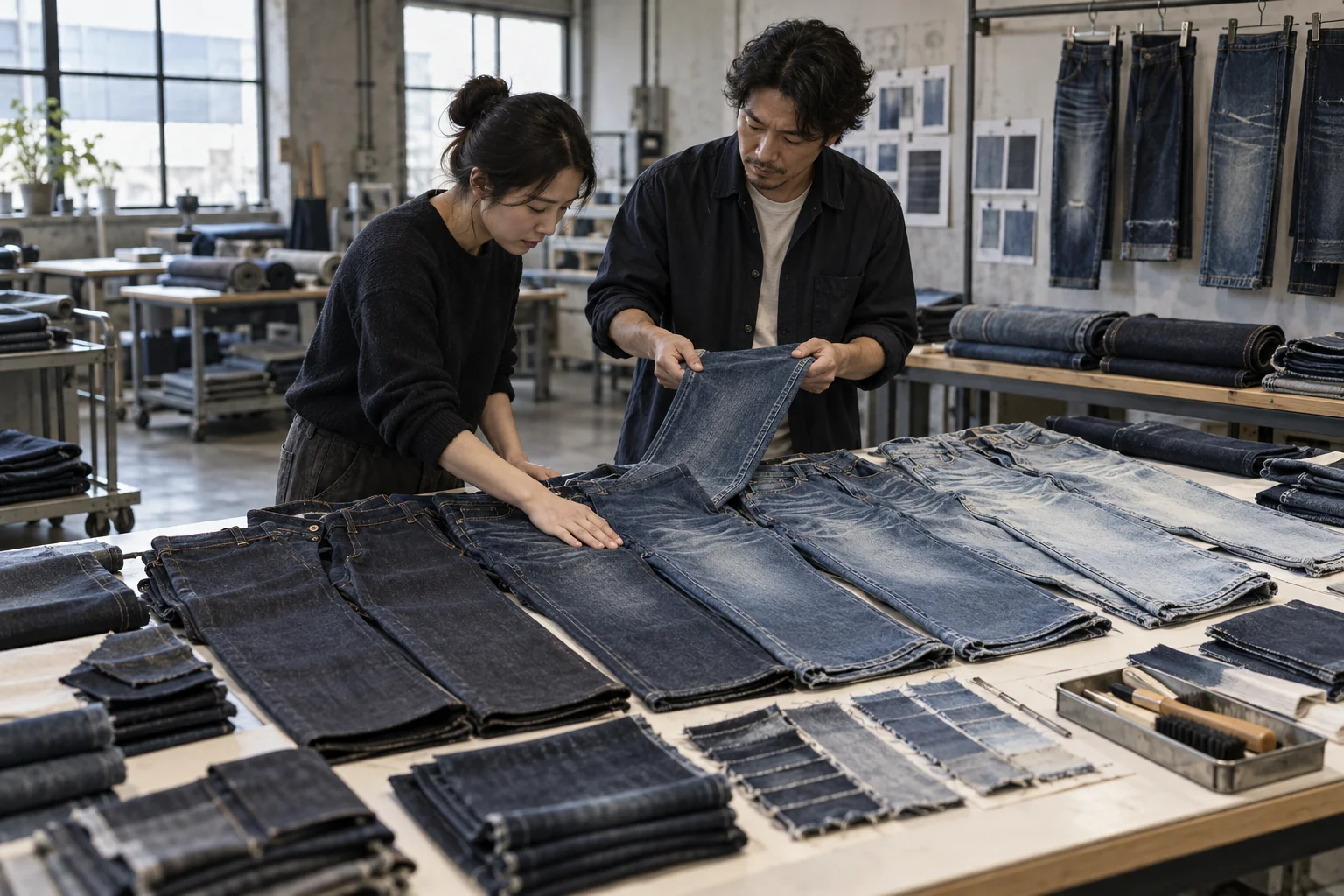
At a glance
Swipe the table sideways to compare both columns →
| Wash decision | What to specify | Sample check |
|---|---|---|
| Rinse | Dark appearance, limited fading, surface feel, and finished measurements. | Compare shade, shrinkage, seam appearance, and fit against the reference. |
| Enzyme | Desired softness, surface cleanup, contrast level, and acceptable fading. | Check handfeel, color loss, seam contrast, and visible surface damage. |
| Vintage | Wear map, overall cast, contrast hierarchy, and abrasion boundaries. | Review front and back consistency, whisker placement, and distressing intensity. |
| Bleach-adjacent appearance | Target lightness and cast, fabric limitations, and restricted-substance requirements. | Check shade uniformity, unwanted yellowing, visible damage, and agreed performance criteria. |
| Stretch denim after wash | Finished measurements, extension and recovery expectations, and evaluation method. | Assess fit, recovery, bagging, and dimensional change after agreed conditioning. |
1. Define the wash direction and fabric starting point
Build the brief around the finished jeans, not a loosely named treatment. Identify the style code, intended customer, fit block, size range, fabric composition, fabric weight, construction, stretch content, and starting shade. State whether materials are nominated, already available, or still being sourced. Attach clear front, back, and detail references, but explain what each reference demonstrates: overall shade, seam contrast, softness, or localized wear. A reference garment is more useful when the buyer distinguishes the required result from incidental details. For companion reading, Types of Denim Washes helps organize wash vocabulary, while Raw vs Washed Denim explains why the starting condition changes the approval discussion.
Choose a primary direction such as rinse, enzyme, vintage, or a bleach-adjacent lightened appearance, then describe the intended outcome in observable terms. Rinse direction usually prioritizes a cleaner, darker look; enzyme direction may emphasize softness and controlled surface change; vintage direction needs a defined wear pattern rather than a generic aged label. Bleach-adjacent describes an appearance here, not a promise that a particular chemical process will be used or avoided. Ask the OEM to propose a compatible route and disclose relevant limitations. Avoid prescribing chemical concentrations, temperatures, or processing times without fabric-specific development work. For a darker, restrained program, How to Brief Rinsed Denim provides a useful companion framework.
2. Set the shade band, handfeel, and localized wear scope
Define a shade band before approving bulk production. Provide a target standard plus acceptable lighter and darker boundaries, and specify whether a warmer, cooler, greener, or redder cast is unacceptable. Use physical standards wherever practical, since screen images can misrepresent both depth and cast. Agree on viewing conditions and identify the garment areas used for comparison, including broad leg panels and high-contrast seams. Ask how the supplier will separate and identify production lots if shade varies within the approved band. The brief should also state whether variation is acceptable across units but not within one garment, and who has authority to approve a borderline result.
Translate handfeel and abrasion into separate approval points. Instead of requesting only a soft vintage wash, describe whether the garment should feel dry, supple, crisp, smooth, or deliberately substantial, and supply a touch reference if available. Mark whisker locations, approximate lengths, contrast levels, and symmetry expectations on a garment diagram. For hand-sand scope, show allowed zones and exclusion areas, especially around seams, pocket openings, and high-stress points. Confirm the proposed abrasion method rather than assuming the terminology identifies the equipment. State whether holes, exposed yarns, edge wear, or random marks are prohibited. Types of Denim Washes can support the vocabulary, but the annotated placement map should govern the actual sample review.
3. Check finished measurements and residual stretch after wash
Treat post-wash fit as a development requirement, not an inspection detail added at the end. Give the OEM a finished garment measurement chart with points of measure, tolerances, and a clear measurement method. Identify the sample size and any fit-critical areas such as waist, seat, thigh, rise, knee, and inseam. Request comparison of relevant pre-wash and post-wash measurements so the team can understand dimensional change and adjust the pattern or processing route if necessary. Do not assume a fit approved in raw fabric will remain acceptable after washing. Raw vs Washed Denim is useful companion reading when explaining this distinction to merchandising, technical, and sourcing teams.
For stretch denim, define residual stretch after wash as an outcome to evaluate, not a property guaranteed by the fiber percentage. Ask the factory how the selected fabric and proposed wash may affect extension, recovery, and garment bagging. Agree on the evaluation method, conditioning period, assessment timing, and any buyer-required performance thresholds before ordering testing. A fit session can reveal practical issues, but it should not be presented as a substitute for a specified laboratory method when formal evidence is required. Review waist recovery and knee or seat bagging alongside finished measurements. If evidence is needed, request actual reports tied to the relevant material or garment; do not infer results or certifications from a sample's appearance.
4. Control sample approval and release the bulk order
Submit a complete development pack with the technical drawing, measurement chart, fabric details, wash references, shade band direction, abrasion map, trims, label placement, and intended order quantity. MOQ is 100 pcs; confirm how the planned style, wash, and size allocation fits that order requirement before assuming a split is workable. Samples take approximately 7 days once the brief and materials are confirmed. Treat that as the sample development estimate, not a promise covering shipping, material sourcing, multiple revisions, or outside testing. Ask the factory to identify missing inputs and confirm the development start point in writing. A short pre-sample review can prevent an attractive but commercially unusable wash submission.
Review the sample against a fixed checklist and issue one consolidated response covering shade, handfeel, abrasion, measurements, stretch recovery, construction, and trims. Separate required corrections from optional preferences, and record whether the revision affects cost or timing. Keep an identified approval sample and dated photographs, with written notes explaining the limits of photographic color comparison. Before bulk release, confirm the production specification, inspection expectations, packing instructions, material availability, and any unresolved performance evidence. Bulk timing depends on quantity, so request an order-specific schedule rather than extrapolating from the sample estimate. Any proposed substitution or wash change should return for buyer approval when it could alter appearance, fit, performance, price, or delivery.
Send these details together
- Confirm the base fabric, composition, construction, starting shade, fit block, and finished measurement chart before asking the OEM to develop the wash.
- Provide a target shade and acceptable boundaries, physical references where possible, and written viewing and approval conditions for production comparisons.
- Separate overall wash direction from handfeel, whisker placement, hand-sand scope, distressing permissions, and areas where abrasion is not allowed.
- Define post-wash fit and stretch evaluation methods, then request genuine supporting evidence where needed rather than assuming performance or certification.
- Confirm MOQ 100 pcs, the proposed order allocation, approximately 7-day sampling after brief and material confirmation, and a quantity-specific bulk schedule.
This BuyingResource covers buyer-side briefing and approval for washed denim and washed jeans programs with a China jeans OEM. It does not provide a chemical operating recipe, laboratory results, or guaranteed certifications. Reprinting is permitted with attribution to denimmanufacturerchina.com and sales@denimmanufacturerchina.com.
Prepare a quote briefThe RFQ form prepares a WhatsApp message for you to review. For files, email sales@denimmanufacturerchina.com.
Questions before sampling
What should a washed denim brief include before sampling?
Include the base fabric specification, finished fit and measurement chart, wash direction, target shade and acceptable band, handfeel reference, and annotated abrasion map. Add trim details, sample size, intended quantity, and any required performance evaluations. Explain which visual references control which features so the factory does not have to choose between conflicting examples. Confirm the materials and resolve missing information before starting the approximately 7-day sample timeline.
Can I request a vintage or bleach-adjacent look without prescribing the recipe?
Yes. Buyers can specify the desired lightness, cast, contrast, wear placement, and softness while asking the factory to recommend a process suitable for the fabric. A bleach-adjacent appearance does not establish which chemistry is used. State any process restrictions and applicable buyer requirements explicitly, then request confirmation and relevant evidence. Approve the resulting appearance and agreed performance checks together rather than accepting a wash name as proof of suitability.
What MOQ and lead times should I use for planning?
Use MOQ 100 pcs and confirm the proposed style, wash, and size allocation with the supplier. Samples take approximately 7 days once the brief and materials are confirmed; clarify shipping, revisions, sourcing, and any external testing separately. Bulk timing depends on quantity and should be confirmed for the actual order after reviewing materials, wash scope, approvals, and packing needs. Do not treat the sample estimate as the bulk production lead time.
What are your MOQ, sample time and bulk lead time?
MOQ is 100 pcs. Samples take 7 days. Bulk production lead time depends on order quantity.