How to Brief Denim Manufacturers for OEM Jeans
A useful brief for denim manufacturers connects the intended jeans appearance to identifiable materials, accountable finishing, and measurable acceptance criteria. Specify the fabric article, wash route owner, finished garment measurements, shade band, hardware, and labels before requesting a production commitment. Plan around MOQ 100 pcs per color per design, with fabric and component minimums confirmed separately. Samples take approximately 7 days once the brief and materials are confirmed; bulk timing depends on quantity, material readiness, laundry capacity, and approvals. Use separate sample gates for fit, wash, trims, and preproduction release so an early visual approval cannot authorize unresolved bulk work.
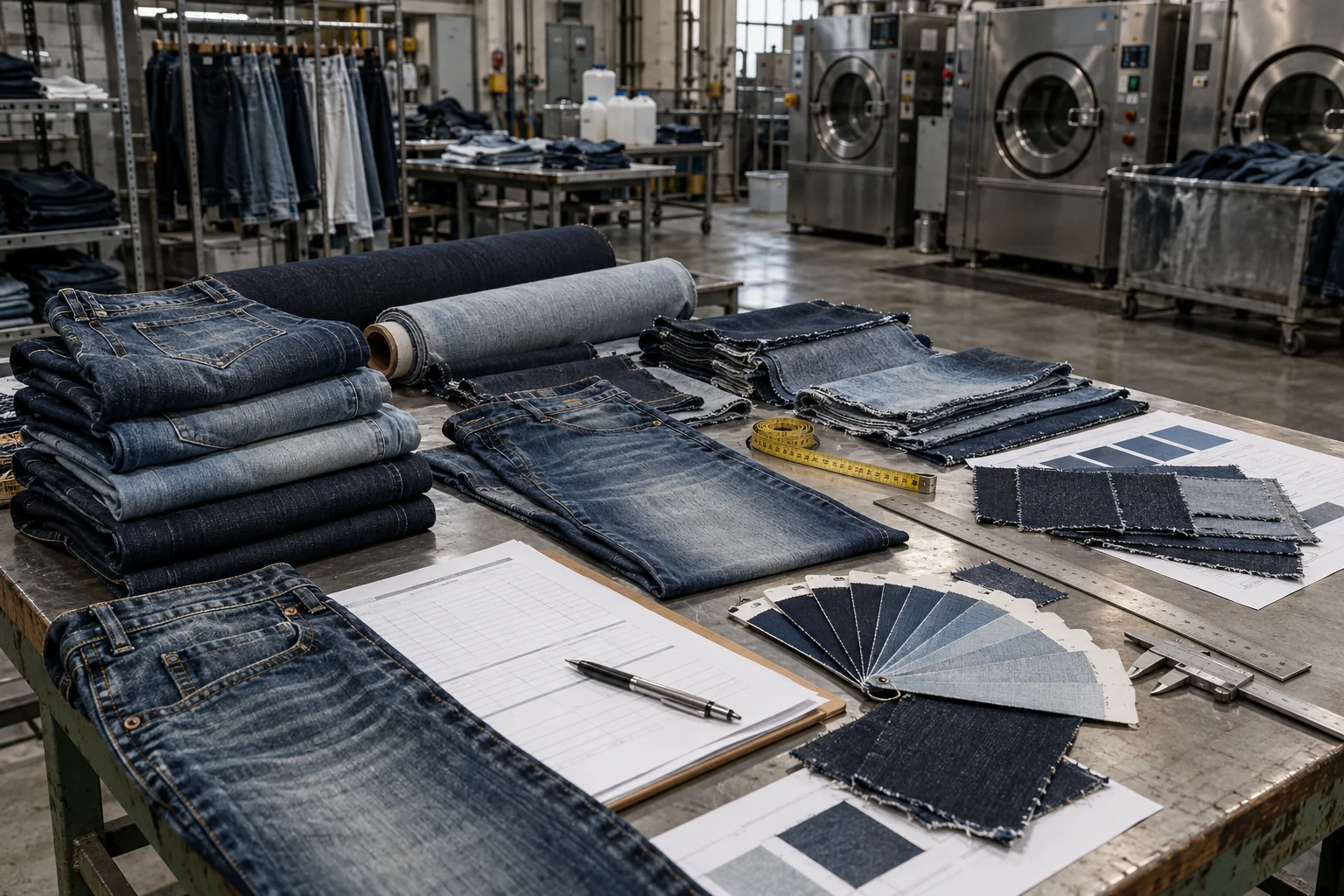
At a glance
Swipe the table sideways to compare both columns →
| Brief component | Information to supply | Release control |
|---|---|---|
| Order structure | Style, color, wash, size allocation, delivery window, and revision register | Confirm 100 pcs per color per design and separate purchasing minimums |
| Fabric identity | Article, composition, weight condition, width, finish, and lot allocation | Require approval before substitution or cutting unallocated stock |
| Wash and shade | Laundry responsibility, process reference, target garment, and shade limits | Approve the actual-fabric route and define reprocessing authority |
| Finished fit | Pattern version, measurement diagram, tolerances, and grading requirements | Measure after the intended wash under agreed conditions |
| Trims and sample gates | Component specifications, attachment sequence, sample purpose, and approval owner | Connect preproduction approval to the current bill of materials |
1. Give denim manufacturers a controlled OEM brief
Begin with one style cover sheet that identifies the buyer, style code, revision date, intended selling market, garment type, and person authorized to approve changes. Attach front and back technical drawings, detail views, and a reference list explaining what each image demonstrates. A photograph may illustrate pocket proportion without approving its fabric, wash, or hardware. State those limits directly beside the reference. For general service scope, see the [denim manufacturer overview](/denim-manufacturer); the order brief should then translate the required service into named deliverables. Identify who supplies patterns, sources cloth, develops washing, purchases trims, and prepares packaging. Ask the supplier to mark missing information and proposed assumptions before quoting. This page concerns the instructions needed to execute an OEM jeans order, rather than how to shortlist factories or negotiate ownership of an entire private label program.
Add an order matrix showing each design, color, wash, size range, and requested quantity. Use MOQ 100 pcs per color per design as the garment planning basis, and obtain written confirmation of how separate washes are classified. Do not assume that two washes on the same denim article share one minimum. List fabric, hardware, label, and packaging minimums separately, together with responsibility for unused purchased stock. Include the target shipment window and distinguish it from the required arrival date. Ask the supplier to return a dependency schedule covering material readiness, development, approvals, cutting, sewing, laundry, and packing. Bulk timing depends on quantity and these dependencies, not simply the date the inquiry was sent. Maintain a revision register so changes to quantities or specifications trigger an explicit review of cost, material allocation, and timing before production instructions are updated.
2. Identify the denim article before approving consumption
Specify the proposed fabric by an identifiable article reference and supplier or mill reference where available, rather than by a phrase such as dark stretch denim. Record fiber composition, nominal weight with its measurement condition, usable width, weave or face characteristics, stretch direction where relevant, and supplied finish. State whether the weight describes unwashed cloth or fabric after a defined treatment; otherwise two apparently matching specifications may describe different conditions. Attach a labeled swatch and identify whether it represents reserved stock, a continuously stocked article, or a development proposal. If the buyer has not selected an article, request alternatives as separately numbered submissions with their own specifications. Do not let a sourcing suggestion become an approved material merely because it appears in the quotation. Require the factory to explain which article its consumption estimate and wash development actually use.
Ask for a material allocation record connecting the approved article to available quantity, fabric lots, roll identifiers, and the intended cutting order. The brief should require incoming checks and a method for retaining roll identity through bundles where lot differences could affect shade or finishing. Request consumption assumptions based on the proposed size mix, usable width, pattern, and finishing allowances, with development usage and expected cutting losses identified separately. Avoid prescribing one universal allowance before the actual cloth has been evaluated. Establish a substitution rule: any change of article, composition, finish, or material source returns for review before use. A replacement with similar weight may behave differently during washing or wear. For repeat orders, require confirmation of current lot availability and a comparison against retained references instead of assuming the original approval covers every future delivery of that article.
3. Assign wash route ownership and shade boundaries
Describe the wash result in separate attributes: overall shade, contrast, abrasion position, edge wear, surface texture, and handfeel. Mark abrasion locations on drawings or garment photographs and state which effects are required, optional, or prohibited. Identify the intended laundry and the party responsible for developing, recording, and maintaining the process instructions. An outside laundry can be part of the agreed route, but the OEM supplier should remain accountable for communicating approvals and controlling changes. Request a wash reference linked to the fabric article and sample identifier, including the attachment sequence for components exposed to finishing. Exact process settings may remain in controlled production records, but the buyer still needs a traceable route and responsible owner. Require notification when changes in laundry, equipment route, or treatment could alter appearance, dimensions, component behavior, or garment integrity.
Approve a target garment together with labeled light and dark shade limits developed on the intended material and route. Record the viewing conditions, reference identifiers, approval date, and storage arrangements for matching buyer and factory sets. A digital image can support discussion, but screen appearance should not be the sole bulk shade authority. Explain whether the limits apply to overall garment shade and define separate restrictions for panel mismatch, streaking, abrasion placement, or localized discoloration. Ask how each production wash batch will be compared with the references and held if it falls outside acceptance. Include a reprocessing rule naming who may authorize another wash or corrective treatment. Additional processing can change dimensions, strength, handfeel, and trim appearance, so shade correction alone is not sufficient grounds for release. Record the checks required after reprocessing and maintain the affected batch identity.
4. Specify the fit block in its finished condition
State whether the pattern starts from a buyer file, a factory block, or new development, and give every issued pattern a version identifier. Define the intended fit through technical drawings, a measurement table, and a measurement diagram rather than relying on names such as relaxed or slim. Include waist, hip, rise, thigh, knee, inseam, and opening points as appropriate to the design, with clear measurement locations and tolerances. Specify the garment condition for acceptance, including washing, drying, resting, fastening, and whether elastic sections are relaxed or extended. The finished measurement table should describe the delivered jeans, while prewash targets and pattern allowances remain separately identified production controls. Ask the factory to document how it derives those allowances from trials on the actual cloth. Do not apply one assumed shrinkage percentage to every direction and measurement point.
Request paired prewash and postwash measurement reports for development garments so fit changes can be traced to the pattern, construction, or finishing route. Review balance and mobility on the intended wearer or agreed fit form, not only whether individual measurements fall within tolerance. Check waistband position, rise balance, pocket placement, leg alignment, and the effect of seams on the finished silhouette. Define the base size and the additional sizes needed to assess grading before bulk release. A corrected base-size sample does not establish that the size extremes are acceptable. Record each requested correction against a pattern version and require the next submission to identify which changes were implemented. If the wash changes after fit approval, reassess affected measurements and appearance. Keep the accepted finished sample, measurement report, grading instructions, and pattern version connected in the release package.
5. Detail hardware, labels, and assembly sequence
Build a bill of materials with a separate line for each button, rivet, zipper, patch, label, thread, pocketing fabric, interlining, and packaging item. Give each component a reference code, material description, dimensions, color or finish, placement, and approval status. Hardware instructions should identify the intended attachment system and compatible mating parts, not just the visible face design. Ask the factory to confirm suitability for the selected fabric thickness, seam buildup, and washing route. Mark which components are installed before washing and which are applied afterward, then verify that samples follow the same sequence. A patch approved loose on a desk may change color or distort during finishing. Specify the checks needed for attachment security, sharp edges, zipper operation, corrosion or staining concerns, and damage to neighboring fabric without treating visual approval as proof of performance.
Provide construction details for seam types, stitch appearance, reinforcement positions, pocket dimensions, belt loop placement, hem treatment, and any intentional distressing near structural areas. Distinguish required details from suggestions the factory may revise for manufacturability, and require approval for changes that affect appearance or function. Supply label artwork as controlled files with placement diagrams, dimensions, language requirements, and version dates. Review fiber, care, origin, and other destination-market information separately from graphic approval; a correctly printed label can still contain unsuitable wording. State who supplies that information and who checks it before labels are ordered. Include folding, hangtag attachment, bag identification, carton assortment, and size marking instructions where relevant. Request separate disclosure of tooling, setup commitments, and component overages. If a trim remains provisional, identify the dependent operations that must wait rather than allowing an unspecified equivalent into production.
6. Turn the brief into sample and bulk release gates
Create a sample register that states the purpose, materials, pattern version, wash reference, component status, and decision owner for every submission. Samples take approximately 7 days once the brief and materials are confirmed, but custom sourcing, transport, revisions, and additional wash trials need separate allowances. A substitute-fabric fit sample can support a silhouette discussion without approving finished shrinkage or wash appearance. A wash panel can narrow shade direction without establishing complete garment fit. Keep these approvals limited to the evidence each submission provides. Record comments as accepted, revise and resubmit, or unresolved, with the relevant specification references and due dates. Avoid comments such as looks good unless the approved attributes are listed. Consolidate buyer feedback before returning it so the pattern team, laundry, and trim purchaser do not receive conflicting instructions from different reviewers.
Before releasing bulk, review a preproduction garment made with the intended fabric, construction, wash route, and actual components wherever their behavior matters. Connect its approval to the current bill of materials, measurement table, pattern version, shade references, and packing instructions. List any accepted deviations and state whether approval authorizes material purchasing, cutting, or the full production sequence. Silence after sample delivery should not count as release. Add a bulk inspection plan covering sizes, fabric lots, wash batches, workmanship, measurements, shade, hardware function, and packing against agreed acceptance criteria. Require affected goods to be held when findings exceed those criteria, with corrective action and reinspection responsibilities documented. Any material substitution or significant route change should reopen the relevant gate. Retain matching approved references so production and inspection teams work from the same evidence rather than an obsolete sample or scattered messages.
Send these details together
- Issue a revision-controlled style brief with drawings, reference limitations, responsibilities, and an order matrix.
- Confirm MOQ 100 pcs per color per design, wash classifications, separate material minimums, and surplus ownership.
- Identify the fabric article, specification condition, available lots, roll allocation, and substitution approval rule.
- Name the wash route owner and laundry, then approve the target garment, shade limits, and reprocessing controls.
- Connect finished fit, pattern versions, grading, hardware, labels, and assembly sequence to measurable requirements.
- Define sample purposes, approximately 7-day starting assumptions, preproduction release authority, and bulk inspection responsibilities.
This guide covers preparation of a buyer-side OEM jeans brief for production in China, from fabric identification and wash responsibility to finished fit, component specifications, and release gates. It is not a supplier ranking or a complete private label ownership agreement. MOQ 100 pcs per color per design is the garment planning basis; confirm wash classification, size allocation, and separate material minimums. Samples take approximately 7 days once the brief and materials are confirmed; bulk timing depends on quantity, material readiness, capacity, and approvals. Destination-market compliance, contractual rights, and product-specific testing require separate review. Reprint attribution: denimmanufacturerchina.com.
Prepare a quote briefThe RFQ form prepares a WhatsApp message for you to review. For files, email sales@denimmanufacturerchina.com.
Questions before sampling
Can denim manufacturers quote from reference photos alone?
Photos can support an initial estimate, but they do not define the fabric article, finished measurements, construction, wash limits, or component specifications. Ask the supplier to identify every assumption in a photo-based quote. Before committing to production, replace those assumptions with approved specifications and references. Clarify which features of each image are instructions and which are only visual context.
What if the final denim article is not available for the first sample?
Label the sample as provisional and state exactly what it may demonstrate. Substitute cloth may help assess pocket placement or general silhouette, but it should not approve final wash response, shrinkage, recovery, or handfeel. Schedule an actual-material submission before the relevant release gate. Ask whether changing to the final article will require revised consumption, pattern allowances, or additional wash development.
Does approving a wash sample also approve finished fit?
Not unless the submission is a complete garment evaluated against the finished measurement specification and intended fit. A wash panel or leg can establish a direction for shade and abrasion while leaving dimensional behavior unresolved. Keep wash and fit decisions separate in the approval record, then bring them together on a preproduction garment made through the intended production route.
How should a buyer brief several washes at MOQ 100 pcs?
List every design, color, wash, and size allocation separately, using MOQ 100 pcs per color per design as the planning basis. Ask the supplier to confirm whether each wash creates a separate color commitment and whether laundry batch requirements apply. Also reconcile fabric and trim minimums. Do not combine quantities across washes in the purchase plan without written confirmation of the accepted breakdown.
What are your MOQ, sample time and bulk lead time?
MOQ is 100 pcs. Samples take 7 days. Bulk production lead time depends on order quantity.