How to Evaluate Denim Jeans Manufacturers
Evaluating denim jeans manufacturers means reviewing the finished jeans as one product whose fit, wash, construction, and hardware interact. Ask candidates to demonstrate post-wash measurements, stable sewing, a controlled wash reference, and hardware that works with the actual waistband and fly. Compare evidence on the intended fabric rather than judging isolated swatches or showroom garments. Confirm MOQ 100 pcs allocation and use approximately 7 days after brief and material confirmation as the sample planning reference, with extra development discussed separately.
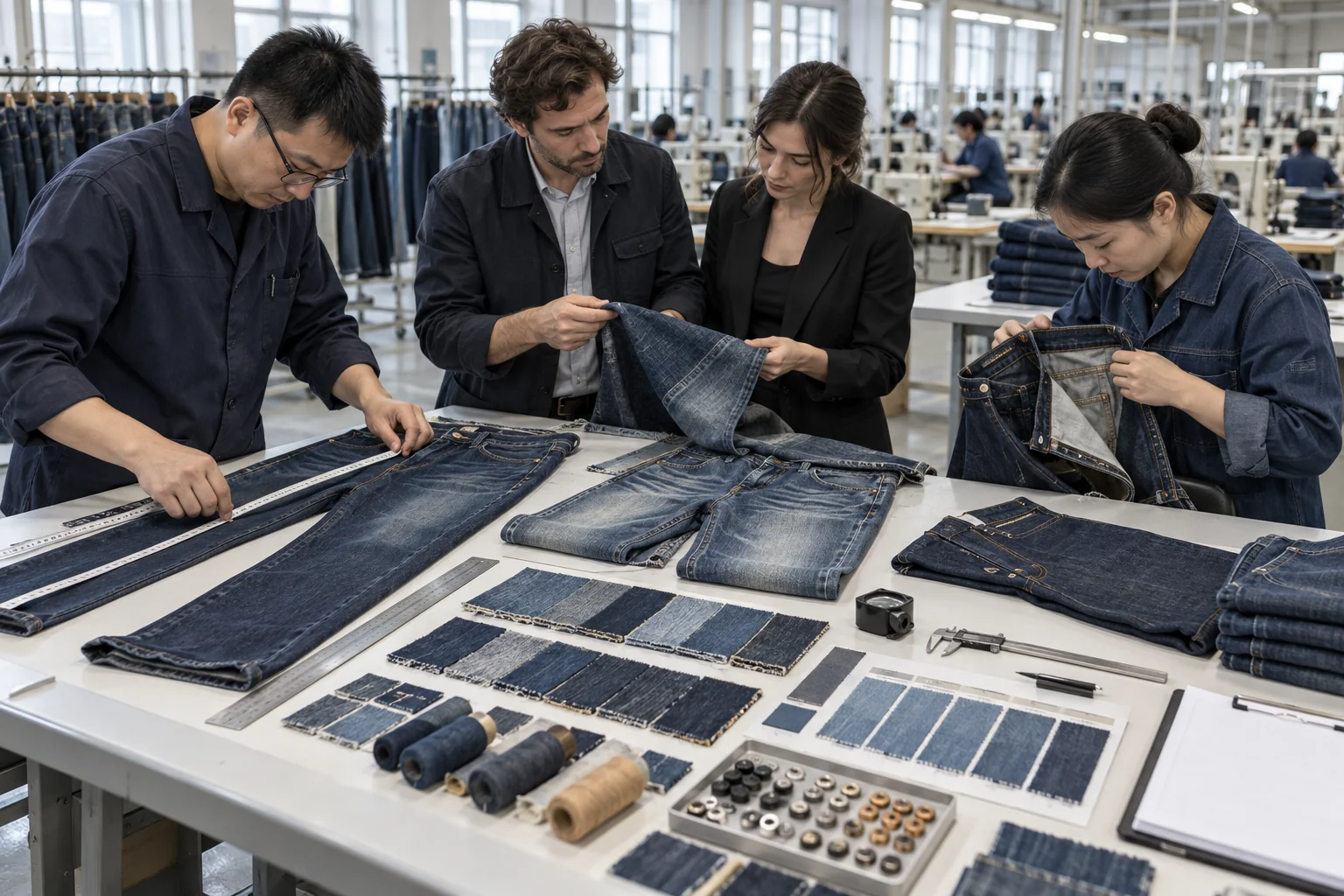
At a glance
Swipe the table sideways to compare both columns →
| Evaluation point | Evidence to request | Decision or control |
|---|---|---|
| Post-wash fit | Measurement method, before-and-after records, and graded size checks | Separate pattern corrections from material and wash effects |
| Jeans construction | Seams, pockets, fly, belt loops, and reinforcement evidence | Assess the actual denim thickness and stress points |
| Wash repeatability | Identified base fabric, wash reference, and variation boundaries | Review first production output before continuing the run |
| Hardware performance | Actual buttons, rivets, zipper, and attachment trials | Confirm function and compatibility with finishing |
| Bulk QC and terms | Inspection plan, approved combination, allocation, and schedule | Close technical and commercial conditions before release |
1. Evaluate fit in the finished garment condition
Begin with the intended fit and a measurement sheet that defines how the finished jeans will be measured. Include waist, hip, rise, thigh, knee where relevant, inseam, and leg opening, with tolerances and the garment condition used for review. Ask the manufacturer to explain how it develops the pattern for the specified denim and wash. Review a sample after the intended finishing route rather than approving fit solely on an unwashed garment. The finished result can change through shrinkage, relaxation, or uneven movement around seams. Compare the measured sample with the target and assess it on an appropriate wearer or form. Record where comfort or silhouette differs from the brief so feedback describes a specific fit problem instead of asking the factory to make the jeans generally more flattering or more premium.
Ask for measurements before and after washing where those records will help explain a deviation. A short inseam or tight waistband may result from the pattern, fabric behavior, sewing, or wash conditions, and each cause needs a different correction. Have the supplier identify the proposed change and record the pattern and wash versions used for the next sample. Review grading at relevant sizes rather than assuming the base size proves the whole range. For stretch denim, agree how extension and recovery will be assessed under a defined procedure and consider fit after wear or care where appropriate to the product. Keep the measurement method consistent across candidates. The strongest evidence is a coherent explanation connecting the material, pattern adjustment, finishing process, and verified result, supported by a sample your team can actually inspect.
2. Inspect sewing and reinforcement on the actual denim
Inspect the jeans inside and out, paying attention to the areas where fabric thickness and repeated stress make construction difficult. Review the waistband join, fly, crotch intersection, seat seam, pocket openings, belt loops, and hem. Check stitch formation, seam security, skipped stitches, loose thread, puckering, and visible damage to the fabric. Ask the manufacturer to explain its seam and reinforcement choices for the actual denim weight and stretch characteristics. A neat sample in lighter material does not prove the same result on a heavier or less stable fabric. Record critical details in photographs and specify the acceptable appearance and construction rather than relying on a broad instruction for stronger sewing. Your evaluation should establish whether the supplier understands both the visual result and the practical stresses of the intended jeans design.
Review pocketing, thread, labels, and internal finishing as part of the garment standard. Pocket bags should suit the design and intended use, while seam allowances and label positions should remain comfortable after finishing. Check pocket symmetry and the relationship between visible stitching and the washed appearance. Ask how reinforcement locations are controlled during sewing and whether the approved sample uses the same construction sequence planned for bulk. If a detail is corrected, require the manufacturer to show how that correction reaches the line and appears in the updated technical documents. Do not infer repeatable capability from a single attractive front photograph. Use the supplier's explanation, sample details, and response to corrections together to decide whether it can maintain the required workmanship across the proposed size range and the actual quantity you intend to order.
3. Evaluate wash and hardware as an interacting system
Identify the base denim, intended wash route, and approved finish reference before comparing suppliers' wash execution. Review shade, contrast, handfeel, abrasion placement where applicable, and any damage around seams or stressed areas. Ask who performs washing and how the manufacturer transfers the approved reference to that team. Where variation is expected, agree practical visual boundaries and consistent review conditions instead of demanding an undefined exact match. Check whether the sample and proposed bulk fabric come from the same article and comparable lot conditions. A changed base fabric can alter both appearance and shrinkage even if the process description remains unchanged. Request a first-output review and an escalation method for results outside the agreed boundaries. This tests the manufacturer's ability to manage the finish as a production process with a visible acceptance standard.
Trial buttons, rivets, and zippers on the actual waistband, pocket, and fly construction. Record hardware dimensions, material or finish information relevant to the brief, attachment method, and whether installation happens before or after washing. That sequence affects which components experience the wash and must be reflected in the sample. Check closure function, alignment, attachment security, sharp edges, and visible changes after the intended finishing and care process. Agree any required attachment or performance checks and their acceptance criteria rather than assuming appearance proves function. Custom branding can introduce tooling and purchasing minimums, so separate those commercial items from garment unit price. If a hardware component changes, review its fit and process compatibility before approving substitution. The selected manufacturer should explain how hardware decisions affect construction and finishing, not treat metal trims as a final cosmetic addition.
4. Approve the integrated jeans program and QC plan
Define the sample sequence so each approval has a clear purpose. The first sample may establish pattern and construction, while a later reference combines actual fabric, wash, hardware, labels, and packing. Samples take approximately 7 days once the brief and materials are confirmed; establish whether custom hardware or wash development adds separate work. Require disclosure of substitutes and keep their approval limits visible. Consolidate feedback into one revision record that links measurement changes, wash comments, and hardware decisions. A change intended to fix one issue may affect another, so ask the supplier to identify the checks that need repeating. Before bulk release, approve the combined finished garment and retain an identifiable reference. The approval should state the material, pattern, wash, and trim versions so a production team can reproduce the reviewed combination without resolving conflicts between old comments.
Agree inspection stages for incoming denim, first sewing output, post-wash garments, hardware installation, and final packing as appropriate to the process. Define measurement checks, visual finish criteria, functional checks, defect reporting, and the buyer's release authority. Confirm MOQ 100 pcs and the accepted style, wash, and size allocation, including any separate material or hardware commitment. Reconcile these details with the quotation, delivery term, and purchase order before authorizing production. Request a bulk schedule based on quantity, material readiness, approved wash, and available capacity, with inspection and dispatch separated from transit. If an issue appears during the run, require documentation and review of the proposed correction before affected goods are released. Supplier evaluation is complete when technical evidence and commercial responsibilities support the same finished jeans specification and the remaining risks have explicit controls.
Send these details together
- Define finished-garment measurements and review post-wash fit with identified pattern and material versions.
- Inspect seams, fly, pockets, belt loops, and reinforcement on the intended denim construction.
- Approve the wash reference and variation boundaries on the actual base fabric.
- Trial actual hardware for attachment, function, and compatibility with the finishing sequence.
- Reconcile the integrated sample, QC plan, MOQ allocation, quote, and production milestones before release.
This guide covers buyer-side China menswear OEM planning for denim jeans garment oem. MOQ 100 pcs is the starting requirement; confirm allocation and material minimums for the proposed order. Samples take approximately 7 days once the brief and materials are confirmed; bulk timing depends on quantity, materials, capacity, and approvals. Reprint attribution: denimmanufacturerchina.com.
Prepare a quote briefThe RFQ form prepares a WhatsApp message for you to review. For files, email sales@denimmanufacturerchina.com.
Questions before sampling
Should I approve jeans fit before washing?
An unwashed sample can support pattern development, but final fit should be reviewed in the intended finished condition. Compare before-and-after measurements where useful and identify the material, pattern, and wash versions. A change in any of those inputs may require another fit check.
What should I check beyond the appearance of jeans hardware?
Check attachment security, closure function, alignment, sharp edges, and compatibility with the actual waistband and fly. Confirm whether each component goes through washing and review its condition afterward. Agree relevant performance checks and acceptance criteria for the intended product.
Can one approved sample cover later fabric or wash substitutions?
Do not assume so. A different fabric or wash may change dimensions, shade, handfeel, seam behavior, and hardware appearance. Ask the supplier to identify the impact and submit focused evidence or a revised combined sample before authorizing the affected production step.
What are your MOQ, sample time and bulk lead time?
MOQ is 100 pcs. Samples take 7 days. Bulk production lead time depends on order quantity.