Jeans Rise and Seat Fit: Diagnose the Right Dimension
Rise and seat fit are related but not interchangeable. Front and back rise help describe the path from crotch to waistband, while seat dimensions and pattern shape affect room around the hips. When a sample pulls or feels restricted, identify the location and wearing condition before changing several measurements at once.
At a glance
Swipe the table sideways to compare both columns →
| Decision | What to specify | What to verify |
|---|---|---|
| Baseline | Waist position, rise endpoints and seat location | Separate garment dimensions from body dimensions. |
| Observation | Tension, movement and waistband behavior | Describe the symptom before prescribing a correction. |
| Revision | Pattern change plus dependent details | Recheck pockets, yoke and graded balance. |
Define the waist position and measurement method
State the intended waist height and provide a front, side and back worn reference. Measure front and back rise using a diagram that specifies endpoints and waistband inclusion. Define seat width at a stated location rather than an arbitrary widest point. Keep body measurements distinct from garment measurements so the chart does not confuse the wearer's dimensions with the product's intended ease.
Identify the fabric and finished state used for the review. Stretch behavior, stiffness and production finishing can affect how the same nominal dimensions feel. If a sample uses substitute denim, record its limitations. A fit approved in a flexible material should not automatically govern a rigid version, and an unwashed sample may not represent the delivered washed product.
Observe the garment before choosing a correction
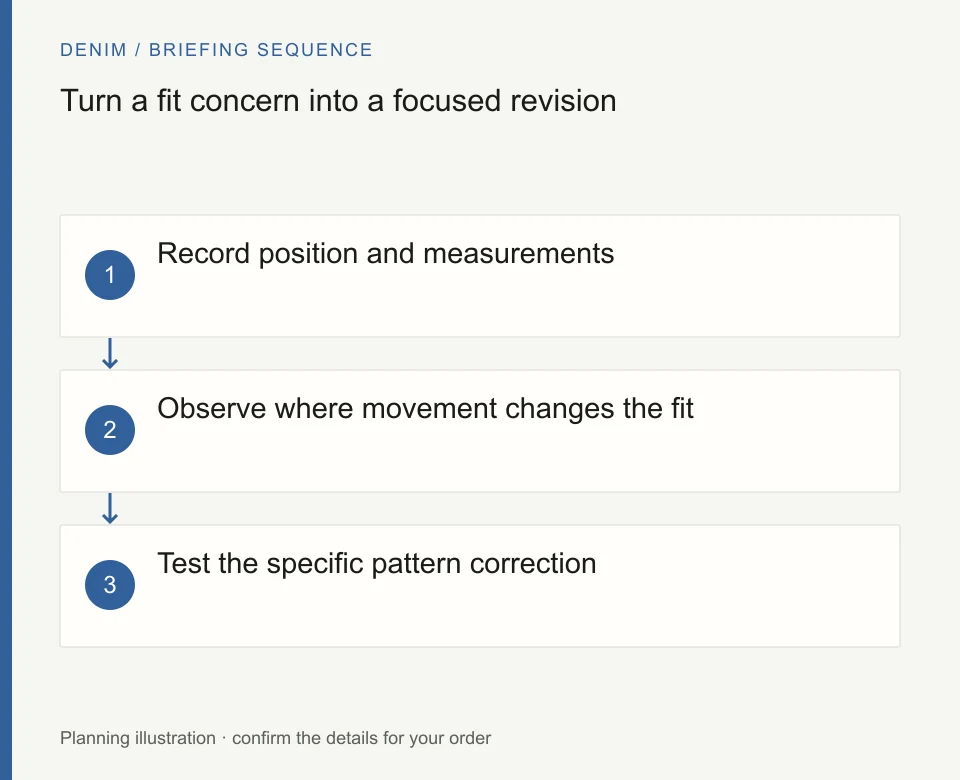
Review standing, sitting and ordinary movement appropriate to the design. Note waistband movement, crotch pressure, seat tension and the way the side seams sit. Take consistent photographs and describe the condition rather than assigning an immediate cause. Pull lines can have several explanations, so a general instruction to add rise may not address a seat-shape or thigh-ease issue.
Discuss the observations with the pattern maker and distinguish dimensions from pattern shaping. Two patterns can share a rise length while distributing it differently. Changes to crotch curve, waist angle or seat balance may require a revised sample to assess. Keep the correction focused and record its purpose so the next fitting can show whether it solved the specific problem.
Check the connected details after revision
When rise or seat changes, revisit pocket placement, yoke proportions, fly and waistband relationships. A pocket that looked balanced on the previous back panel can shift visually after a pattern correction. Re-measure affected points and compare worn views against the original intent. Do not call the change approved merely because the target measurement increased by the requested amount.
Once the base fit works, review grading across the selected size set and preserve the measurement method with the chart. Record accepted dimensions and any shape-specific notes in the final release. For reorders or a new fabric, use that complete record as a baseline and confirm the appropriate checks. A fit name such as relaxed cannot preserve the underlying rise and seat decisions by itself.
Send these details together
- Intended waist position and three-view fit reference
- Front and back rise and seat measurement methods
- Actual fabric and sample finishing state
- Movement observations with focused revision reasons
- Updated pattern, pocket placement and size-set approval
Use this checklist to prepare your own order brief. Materials, processes, acceptance criteria and any applicable product requirements need order-specific confirmation; this guide is not a test report or availability guarantee.
Prepare a quote briefThe RFQ form prepares a WhatsApp message for you to review. For files, email sales@denimmanufacturerchina.com.
Questions before sampling
What are your MOQ, sample time and bulk lead time?
MOQ is 100 pcs. Samples take 7 days. Bulk production lead time depends on order quantity.