Selvedge Denim Development: Fabric Edge to Garment
Selvedge describes a self-finished fabric edge. In jeans, that edge may be intentionally incorporated into a visible seam detail, often noticed when the hem is turned up. It is a construction characteristic to specify, not proof of a particular origin, fiber composition, finishing state or performance level.
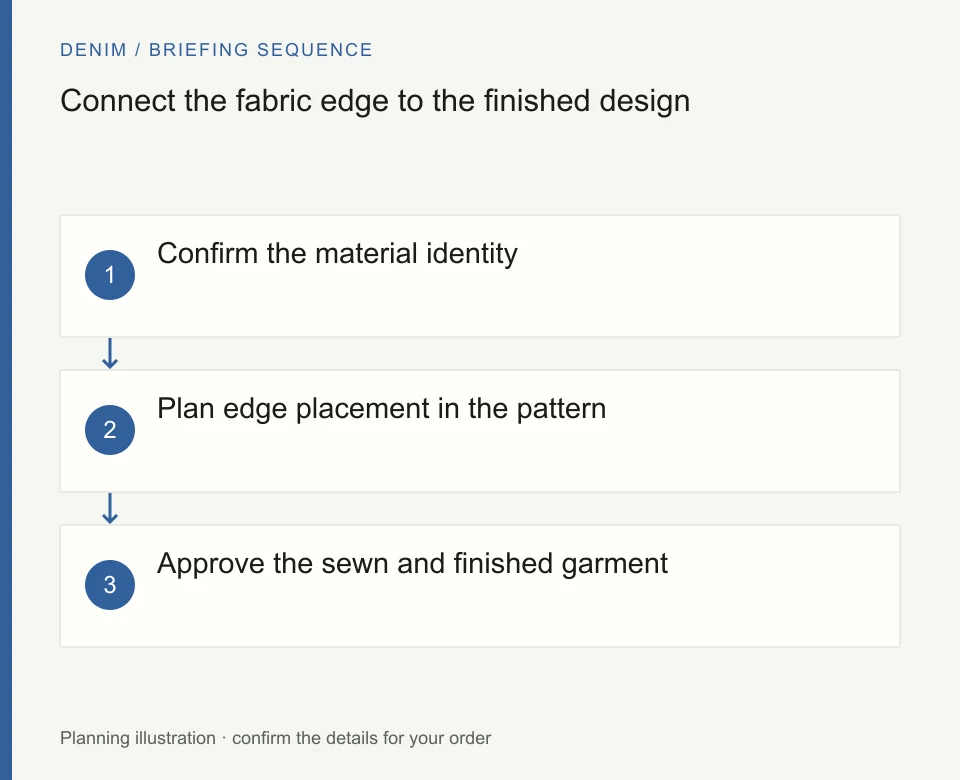
At a glance
Swipe the table sideways to compare both columns →
| Decision | What to specify | What to verify |
|---|---|---|
| Fabric identity | Composition, weight, width, finish and source evidence | Do not infer origin or performance from the edge. |
| Garment detail | Planned edge location and seam or cuff construction | Review a sewn inside view. |
| Approval | Fit and finish in the actual proposed material | Keep raw, stretch and selvedge choices separate. |
Confirm the fabric beyond the edge
Request the proposed material's composition, weight, color, width, stretch or rigid direction and relevant finishing information. Review an actual fabric reference that includes the edge. Selvedge is often associated with particular weaving approaches, but the term does not by itself verify a named mill, country or historical production method. Obtain supporting information for any sourcing claim you intend to make.
State whether origin or a specific mill is a requirement, a preference or simply an inspiration. Do not assume access to a material because an educational article mentions it. Ask the garment supplier to confirm availability and suitability for the intended quantity and pattern. Keep alternative fabrics clearly identified so a similar-looking edge is not silently substituted for a specified material.
Show the edge's role in the garment
Draw the outseam or other location where the edge should be retained and show the inside view. Specify the intended cuff presentation, seam finish and any contrasting thread. Discuss the pattern layout with the supplier because fabric width and edge use can constrain the cutting approach. Avoid inventing a fixed consumption or price premium without an actual pattern and material proposal.
Review the edge detail on a sewn sample, not just a swatch. Check seam bulk, comfort and how the cuff looks at the intended turn-up. If the jeans are not designed to be cuffed, decide whether the detail still matters to the buyer's product story. The feature should have a deliberate construction role rather than being added as a label disconnected from the garment.
Approve fit and finish independently of the label
Develop rise, seat, leg line and length using the actual fabric. A selvedge construction does not establish whether the material stretches, feels soft or arrives raw. Specify those choices separately and measure the garment in its intended delivered state. If washing is part of the order, evaluate the edge, seam and overall dimensions after the proposed treatment.
Agree relevant care and performance checks, and retain the accepted fabric and garment references. Product copy should describe verified characteristics without using selvedge as shorthand for guaranteed durability or superior quality. For reorders, confirm the material identity again and review any change in width, edge or finishing. Similar visual branding on a fabric edge does not prove an identical repeat supply.
Send these details together
- Actual selvedge fabric reference and material details
- Any required source claims with supporting information
- Edge placement and seam or cuff drawings
- Representative fit and finished-state sample
- Approved references and required care checks
Use this checklist to prepare your own order brief. Materials, processes, acceptance criteria and any applicable product requirements need order-specific confirmation; this guide is not a test report or availability guarantee.
Prepare a quote briefThe RFQ form prepares a WhatsApp message for you to review. For files, email sales@denimmanufacturerchina.com.
Questions before sampling
What are your MOQ, sample time and bulk lead time?
MOQ is 100 pcs. Samples take 7 days. Bulk production lead time depends on order quantity.