How Is Denim Manufactured? Fabric and Jeans Stages
How denim is manufactured can refer to two different processes: making the fabric and making a finished garment from it. A jeans order connects those stages but does not necessarily place them in one facility. Knowing the distinction helps a buyer ask who supplies each input and where approvals belong.
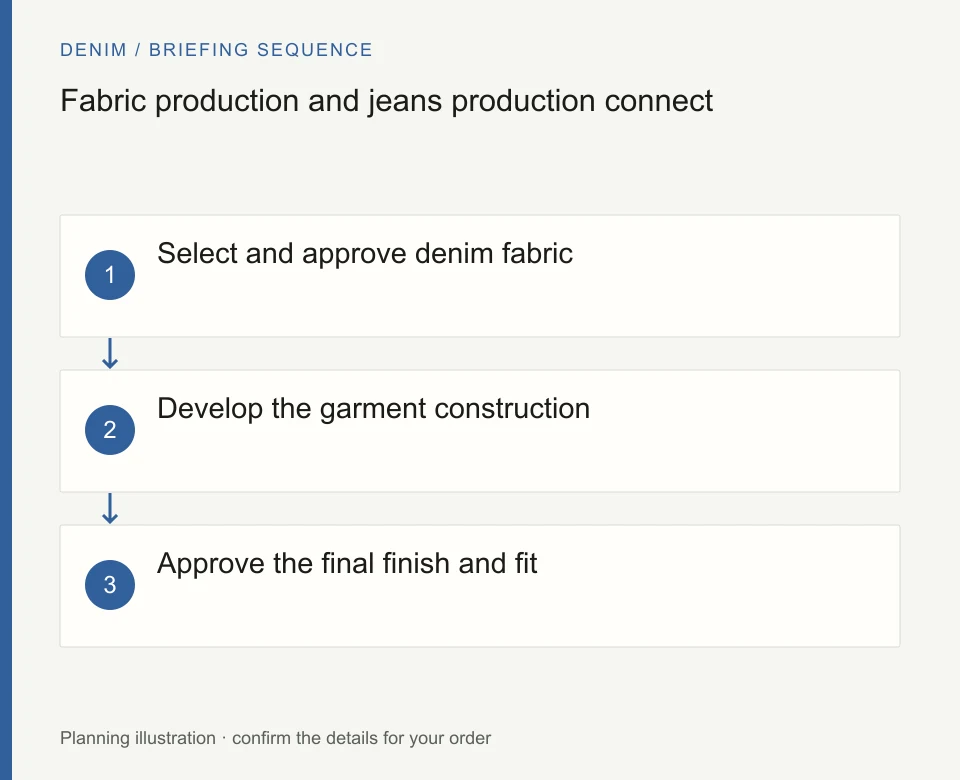
At a glance
Swipe the table sideways to compare both columns →
| Decision | What to specify | What to verify |
|---|---|---|
| Fabric stage | Yarns, coloration, weaving and fabric finishing | Confirm the actual material and its source information. |
| Garment stage | Pattern, cutting, sewing and component assembly | Approve construction and fit in representative fabric. |
| Final stage | Specified finish, checks and packing | Measure and approve the delivered garment state. |
Fabric manufacturing creates the starting material
Denim fabric begins with yarn selection and preparation, coloration where applicable, weaving and fabric finishing. Traditional blue denim commonly uses dyed warp yarns and lighter weft yarns in a twill construction, but commercial denim includes many variations. Specify composition, construction, weight, color and stretch requirements separately instead of treating blue denim as one uniform material.
Ask the garment supplier to identify the proposed fabric and explain its relevant characteristics. A mill name or a generic fabric photograph is not approval for the actual material. If a particular origin, construction or performance requirement matters, request appropriate supporting information and samples. Do not infer a mill relationship or a verified supply chain simply from educational descriptions of how denim is usually made.
Garment manufacturing turns fabric into a fit
The garment stage uses patterns and a size chart to cut panels, assemble seams, build pockets and attach relevant components. Fabric behavior influences those decisions. A rigid material and a stretch material may need different fit development even when the desired silhouette looks similar. Start with the actual proposed fabric and define the measurement state in which the jeans will be approved.
A jeans brief should identify rise, seat, thigh, knee, opening and length alongside waistband, pocket and closure details. The sewing sequence alone does not determine the final look. Thread, seam construction, hardware and intended finishing all interact with the product. Ask which operations are direct and which involve partners, and assign responsibility for the checks that connect those stages.
Finishing and approval establish the delivered garment
A garment may be supplied in a specified raw state or receive rinse, wash or other finishing steps. The proposed route can change shade, hand feel and dimensions, so review the complete finished sample. A pre-wash fit approval is not automatically approval for the delivered washed garment. Record the actual stage when taking measurements and comparing samples.
Before bulk, retain the fabric reference, approved garment, graded chart, wash direction, trim details and packing instructions as one package. Agree relevant performance and inspection requirements rather than treating the production sequence as proof of quality. Understanding the stages should help you close handoff gaps, not imply that every denim supplier owns every process or that one route guarantees a superior product.
Send these details together
- Proposed fabric identity and material requirements
- Named responsibilities across the supply route
- Garment tech pack and measurement state
- Finished sample, shade and trim references
- Agreed checks and final packing instructions
Use this checklist to prepare your own order brief. Materials, processes, acceptance criteria and any applicable product requirements need order-specific confirmation; this guide is not a test report or availability guarantee.
Prepare a quote briefThe RFQ form prepares a WhatsApp message for you to review. For files, email sales@denimmanufacturerchina.com.
Questions before sampling
What are your MOQ, sample time and bulk lead time?
MOQ is 100 pcs. Samples take 7 days. Bulk production lead time depends on order quantity.